
Narita International
Airport
Narita International Airport is one of Tokyo's main international gateways, about 60 km east of central Tokyo. It has rail, bus and road links to the city and wider Kanto region.
Narita Airport has three passenger terminals: Terminal 1, Terminal 2 and Terminal 3. The airport website provides terminal maps, rail and bus access tools, parking information and guidance for night and early-morning terminal use.
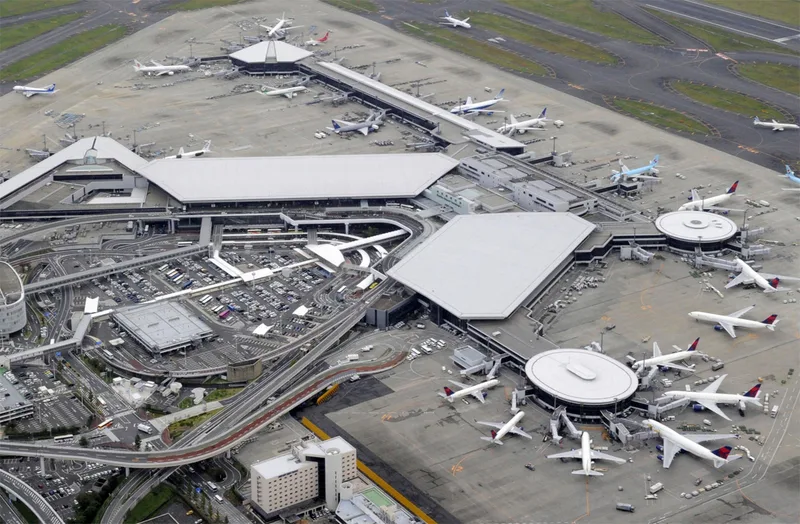
Narita International Airport : Japan
IATA Code: NRT
Is There Free WiFi at Narita International Airport?
Yes, Narita International Airport offers free WiFi across the main terminal areas. It is usually adequate for messaging and browsing, but speeds can slow during busy periods and occasional login or reconnection issues may occur.
If you need fast, stable internet at Narita International Airport, there's a better alternative to airport WiFi.
| Airport WiFi vs eSIM | Airport WiFi | travelData.shop eSIM |
|---|---|---|
| Connection Speed | Slow / Unstable | Fast 4G/5G Speeds |
| Reliability | Can Disconnect | Stable Connection |
| Activation Time | Login / Ads / Forms | Instant Connection |
| Security | Public Network (Risk) | Private Secure Connection |
| Coverage | Only Inside Airport | Works Across Entire Country |
| Registration Required | Yes (email / ID / Login) | No (Instant Use) |
Global Network Partners
Why Use eSIM Instead of Narita International Airport WiFi?
Instant Connection After Landing
Get Online the Moment You Land — No Searching for WiFi, No Waiting, No Login Screens.
Works Beyond the Airport
Stay Connected Across the Entire Japan — From the Airport to Your Hotel, City Center, or Road Trip.
No Public WiFi Risks
Avoid Slow, Unsecured Airport Networks & Use Your Own Private Mobile Connection Instead of Relying on Narita International Airport WiFi
Perfect for Travel Essentials
Use Maps, Book a Ride, Check-in to Your Hotel, or Message Instantly after Arrival.
Best Way to Get Internet at Narita International Airport
Compare Free WiFi vs Mobile Data & Choose What Works Best for You.
Free Narita International Airport Internet
Start with 100MB of Free Data at Narita International Airport : Great for Quick Access Only
Once You Run Out of Data, You\'ll be Automatically Upgraded to a 1GB Plan for 3.99 € to Keep You Connected Without Interruption.
Free
1 GB : Mobile 5G eSIM Internet
Stay Connected with 1GB of 5G High-Speed Data Without Relying on Narita International Airport WiFi. Works Across All of Japan
Instant Connection for Maps, Rides & Travel Without Relying on Slow Public WiFi. Fixed Price, No Auto-Upgrades.
2.99 €
UNLIMITED : Mobile 5G eSIM Internet
1 Day UNLIMITED 5G High-Speed Data Without Relying on Narita International Airport WiFi. Works Across All of Japan
No Need to Track Your Usage. Ideal for Heavy Usage, Streaming & Full Day Travel. Fixed Price, No Auto-Upgrades.
5.99 €
How to Get Internet at Narita International Airport
Get Connected Instantly after Landing — No Airport WiFi Needed
Choose Your DATA Plan
Pick the Best Option for Your Arrival at Narita International Airport
Install eSIM in One Tap
Activate Your eSIM Instantly with One Tap — No QR Code, No Manual Setup.
Get Online Instantly
Start Using Internet Immediately at Narita International Airport
FAQs about Internet at Narita International Airport
Everything You Need to Know about Getting Online at Narita International Airport
In most cases, yes. eSIM mobile data is usually faster, more stable, and more secure than crowded public WiFi at Narita International Airport, especially during peak travel hours.
Yes. You can buy and install your eSIM before departure so your mobile data works instantly when you land at Narita International Airport.
No. If your phone supports eSIM, you don’t need to buy a physical SIM card at Narita International Airport — you can get mobile data instantly online.
Yes. Once your eSIM is installed, your mobile data starts working as soon as you land and connect to a local network.
Most travelers are comfortable with 1GB to 5GB for navigation, ride apps, messaging, and light browsing during the first days after arrival.
Yes. Most dual-SIM phones allow you to keep your regular SIM for calls and SMS while using eSIM for mobile data.
Yes. You can increase your data amount and also extend your plan validity, depending on the provider and package options available for your eSIM.
First Time at Narita International Airport? Here’s What You Should Know
Passenger terminals are Terminal 1, Terminal 2 and Terminal 3 at Narita Airport.
Terminal 1 and 2 are separate main terminals; Terminal 3 serves many low-cost carriers.
A free inter-terminal bus links Terminals 1, 2 and 3; walking links also connect Terminal 2 and 3.
The airport operates all day, but some terminal areas and services may have limited overnight access.
Check-in and security opening times depend on airline schedules; confirm your terminal and airline guidance before travel.
For international flights, arriving 2 to 3 hours early is typically recommended, especially in peak periods.
Narita International Airport Parking Options
Parking at Narita International Airport
See practical airport parking options, walking time to terminals, typical price guidance, and booking tips before you drive to the airport.
ParkingOptions
4 available
BookingAdvice
Pre-book Online
Narita Airport publishes parking and discount information; exact tariffs and occupancy can change by date.
Services & Facilities at Narita International Airport
Airport Lounges at Narita International Airport
Narita has airline and contract lounges across international departure areas, especially in Terminals 1 and 2. Access depends on airline class, alliance status, paid entry or lounge program eligibility.
Terminal / location
Terminal 1 landside
Hours
Not publicly listed
Access policy
Paid access and eligible cardholder access
Amenities
Seating, drinks, Wi-Fi and basic business facilities
Useful before security or for meeters and greeters.
Terminal / location
Terminal 2 landside
Hours
Not publicly listed
Access policy
Paid access and eligible cardholder access
Amenities
Seating, drinks, Wi-Fi and basic business facilities
Located before security in Terminal 2 area.
Terminal / location
Terminal 2 landside
Hours
Not publicly listed
Access policy
Paid access and eligible cardholder access
Amenities
More premium seating, refreshments and Wi-Fi
Check current location and admission rules before travel.
Terminal / location
Terminal 1 airside
Hours
Not publicly listed
Access policy
ANA premium cabin, Star Alliance eligible status and qualifying paid access
Amenities
Food, drinks, Wi-Fi, showers in some locations and work areas
Narita has more than one ANA Lounge area; use your gate area guidance.
Terminal / location
Terminal 1 airside
Hours
Not publicly listed
Access policy
Restricted to eligible ANA premium passengers and top-tier members
Amenities
Higher-end dining, drinks, quiet seating and showers
More exclusive than the standard ANA Lounge.
Terminal / location
Terminal 1 airside
Hours
Not publicly listed
Access policy
United Club members, Star Alliance eligible passengers and some premium cabin travelers
Amenities
Snacks, drinks, Wi-Fi and seating
Check current operating status as airline lounge access rules can change.
Terminal / location
Terminal 1 airside
Hours
Not publicly listed
Access policy
Korean Air premium passengers, SkyTeam eligible status and selected partners
Amenities
Snacks, drinks, Wi-Fi and seating
Access depends on airline and alliance rules.
Terminal / location
Terminal 2 airside
Hours
Not publicly listed
Access policy
JAL premium cabin, oneworld eligible status and qualifying customers
Amenities
Food, drinks, Wi-Fi, showers in some areas and workspaces
Narita has multiple JAL lounge spaces depending on departure area.
Terminal / location
Terminal 2 airside
Hours
Not publicly listed
Access policy
Eligible first class passengers and top-tier oneworld/JAL members
Amenities
Premium dining, drinks, shower facilities and quieter seating
Higher-tier JAL lounge product.
Terminal / location
Terminal 2 airside
Hours
Not publicly listed
Access policy
Eligible club members, oneworld status passengers and qualifying premium travelers
Amenities
Snacks, drinks, Wi-Fi and seating
Check latest access rules for partner airlines.
Terminal / location
Terminal 2 airside
Hours
Not publicly listed
Access policy
Eligible Cathay and oneworld premium passengers and status holders
Amenities
Food, drinks, Wi-Fi and lounge seating
Availability can vary with Cathay schedule changes.
Passenger Facilities at Narita International Airport
Check practical terminal services while waiting, arriving or departing: food, ATMs, storage, charging, accessibility support and more.
ATMs are available in terminal areas, including arrivals and departures. International card acceptance varies by machine and network.
Currency exchange counters are available in the terminals. Rates and opening hours vary by location and flight schedule.
Narita provides baggage-related services, but exact locker and temporary storage locations vary by terminal. Check terminal maps for current points.
Lost property inquiries are handled through Narita Airport and relevant terminal or security operators, depending on where the item was lost.
There is a broad range of restaurants, cafes and takeaway outlets across landside and airside areas in all main terminals.
Duty-free and general retail shopping are available, with the widest selection after security in international departure zones.
Charging points are available in many seating areas and lounges, though outlet availability can be limited near busy gates.
Family restrooms, nursing rooms and other child-friendly facilities are available in the terminals; locations are shown on terminal maps.
Smoking is limited to designated smoking rooms or areas in accordance with airport rules.
Barrier-free facilities and assistance for passengers requiring help are available. Arrange airline assistance in advance when possible.
Use Narita's official floor maps for terminal-specific facility locations, as some services differ between Terminals 1, 2 and 3.
Hotels Near Narita International Airport
Sleeping at Narita International Airport
Find on-airport and nearby hotel options, how to reach them from arrivals, expected nightly rates, and practical booking tips for late arrivals or early departures.
Price Range
5000 - 28000 €
Hotels Nearby
6 available
Narita has a wider range of airport hotels than many airports, but late-night arrivals should verify shuttle operating hours.
How to Get from Narita International Airport to City Center
Bus & Train at Narita International Airport
See exact route options, departure points, schedule windows and ticket tips for getting to the center after landing.
Useful for direct hotel-area access; traffic can significantly affect journey time.
Popular low-cost city link; service pattern may change seasonally.
Best for direct JR access to central Tokyo and some through services beyond Tokyo.
Fastest rail option to northeast central Tokyo with easy JR transfer at Nippori.
Cheaper than Narita Express but slower and not all seats are reserved.
Useful for east Tokyo and through-services onto subway and private railway lines.
Taxi, Ride Apps and Car Rental at Narita International Airport
Compare the main door-to-door options after landing, including official taxi pickup points, ride-hailing availability and on-airport rental counters.
TaxiFare
20,000-35,000
RideApps
GO, Uber
RentalCompanies
5 available
Official Operators
Narita Airport registered taxi operators, Fixed-fare airport taxi operators listed by Narita Airport
Pickup Point
Official taxi ranks outside each terminal arrivals area
Travel Time to Center
Typically 60-90 min to central Tokyo, longer in交通
Payment Methods
Cash and cards are commonly accepted, but confirm with driver
Use fixed-fare airport taxis where available for Tokyo wards; expressway tolls may be extra.
Frequently Asked Questions About Narita International Airport
Narita Airport has three passenger terminals: Terminal 1, Terminal 2 and Terminal 3.
Yes. A free inter-terminal shuttle bus links the terminals, and Terminals 2 and 3 also have a walking connection.
The airport operates 24/7, but some terminal areas and many shops or counters may have limited overnight access or reduced hours.
The Keisei Skyliner is usually the fastest rail option to Nippori and Ueno, while the Narita Express gives direct JR access to major central Tokyo stations.
Yes. Airport bus services including the TYO-NRT route connect Narita Airport with the Tokyo Station area, subject to current schedules.
A 2 to 3 hour buffer is typically recommended, especially for checked baggage, peak travel periods or if you are unfamiliar with your terminal.
They are usually much more expensive than rail or bus. A trip to central Tokyo often costs roughly 20,000 to 35,000 JPY plus possible tolls.
Yes. Narita has an on-airport or connected stay option plus several nearby airport hotels with shuttle buses.
Yes. Narita has airline lounges and contract lounges, mainly in Terminals 1 and 2, with access based on ticket class, status, membership or paid entry.
Yes. Free WiFi is generally available in terminal areas, though speeds can slow at busy times and some users may experience occasional disconnects.
Travel Tips & Essential Information for Japan
Japan is a highly organized and generally very safe destination known for efficient public transport, strong convenience store culture, excellent food, and clear social etiquette. Visitors commonly find travel easy with some planning, especially for rail travel, cash needs, and quiet public behavior.
Japan
Language
Japanese
Capital City
Tokyo
Currency
Japanese yen (JPY)
Time zone
JST
Emergency Numbers
110 police, 119 ambulance, 119 fire
Driving side
Left
Plug type
Type A and Type B
Voltage
100 V, 50 Hz in eastern Japan and 60 Hz in western Japan
Japan Travel Essentials
Language: Japanese
English support is commonly available in major tourist areas, airports, large hotels, and on main rail networks, but everyday spoken English can be limited, especially outside big cities. Translation apps are very useful.
Card acceptance is widespread in hotels, department stores, larger restaurants, and transport booking, but cash is still commonly needed at smaller eateries, local shops, temples, rural areas, and some ticket machines. IC cards and mobile wallet payments are common for transport and many convenience purchases.
Plug type: Type A and Type B
Voltage: 100 V, 50 Hz in eastern Japan and 60 Hz in western Japan
Adapter: Visitors from countries using different plug types will need an adapter. Many devices handle 100 to 240 V automatically, but check chargers carefully because Japan uses 100 V.
Mobile network: Mobile coverage is typically excellent in cities, on major train routes, and in most towns. Coverage can weaken in remote mountain areas, tunnels, and some rural coastal areas. 5G is available in major urban areas, with strong 4G nationwide.
Roaming/SIM/eSIM: Roaming is convenient for short stays but can be expensive unless your home plan includes Japan. A local SIM usually offers good value for longer trips if your phone is unlocked, but voice service options for short-term visitors may be limited. An eSIM is often the easiest choice for compatible phones because it can be installed before arrival and usually provides competitive data pricing. Pocket Wi-Fi can still work well for groups or travelers with several devices, but it adds another device to charge and carry.
Japan Safety, Culture & Tipping
Japan is generally very safe for visitors, with low violent crime rates and reliable infrastructure. Common travel issues are more often related to lost items, natural hazards such as earthquakes, typhoons, heavy rain, heat, or transport disruptions rather than street crime.
- Keep your passport secure and carry it, as foreign visitors may be required to show identification.
- Use official taxi ranks or licensed ride services where available.
- Prepare for earthquakes and severe weather by checking local alerts and hotel guidance.
- In summer, take heat and humidity seriously; carry water and use cooling measures.
- Late night rail services are limited compared with daytime frequency, so check last train times.
Do
- Stand to one side on escalators where local practice indicates, but follow station signs because customs vary by city.
- Be punctual for tours, trains, and restaurant reservations.
- Use the provided tray when paying at shops and restaurants if one is present.
- Learn a few simple phrases such as hello, thank you, and excuse me.
Avoid
- Do not eat or drink while walking in crowded areas where it is discouraged.
- Do not tip casually in ordinary situations, as it can cause confusion.
- Do not enter bathwater before washing at an onsen or sento.
- Do not talk loudly on public transport or play audio without headphones.
Local cultural tips
- • Queue neatly and wait your turn on platforms, escalators, and in shops.
- • Keep voices low on trains and avoid phone calls in train carriages.
- • Remove shoes when required in homes, some traditional accommodation, temples, fitting areas, and certain restaurants.
- • Carry a small bag for trash, as public bins can be limited.
- Bow lightly in greeting if appropriate, though a polite verbal greeting is enough for most visitors.
- Handle chopsticks respectfully; do not stick them upright in rice or pass food chopstick to chopstick.
- Keep cash, cards, and receipts organized because payment flow is often orderly and quick.
- Follow posted rules carefully in trains, shrines, museums, and accommodation.
- Be considerate of shared spaces and keep bags compact during busy commuting hours.
Tipping is generally not expected in Japan and can be awkward in standard service situations. Good service is built into normal pricing. Some upscale hotels or restaurants may include a service charge, and there are occasional exceptions for private guides or special arrangements, but visitors typically do not need to tip.
Get Online Without Narita International Airport WiFi. Activate Your Free eSIM Trial When You Land.
Get a Free eSIM Trial for Japan When You Land at Narita International Airport, then Continue With 1GB or Unlimited Data for Maps, Taxi Apps & Travel Essentials.