
The animal is the part of the move people worry about least, on the grounds that it is already family and will simply come along. The paperwork behind it is the part that quietly takes longer than the visa.
It is not a checklist. It is a chain: each document is valid only because an earlier one exists, and doing two of them in the wrong order does not delay the second — it voids it. This article is about the shape of that chain and where the months hide inside it, not about any one country's forms.
Key takeaways
- The microchip has to be implanted before the rabies vaccination — a vaccination given first does not count, whatever it did for the animal.
- Waiting periods run from a date written on a certificate, not from the day you were ready.
- The airline is a second rulebook, stricter than the country's, and cabin, hold and cargo are three separate bookings.
- Quarantine is usually the consequence of a document, not of an illness.
One Wrong Order Can Cost You Six Months
Written as a list, the requirements look mild. A chip, a vaccination, some blood work, a certificate, a flight. Five things, none of them difficult.
They are not five things. Each is the input to the next, and the validity of every later step is measured from a date set by an earlier one. That is why a pet move is planned backwards from the flight, and why it belongs at the start of a relocation rather than at the end of it. The rest of the move has a chain of its own — the first month after you arrive — but the animal's runs on a far longer clock than any of it.
| Step | Needs first | Then starts |
|---|---|---|
| Microchip | Nothing | The whole chain |
| Rabies vaccination | A readable chip | A wait in days |
| Blood test | A valid vaccination | A wait in months |
| Health certificate | All of the above | A window in days |
| Flight | The airline's own yes | The travel date |
Most of this is arranged from between two countries: a vet in one, a ministry's helpline in another, an airline desk that answers only a telephone, over weeks when you are already half moved. Being sure that the phone works in both is worth settling before the first appointment rather than after the third missed callback.
The Microchip Comes Before the Vaccination, or Neither Counts
The chip is not an accessory or a safety measure here. It is the only thing tying a stack of certificates to the animal standing in front of an official, and its position in the sequence is the most expensive detail in the whole process.
Three authorities, one rule. The EU puts it in a single line: to be valid, your pet must have been microchipped before the vaccination is given. Great Britain says pets must be microchipped before they get their rabies vaccination. Japan's Animal Quarantine Service requires that dogs and cats be identified by a microchip before the first rabies vaccination.
The consequence is what surprises people. A rabies vaccination given to an unchipped animal is not a late vaccination — it is a vaccination that, on paper, never happened. The animal is immune and the file is empty. You chip, revaccinate, and start every clock downstream of it again.
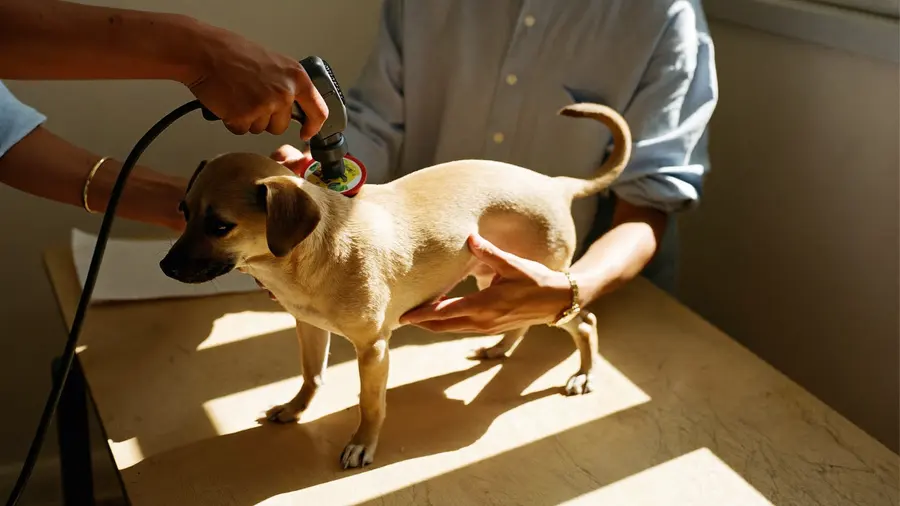
A chip a scanner cannot find is the same problem at a border as no chip at all. Ask for it to be scanned at every appointment after the first, and check that the number printed on each document matches the number the scanner shows.
The Vaccination Only Counts Forward
Two clocks attach to the vaccination itself. The first is age: the EU requires an animal to be at least 12 weeks old before its first vaccination. The second is the wait afterwards — at least 21 days before travelling under EU rules, phrased by Great Britain as 21 full days after the first vaccination.
12 weeks
minimum age for a first rabies vaccination under EU rules
21 days
minimum wait after that vaccination before EU travel
Neither figure is advice. They are the earliest date the animal may legally travel, counted from what a vet wrote on a certificate, and no amount of readiness moves them.
Where this bites later is the booster. A rabies vaccination is valid until its stated expiry, and letting it lapse by a single day means the next one is a primary vaccination again. The waiting period returns with it, and on some routes so does the blood test — which is where the calendar stops being measured in days.
The Blood Test Is Where the Months Appear
A rabies antibody titration is not required everywhere, and where it is required it turns a move into a project. Two versions bracket the range, and both are worth reading before assuming a departure date.
For an animal entering the EU from a country outside its listed set, the guidance is to wait 30 days after the primary vaccination has been completed before the sample is drawn, then wait 3 months from the date the blood sample was taken before travelling. Japan is longer: the result must be equal to or greater than 0.5 IU/ml, and dogs and cats are required to arrive in Japan after 180 days have passed from the date of blood sampling.
Read those dates carefully, because the clock does not start when the result arrives. It starts on the day the sample is taken, and it restarts entirely if the laboratory was not an approved one or the titre comes back under the threshold. Half a year is an ordinary answer on some routes. So the first question to ask is not what the animal needs, but what the earliest date is on which it could legally fly.
The Health Certificate Expires Faster than Anything Else
Every long wait above ends in a document with a very short life. An EU animal health certificate must be issued by an official State vet in the country of departure not more than 10 days before your pet arrives in the EU, after which it is valid for travel between EU countries for 6 months from this date or until the anti-rabies vaccination expires, whichever lapses first.
So the last link in the chain is also the tightest. Everything before it is measured in weeks and months; this one is measured in days, and it needs an appointment with an official vet, which is a scarcer thing than an appointment with a vet.
Treatments carry their own windows in the same way. Great Britain requires a dog's tapeworm treatment no less than 24 hours before (and no more than 5 days before) you arrive in Great Britain — narrow enough that one rerouted flight can miss it.
Cabin, Hold and Cargo Are Three Different Bookings
These are not three prices for one service. They are three contracts, made in three ways, and only one of them is attached to your own ticket.
IATA describes the split plainly: only small dogs and cats can go in the cabin; carriers that do not allow that will transport them as special baggage in a heated and ventilated hold; and an animal can instead be shipped as air freight, which is a cargo booking with its own paperwork.
| Flying as | Booked with | Collected |
|---|---|---|
| In the cabin | Your own ticket | Beside you |
| In the hold | The airline, separately | The baggage hall |
| As cargo | A freight booking | A freight terminal |
The difference that matters is who is holding the animal at each end. Cabin and hold travel on your journey and are handed back where you land. Cargo does not: it is consigned, cleared separately and released at a freight terminal, often to an agent you have to appoint in advance. That is a different day from the one most people picture.

Carriers cap how many animals fly on a given aircraft, so your own seat is the easy half. Get the animal confirmed on that exact flight first, then buy the ticket around it.
The Airline's Rules Are Stricter than the Country's
A country decides whether the animal may enter. The airline decides whether it may fly, and it is reliably the stricter of the two. A complete and correct file is not a right to board.
IATA's Live Animals Regulations set the container standard the carriers apply: the box has to let the animal turn about normally while standing, to stand and sit erect, and to lie in a natural position, and snub-nosed breeds require 10% larger container. On top of that sit each carrier's own layers — breed restrictions, temperature embargoes on hot and cold routes, a limit per aircraft. IATA's advice is to contact the airline you have selected to confirm that they accept your pet on the day and flight that you prefer, because some airlines restrict the number of animals on a flight.
None of that appears in a government's guidance, and none of it is visible while you are booking a seat.
Quarantine Is a Paperwork Outcome, not a Policy
Quarantine sounds like a medical measure. For a person moving with a healthy animal it is almost always an administrative one: what happens when the file does not match the creature in the box.
Japan says so inside the sentence. Animals which don't meet import requirements including certification deficiency will be subject to quarantine at a detention facility of Animal Quarantine Service for the necessary period (up to 180 days). Great Britain is blunter about the bill: a pet that does not meet the rules may be put into quarantine for up to 4 months or refused entry if you travelled by sea, and you're responsible for any fees or charges.
In both cases the animal is perfectly well. What failed was a date, a signature or a number.
It is also why landing day is a telephone day: a reference to quote, an inspection desk that is not in the arrivals hall, a handler to reach — all before there has been time to buy anything locally. A plan downloaded before you fly takes that off the list, which is the practical argument for an eSIM on the day you move.
Common Questions
Can My Pet Fly in the Cabin on a Long Route?
Sometimes, and it is decided twice. IATA's position is that only small dogs and cats travel in the cabin at all, and each carrier then applies its own weight, carrier-size and route limits on top. Several countries additionally refuse cabin arrival for animals under import control, requiring the hold or a cargo consignment — a rule of the destination, not of the airline.
Is an EU Pet Passport Enough Everywhere?
No. The passport is the document for travel between EU countries and is valid for life while the vaccinations in it stay current. Bringing an animal into the EU from outside it is a separate procedure with the ten-day animal health certificate, and a country outside the EU will ask for its own paperwork entirely.
What if the Vaccination Lapses Halfway Through?
The next one is treated as a primary vaccination rather than a booster, so the waiting period starts again from that date. On any route that also asks for a titration, expect the blood test to be repeated too — which is how a lapsed booster turns into months rather than weeks.
Count Backwards from the Flight

-
Start at the destination's own authority
Read the importing country's veterinary or agriculture ministry before anything else. Every date in your plan is theirs, and forums quote the version from two rule changes ago.
-
Chip first, and have it read back
Nothing after it is valid without it, and nothing done before it counts at all.
-
Vaccinate, then diarise the waiting period
The earliest legal travel date is the vaccination date plus the wait. Write that date down; it governs everything you book next.
-
Book the blood test if your route needs one
Then count from the sampling date, in months. This is the step that decides whether you are moving this season or the next.
-
Confirm the animal on the flight before you buy the seat
Ask about the breed, the crate dimensions and how many animals the carrier will take that day. Then book yourself onto the same aircraft.
-
Leave the certificate to last, and protect its window
Book the official vet as soon as the flight is firm, and treat any change of date as a change of document rather than a change of plan.
Done in that order a pet move is long, dull and entirely uneventful. Done in any other, it is short, expensive, and it ends with somebody else holding your animal.
Be Reachable on the Day You Land Pick the country you are moving to and set data up before you fly, so the calls that matter on arrival are not the ones you cannot make.