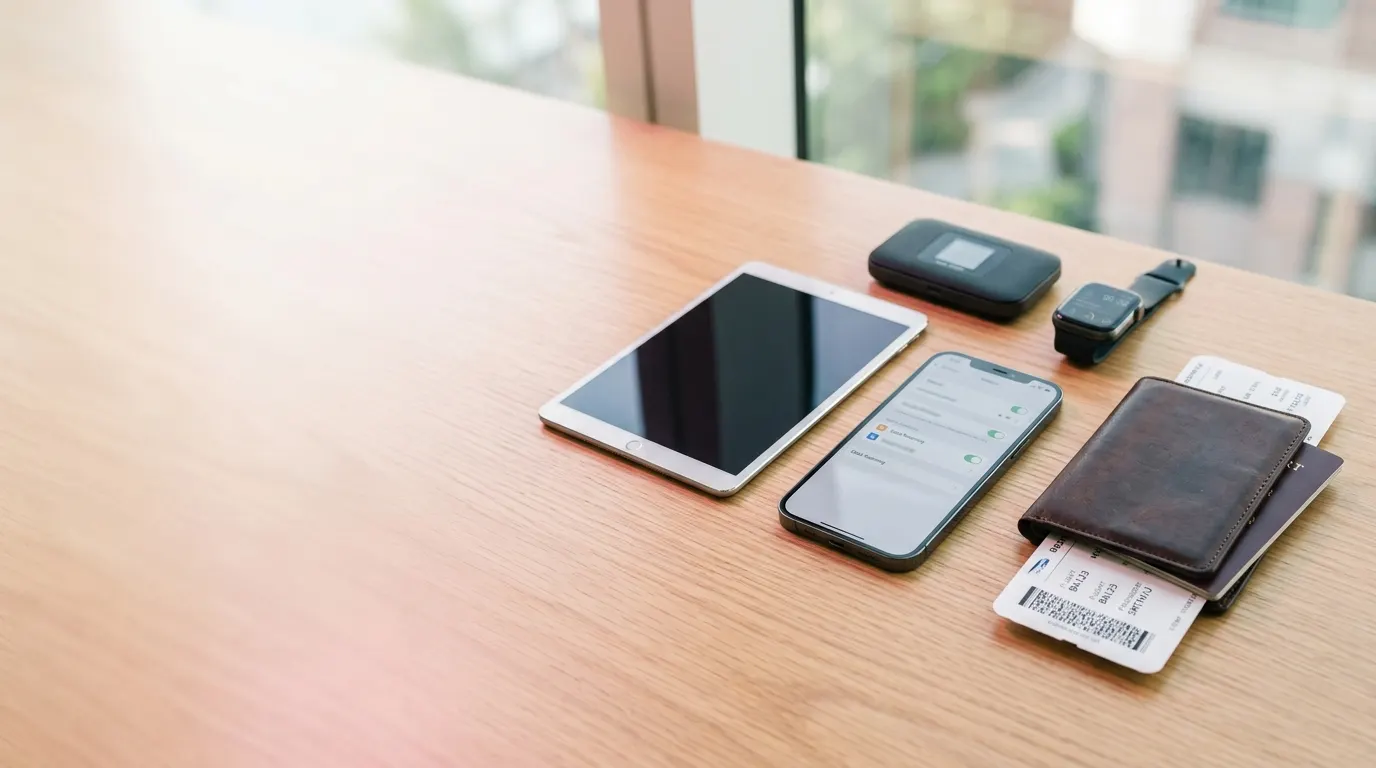
eSIM Compatible Devices
Run a Free eSIM Compatibility Check on the Device in Your Hand — It Detects the Model Automatically and Answers in Seconds. Or Browse All 293 eSIM Compatible Phones, Tablets, Laptops and Hotspots
The Short Answer
Almost Every Flagship Phone Sold since 2018 Supports eSIM. That Means Every iPhone from the XR Onwards, Every Google Pixel from the Pixel 3, and Samsung Galaxy Phones from the S20 Generation, along with the Z Fold and Z Flip Range. Mid-Range and Budget Lines — Redmi, Poco, Moto G, OnePlus Nord — Usually Do Not, Whatever They Cost
The Rule That Catches People Out Is Not the Model — It Is the Market. The Very Same Phone Can Ship with eSIM in Europe and without It in Mainland China, Hong Kong, Taiwan or South Korea, under an Identical Name. The Only Test That Is Always Right Is the Hardware Itself: Dial *#06# and Look for a 32-Digit EID. If There Is One, Your Phone Has an eSIM Chip
Check Your Device Automatically
Open This Page on the Device You Plan to Travel with and Tap the Button. It Is More Reliable Than Searching for Your Model Name, Because It Identifies the Exact Variant You Are Holding Rather Than the One the Marketing Name Describes

Prefer to Look It up Yourself? Every Supported Phone Is Listed below
How to Check It Yourself
On an iPhone or iPad
Open Settings, Tap Cellular or Mobile Data, and Look for Add eSIM or Add Cellular Plan. If the Option Is There, Your Phone Supports eSIM
On Android
Open Settings and Find the SIM or Network Section — Its Exact Name Differs from One Manufacturer to the Next. If an Add eSIM or Add Mobile Plan Option Is There, Your Device Supports eSIM
Dial *#06# and Look for an EID
Dial *#06# as If You Were Calling It and a Panel of Numbers Appears. Look for the Row Labelled EID — If It Is There, Your Device Has the eSIM Chip. No EID Row Means No eSIM, Whatever the Model Name Says
On a Smartwatch
Only the LTE or Cellular Version of a Watch Has a Modem. Open the Watch App on the Paired Phone and Look for a Mobile or Cellular Section — If There Is None, You Are Holding the Wi-Fi Model
Which Phones Take a Travel eSIM
Grouped by Manufacturer, Newest First. Each Brand Opens with the Rule for Its Whole Range — Which Series Have eSIM, Which Never Got It, and Where the Exceptions Hide, Because a Model Name on Its Own Rarely Answers That. Start Typing to Filter, or Use the Automatic Check above and Skip the List Entirely
Every iPhone from the XR and XS Generation Onwards Supports eSIM — That Is 2018 and Later. Two Exceptions Matter When Buying Abroad. Units Sold in Mainland China Have No eSIM at All and Carry Two Physical SIM Trays Instead. Every US Model from the iPhone 14 Onwards Has No SIM Tray, so eSIM Is the Only Option There. From the iPhone 13 Onwards You Can Keep Two eSIM Profiles Active at the Same Time
The Galaxy S20 Generation Is Where eSIM Starts, and It Runs through Every S-series Flagship since, Plus the Z Fold and Z Flip Foldables and the Note 20. The A Series Is Split down the Middle: the A35 and Above Have eSIM, the Older A34 and A53 and the Budget A1x, A2x and M Models Do Not. The Bigger Catch Is Where the Phone Was Bought — Galaxy Units Sold in Hong Kong, Mainland China, Taiwan and Most of South Korea Ship without eSIM under Exactly the Same Model Name
Every Pixel from the Pixel 3 Onwards Supports eSIM, and Dual eSIM — Two Profiles Active at Once — Arrived with the Pixel 7. The Pixel 2 Has the Hardware but Only Ever Accepted a Google Fi Profile, so It Cannot Take a Travel Plan. Pixels Bought in Hong Kong Are the Exception and Have None, and US Pixel 10 Models Have Dropped the SIM Tray Entirely
The Numbered Series and Its Pro, Ultra, T and Lite Variants Carry eSIM. Redmi and Poco Phones Almost Never Do, Which Catches Out Anyone Who Bought a Top-Spec Redmi Note Expecting the Same. China-Only Models Such as the 12S Ultra Are the Other Gap
The Numbered Flagships from the OnePlus 11 Onwards Support eSIM, along with the Open Foldable. The Nord Line Does Not, and the R Variants Are Split — the 13R Has eSIM, the 11R and 12R Do Not. Regional Model Codes Differ Enough That Two Phones Sold under the Same OnePlus Name Can Be Different Devices
The Razr Foldables and the Edge Flagships Support eSIM. The Moto G Range — by Far the Most Widely Sold Motorola — Does Not
Only the Find X and Find N Flagships Have eSIM. The Reno and A Lines Do Not, and What Is on Sale Differs from One Country to the Next
Only a Short Window of Huawei Flagships Shipped with eSIM — the P40, the P40 Pro and the Mate 40 Pro. The P40 Pro+ Catches People Out: the Top Model of the Range, and the One without eSIM
The Magic Flagships and the Magic V Foldables Carry eSIM. The Numbered Mid-Range Mostly Does Not
Only the X-series Flagships Have eSIM. vivo Varies by Market More Than Almost Any Other Brand, so the Same Model Can Ship with eSIM in One Country and without It in the Next
The Xperia 1 and Xperia 5 Flagships Support eSIM from the IV Generation Onwards, and the Mid-Range Xperia 10 from the IV. The Japan-Only Xperia 10 III Lite Is the One Earlier Exception — the Standard Xperia 10 III Has None
Regional Variants and Carrier Locks
The Same Model Can Ship with eSIM in One Country and without It in Another, under an Identical Name. This Is the Single Most Common Reason a Phone on This List Still Will Not Take a Plan
Mainland China, Hong Kong and Macau
iPhones Sold in Mainland China Have No eSIM at All — They Were Built with Two Physical SIM Slots in Its Place. Hong Kong and Macau Units Are the Same. Galaxy and Pixel Phones Bought in Hong Kong, Mainland China or Taiwan Also Ship without eSIM, Even Though the Model Name Is Identical to the Global One
United States Models
Every iPhone from the 14 Onwards Sold in the United States Has No SIM Tray and Runs on eSIM Only. That Is Good News for Travel: There Is Nothing to Swap. The Catch Is the Carrier Lock — a Device Still Tied to the Carrier That Sold It Will Refuse a Second eSIM until It Is Unlocked
Japan, Korea and Southeast Asia
Most Galaxy Phones Bought in South Korea Have No eSIM, Apart from Recent Flagships. Some Pixel Models Sold in Japan, Australia, Taiwan and Southeast Asia Are Also Built without It. If a Phone Was Bought Abroad, Check the EID with *#06# Rather Than Trusting the Model Name
Models We Know Ship without eSIM in Some Markets
eSIM-Only Devices (No SIM Tray)
These Have No SIM Tray at All. Abroad That Is an Advantage — There Is Nothing to Open and Nothing to Lose — but It Also Means a Travel Plan Is the Only Way to Get a Local Rate
Devices That Do Not Support eSIM
If Your Phone Is on This List, No Setting, Update or Accessory Will Change the Answer — the Hardware for It Was Never Fitted. These Are the Models We Are Asked about Most: Phones from Just before eSIM Became Standard, and Mid-Range Ranges That Never Got It
That Does Not End the Trip. Anything Else You Are Carrying Can Take the Plan Instead — a Tablet, a Laptop with a Built-in Modem, a Pocket Hotspot — and Share It with the Phone over Wi-Fi. A Hotspot Covers Everyone Travelling with You at Once. Failing All of That, a Local SIM Card Bought on Arrival Still Works
How Many eSIM Profiles Can Your Device Hold?
Plans You Have Already Bought Can Simply Sit There. They Cost Nothing and Use No Data until You Switch One on, so Last Year Japan and Next Month Europe Wait Side by Side and You Pick the Right One after Landing. What Differs between Devices Is How Many You Can Keep and How Many Can Run at the Same Time. An iPhone Keeps Eight or More and Runs Two at Once from the iPhone 13 — Which Is How Your Home Number Takes Calls While the Travel Plan Carries the Data. The Figures below Come from the Manufacturers, and Where One Publishes Nothing We Print a Question Mark Rather Than a Guess
| Devices | Profiles Stored | Active at Once | |
|---|---|---|---|
| Apple | AppleiPhone Air – iPhone 17 | 8 | 2 |
| Apple | AppleWatch Ultra 2 – Watch SE | 8 | 1 |
| Apple | AppleiPad Pro 11-inch (M1) – iPad (11th generation) | 8 | 1 |
| Apple | AppleiPhone XS Max – iPhone 12 | 8 | 1 |
| GooglePixel 7a – Pixel 10 | ? | 2 |
Beyond Phones
Tablets, Laptops and Travel Hotspots Take an Ordinary Travel eSIM. Smartwatches Do Not, and It Is Worth Knowing Why before You Buy One
Watches
41 modelsThese Watches All Have the Hardware. The eSIM Inside Them Belongs to the Carrier Running the Paired Phone Plan, and It Will Not Take a Profile from Anywhere Else
Mobile Routers
6 modelsTablets
27 modelsOnly the Cellular Version of a Tablet Has a Modem. A Wi-Fi-Only Model of the Same Tablet Cannot Use an eSIM at All
Laptops
15 modelsWhat about Cars and Trackers?
They Come Online Through a Connection Their Maker Set up and Only Their Maker Can Change — There Is No Screen Anywhere to Add a Plan To. Buy the Travel Plan for What You Actually Carry: the Phone, Tablet, Laptop or Hotspot
Frequently Asked Questions
What People Ask Us before Buying Their First eSIM, Answered Straight
Dial *#06#. If a 32-Digit EID Appears Next to the IMEI, the Phone Has an eSIM Chip. You Can Also Open the SIM Settings and Look for an Add eSIM Option, or Use the Automatic Check on This Page, Which Identifies the Device You Are on and Answers in Seconds
No. The eSIM Is Soldered to the Board at the Factory, so No Software Update, Setting or Adapter Adds It Afterwards. In Practice the Line Falls around 2018: Phones Designed before eSIM Became Standard Have No EID and Never Will. A Pocket Hotspot Is the Usual Way Around It
Almost Always a Carrier Lock. A Phone Bought on a Contract Stays Tied to the Operator That Sold It and Refuses Every eSIM but Theirs. Call Them and Ask for the Phone to Be Unlocked — Once the Contract Is Paid off That Is Usually Free, and the eSIM Installs Straight Afterwards
Yes — More Than Any Other Factor. Manufacturers Build Market-Specific Variants, and the eSIM Is One of the Things That Changes between Them. Mainland China, Hong Kong, Macau, Taiwan and South Korea Are the Markets Where a Phone Most Often Ships without It, under the Same Model Name Sold Everywhere Else
Every iPhone from the XR, XS and XS Max Onwards — 2018 and Later — Including the SE from Its Second Generation. The Only iPhones Left Out Are the Chinese Market Units, Which Have No eSIM Hardware at All. US Models from the iPhone 14 On Have No Tray at All
The Galaxy S20 and Every S-series Flagship since, the Z Fold and Z Flip Foldables, the Note 20, and the A Series from the A35 Up. The M Series Has None. The Catch Is Where the Phone Was Bought: a Galaxy from Hong Kong, Mainland China, Taiwan or South Korea Can Carry the Same Name and No eSIM
An eSIM-Only Phone Has No SIM Tray at All: Every iPhone 14 and Later Sold in the United States, and the iPhone Air in Every Market. Abroad That Is an Advantage Rather Than a Limit — No Pin to Find, No Home SIM to Lose in a Hotel Room, and a Travel Plan Installs in about Two Minutes
An iPhone Stores Eight or More and Runs Two at Once from the iPhone 13 Onwards. Most Android Phones Store Several and Run One at a Time, Alongside a Physical SIM. Storing Costs Nothing and Uses No Data, so an Unused Plan from Last Year Can Sit There until the Next Trip
Yes. That Is the Usual Setup: The Home SIM Stays in for Calls and Texts, and the Travel eSIM Carries the Data. Turn off Data Roaming on the Home Line so It Cannot Quietly Bill You
On the Cellular Version, Yes. Wi-Fi-Only Tablets Have No Modem, so There Is Nothing for a Plan to Connect to, No Matter Which Model It Is
No, on Any Brand — Apple Watch, Galaxy Watch and Pixel Watch Alike. A Cellular Watch Gets Its eSIM from the Carrier behind the Paired Phone Plan and Accepts Nothing Else. Pair It over Bluetooth with a Phone Carrying the Travel Plan and Everything but Standalone Data Keeps Working
Yes, If It Has a Built-in Modem. Windows Laptops with a WWAN Module Install a Profile the Same Way a Phone Does, and Most Modern Travel Hotspots Accept One Too
Not Necessarily — the List Covers What We Can Confirm, and New Models Appear Constantly. To Settle It Yourself, Open the Keypad You Make Calls From and Type *#06#. A Panel of Numbers Appears: If One of Them Is Labelled EID, the Chip Is There and a Travel eSIM Will Work
Yes, Briefly — the Install Itself Needs a Connection, and Any Wi-Fi Will Do. Most People Do It at Home before They Fly, but Airport or Hotel Wi-Fi Works Just as Well. Once Installed, It Activates on Arrival without Any Further Connection
Your Device Supports eSIM — What Now?
Nothing Is Shipped and Nothing Has to Be Collected. A Travel eSIM Is a Download, so You Can Buy It on the Way to the Airport and Have It Ready before You Board
Pick Where You Are Going
Choose a Country or a Regional Plan and the Amount of Data You Expect to Use. Nothing Activates yet, so Buying a Week before You Fly Is Fine
Install before You Fly
Install It over Your Home Wi-Fi — One Tap, or a QR Code If You Prefer. Do It before You Travel, Because Installing Needs a Connection and Arrivals Halls Rarely Offer a Good One
Land and Switch It On
The Plan Starts When You First Connect Abroad, Not When You Buy. Your Home SIM Stays in the Phone for Calls and Texts. Turn off Its Data Roaming and the Travel eSIM Carries Everything Else
Plans, Guides and Help
Buy a Travel eSIM for Any Compatible Device
Pick the Country or Region You Are Travelling to, Install the Plan over Wi-Fi before You Fly, and Land with Data Already Working. Prepaid 4G and 5G for iPhone, Samsung Galaxy, Google Pixel and Every Other eSIM Compatible Device — You Pay Once, There Is No Contract, and Nothing Turns up on Your Bill after the Trip
- No Hidden Fees
- Instant Activation
- 24/7 Live Chat Support
- Keep Your Own Number
- Not Tied to One Network