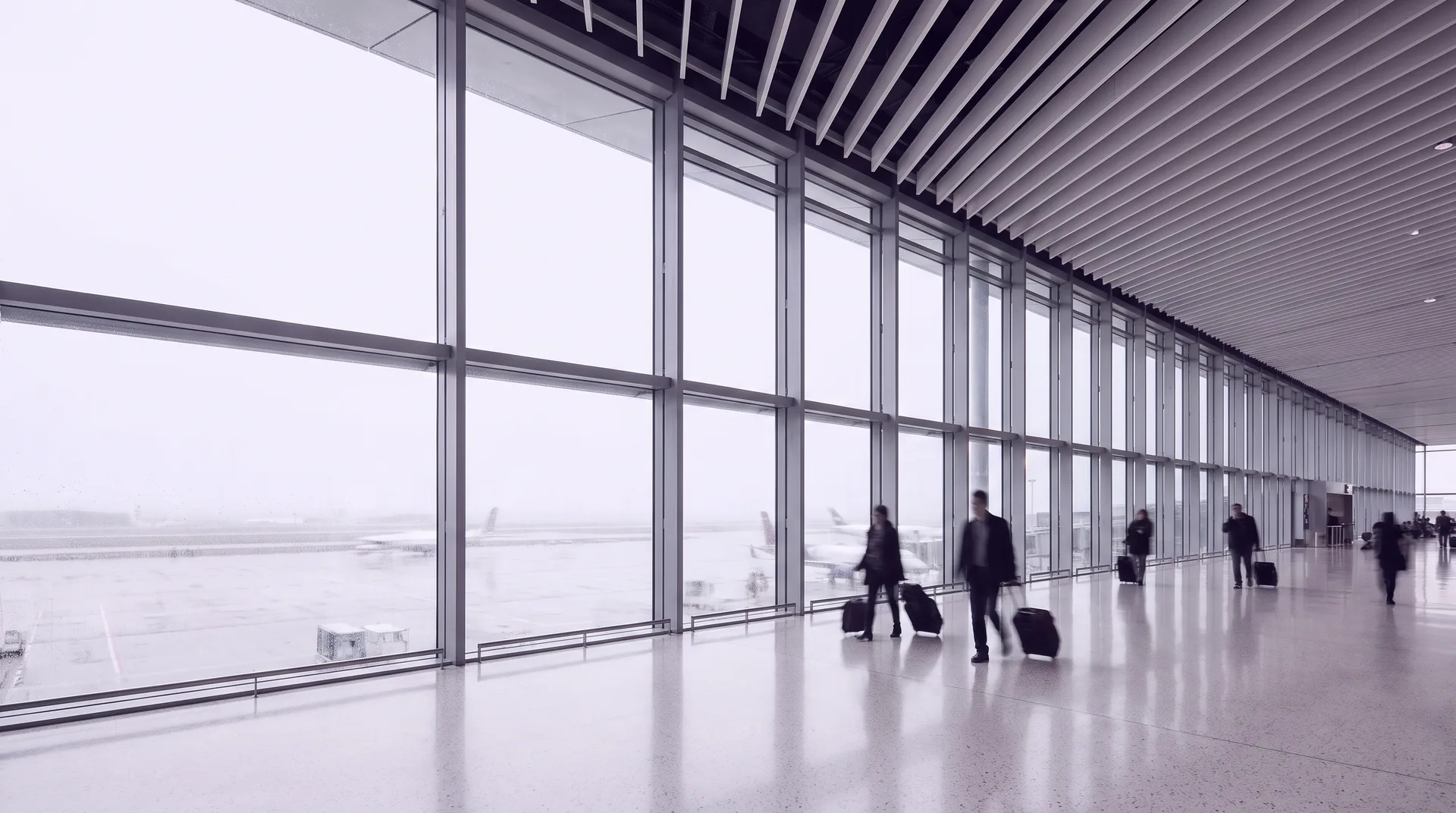
Tokyo Haneda International Airport
Tokyo Haneda Airport (HND) Sits in Ota on Tokyo Bay, 15 km South of Tokyo Station. Its Three Passenger Terminals Handled 85.9 Million Travellers in 2024, Third Busiest in the World
| IATA / ICAO | HND / RJTT |
|---|---|
| Serves | Tokyo, Japan |
| Coordinates | 35.5497° N, 139.7870° E |
| Elevation | 35 ft |
| Number of Terminals | 3 Passenger Terminals |
| Airport Opening Hours | T3 24h, T1-T2 5:00-24:00 |
| Recommended Arrival Time | 2h Domestic, 3h International |
| Official Website | tokyo-haneda.com |
Tokyo Haneda International Airport at a Glance
Terminals 1 and 2 Stand Side by Side and Carry Domestic Flights, Though Terminal 2 Also Has an International Wing; Terminal 3 Is the Main International Building and the Only One Open All Night. A Free Bus Links the Three Every 4 Minutes by Day, and the Keikyu Airport Line and the Tokyo Monorail Both Call at Every Terminal
Is There Free WiFi at Tokyo Haneda International Airport?
Yes. HANEDA-FREE-WIFI Covers All Three Terminals with No Password and No Charge: Pick the Network, Open a Browser and Follow the On-Screen Steps. The Airport Notes It Does Not Cover Most Shops, the Lounges Excepted, and Some Corners Connect Poorly
Where Can I Buy a SIM Card at Tokyo Haneda International Airport?
Airport WiFi
| Connection Speed | Slow / Unstable |
|---|---|
| Cost | Free, Often Time-Limited |
| Activation Time | Login / Ads / Forms |
| Documents Needed | Yes (eMail / ID / Login) |
| Coverage | Only inside Airport |
| Security | Public Network (Risk) |
| Can Be Set Up before You Fly | No |
| Local Phone Number | No |
| Can Pay in Cash | Not Applicable |
| Where You Get It | At the Terminal, Once You Land |
Local SIM Card
| Connection Speed | Fast 4G/5G Speeds |
|---|---|
| Cost | Counter Price, Varies by Desk |
| Activation Time | Queue and Paperwork at the Desk |
| Documents Needed | Passport Often Required |
| Coverage | Works across Entire Country |
| Security | Private Secure Connection |
| Can Be Set Up before You Fly | No |
| Local Phone Number | Yes |
| Can Pay in Cash | Yes |
| Where You Get It | A Desk or Kiosk in the Terminal |
Roaming Options
| Connection Speed | Fast, Depends on Your Plan |
|---|---|
| Cost | Your Operator Rate, Can Be High |
| Activation Time | Instant Connection |
| Documents Needed | None |
| Coverage | Works across Entire Country |
| Security | Private Secure Connection |
| Can Be Set Up before You Fly | Yes |
| Local Phone Number | Keeps Your Own Number |
| Can Pay in Cash | No |
| Where You Get It | Already Active on Your Phone |
travelData.shop eSIM
| Connection Speed | Fast 4G/5G Speeds |
|---|---|
| Cost | Free Trial, Then from 3.99 $ |
| Activation Time | Instant Connection |
| Documents Needed | None |
| Coverage | Works across Entire Country |
| Security | Private Secure Connection |
| Can Be Set Up before You Fly | Yes |
| Local Phone Number | On Selected Plans |
| Can Pay in Cash | No |
| Where You Get It | Online, before You Leave Home |
Why Use eSIM Instead of Tokyo Haneda International Airport WiFi?
Skip the Login Portals — Land, Tap Once, and You Are on a Fast Private Connection That Keeps Working Far beyond the Terminal
Instant Connection
Get Online the Moment You Land — No Searching for WiFi, No Waiting, No Login Screens
Works beyond the Airport
Stay Connected across the Entire Japan — From the Airport to Your Hotel, City Center, or Road Trip
No Public WiFi Risks
Avoid Slow, Unsecured Public Airport Networks & Stay on Your Own Private Mobile Connection Instead
Perfect for Travel Essentials
Use Maps, Book a Ride, Check-In to Your Hotel, or Message Instantly after Arrival
How to Get Internet at Tokyo Haneda International Airport
Get Connected Instantly after Landing — No Airport WiFi Needed
- 01
Choose Your DATA Plan
Pick the Best Option for Your Arrival at Tokyo Haneda International Airport
- 02
Install eSIM in One Tap
Activate Your eSIM Instantly with One Tap — QR Code Available as a Backup
- 03
Get Online Instantly
Start Using Internet Immediately at Tokyo Haneda International Airport
Best Way to Get Internet at Tokyo Haneda International Airport
Compare Free WiFi vs Mobile Data & Choose What Works Best for You
FAQs about Internet at Tokyo Haneda International Airport
Everything You Need to Know about Getting Online at Tokyo Haneda International Airport
Still Need Help?
Chat With Our Support Team 24/7 for Help With Compatibility, Installation, Activation, or Connection Issues
★★★★★ Travelers Around the World Rate Us 4.7/5 — 439860 eSIM Orders Delivered WorldWide
"I Used travelData.shop During My Trip to Japan and It Worked Perfectly From the Moment I Landed. Setup Took Less Than Two Minutes and the Data Speed Was Amazing!"
"Super Easy to Install and No Roaming Fees. I Stayed Connected Through My Entire Europe Trip Without Switching SIM Cards. Totally Worth It!"
"I Bought My Plan Online Before Traveling to Thailand. The QR Code Arrived Instantly, and the Connection Was Fast Everywhere I Went — Beaches, Cities, Even Remote Areas."
First Time at Tokyo Haneda International Airport? Here’s What You Should Know
Where Can I Park at Tokyo Haneda International Airport?
See Practical Airport Parking Options, Walking Time to Terminals, Typical Price Guidance, and Booking Tips before You Drive to the Airport
P1
- Typical Price
- ¥200 for 1 h, ¥2,800 Cap for the First 24 h
- Location
- 3-3-3 Hanedakuko, Ota, Tokyo; Nearest Terminal 1, 2,351 Spaces
- Best For
- Terminal 1 Departures and Short Waits
P2
- Typical Price
- ¥200 for 1 h, ¥2,800 Cap for the First 24 h
- Location
- 3-3-5 Hanedakuko, Ota, Tokyo; Nearest Terminal 1, 2,315 Spaces
- Best For
- Terminal 1 When P1 Is Full, and Booked Stays
P3
- Typical Price
- ¥200 for 1 h, ¥2,800 Cap for the First 24 h
- Location
- 3-4-4 Hanedakuko, Ota, Tokyo; Nearest Terminal 2, 2,449 Spaces
- Best For
- Terminal 2 Departures and Pickups
P4
- Typical Price
- ¥200 for 1 h, ¥2,800 Cap for the First 24 h
- Location
- 3-4-5 Hanedakuko, Ota, Tokyo; Nearest Terminal 2, 3,087 Spaces
- Best For
- Large Vehicles, Motorhomes and Garage Bays
P5
- Typical Price
- ¥100 for 1 h, ¥2,800 Cap for the First 24 h
- Location
- 2-6-5 Hanedakuko, Ota, Tokyo; Nearest Terminal 3, 2,910 Spaces
- Best For
- International Departures and Longer Trips
What Facilities Does Tokyo Haneda International Airport Have?
Lounges at Tokyo Haneda International Airport
Free with an Eligible Credit Card or Priority Pass and a Same-Day Boarding Pass, or ¥4,400 for Adults and ¥2,200 for Children
Priority Pass Members Holding the Card in Their Own Name, with a Boarding Pass for the Same Day
Free with an Eligible Credit Card and a Same-Day Boarding Pass, or ¥1,320 for Adults and ¥660 for Children Aged 4 to 12
Free with an Eligible Credit Card and a Same-Day Boarding Pass, or ¥1,500 for Adults and ¥750 for Children Aged 4 to 12
American Express Cardmembers; American Express Publishes the List of Cards That Qualify
Japan Airlines First Class Passengers, JMB Diamond and JGC Premier Members, and oneworld Emerald Members
Japan Airlines Premium Cabins, JMB Sapphire and JAL Global Club Members, and oneworld Sapphire Members
First Class Passengers on ANA and Star Alliance Carriers, Plus ANA Diamond Service Members, Each with One Guest
Business Class Passengers on ANA and Star Alliance Carriers, Star Alliance Gold Members and ANA Platinum Members
TIAT LOUNGE
SKY LOUNGE
SKY LOUNGE SOUTH
The Centurion Lounge
JAL First Class Lounge
JAL Sakura Lounge
ANA SUITE LOUNGE
ANA LOUNGE
POWER LOUNGE PREMIUM
POWER LOUNGE NORTH
POWER LOUNGE SOUTH
POWER LOUNGE CENTRAL
Lounges, Food, ATMs and Storage
Check Practical Terminal Services While Waiting, Arriving or Departing: Food, ATMs, Storage, Charging, Accessibility Support and More
Where Can I Sleep at Tokyo Haneda International Airport?
Find On-Airport and Nearby Hotel Options, How to Reach Them from Arrivals, Expected Nightly Rates, and Practical Booking Tips for Late Arrivals or Early Departures
The Royal Park Hotel Tokyo Haneda
- Terminal 3, 3F Departure Lobby
- Early International Departures
The Royal Park Hotel Tokyo Haneda Transit
- Terminal 3, 3F Airside Area
- Layovers without Clearing Immigration
Haneda Excel Hotel Tokyu
- Terminal 2, 2F Terminal Lobby North
- Early Domestic Departures from Terminal 2
First Cabin Haneda Terminal 1
- Terminal 1, 1F Arrival Lobby
- A Cabin Bed between Domestic Flights
How Do I Get from Tokyo Haneda International Airport to Tokyo?
Bus & Train at Tokyo Haneda International Airport
See Exact Route Options, Departure Points, Schedule Windows and Ticket Tips for Getting to the Center after Landing
Bus Connection
Airport Limousine Bus to Shinjuku
Airport Limousine Bus to Tokyo Station
Airport Limousine Bus to Shibuya
Airport Limousine Bus to Ikebukuro
Late-Night and Early-Morning Haneda Airport Access Bus
Train Connection
Keikyu Airport Line
Tokyo Monorail Haneda Airport Line
Taxi, Ride Apps and Car Rental
Compare the Main Door-To-Door Options after Landing, Including Official Taxi Pickup Points, Ride-Hailing Availability and On-Airport Rental Counters
Regular Taxi
- Official Operators
- Tokyo Hire-Taxi Association Members, Kanagawa Taxi Association Members
- Pickup Point
- 1F Arrival Lobby Ranks at Terminals 1 and 2; at Terminal 3 Follow the Taxi Signs from the 2F Access Hall Down to 1F
Ride Apps
GO
Uber
Car Rental
Toyota Rent a Car
- T1 1F Arrival Lobby, T2 1F Terminal Lobby South, T3 2F Rent-A-Car Counter
- 8:00-20:00
Nippon Rent-A-Car
- T1 1F Arrival Lobby, T2 1F Terminal Lobby North, T3 2F Rent-A-Car Counter
- 8:00-20:00
Nissan Rent a Car
- T1 1F Arrival Lobby, T2 1F Terminal Lobby North, T3 2F Rent-A-Car Counter
- 8:00-20:00
Orix Rent-A-Car
- T1 1F Arrival Lobby, T2 1F Terminal Lobby North, T3 2F Rent-A-Car Counter
- 8:00-20:00
Times Car Rental
- T1 1F Arrival Lobby, T2 1F Terminal Lobby South, T3 2F Rent-A-Car Counter
- 9:00-20:00
Hertz
- T3 2F Arrival Lobby, at the Shared Rent-A-Car Counter
- 8:00-20:00
National Car Rental
- T3 2F Arrival Lobby, at the Shared Rent-A-Car Counter
- 8:00-20:00
Frequently Asked Questions about Tokyo Haneda International Airport
Travel Tips & Essential Information for Japan
Japan Runs on Unwritten Rules That Almost Everyone Follows — Queue Here, Stay Quiet There, Leave Your Shoes at the Door. Trains Are Punctual to the Minute, Streets Are Safe after Dark, and the Arrival Paperwork Is Now a QR Code You Complete before You Fly
Official Languages: Japanese
Japanese Is the Working Language Everywhere. English Signage Is Reliable on the Rail Network, at Airports and around the Main Sights, and Larger Hotels and Department Stores Can Usually Help — but Spoken English Thins Out Fast in Small Restaurants and Away from the Big Cities. A Translation App Earns Its Place Here
Mobile Network: Coverage Is Excellent — 5G Reached 98.6 Percent of the Population by March 2026 and 4G Covers Effectively Everywhere People Live. Signal Still Drops in Mountain Valleys and on Remote Coastlines. Japan Switched Off Its Last 3G Network on 31 March 2026, so a Phone That Cannot Use 4G or 5G No Longer Connects at All
Roaming/SIM/eSIM: An eSIM Is the Simplest Option for a Recent Phone — Install It before You Fly and It Works on Landing, with No Shop Visit and No Japanese Address. A Local SIM Can Still Win on a Long Stay, or When You Want a Japanese Number for Restaurant Bookings, Though Most Visitor SIMs Are Data-Only. Roaming Is Easiest If Your Home Plan Already Covers Japan, and Expensive If Not. Pocket Wi-Fi Suits a Group Sharing One Device, but It Has to Be Collected, Charged and Returned
Japan Is No Longer a Cash-Only Country — Cashless Payment Reached 58 Percent of Consumer Spending in 2025, and Cards Work in Convenience Stores, Chains, Taxis and Hotels. Cash Still Matters at Shrines, Small Izakaya, Festival Stalls and Some Rural Buses. ATMs in 7-Eleven Stores and Post Offices Take Foreign Cards
Do Not Tip. Japan Has No Tipping Culture, and Staff May Follow You Out of the Shop to Return the Money You Left on the Table — Service Is Already in the Price. The Exceptions Are Narrow. High-End Restaurants and Ryokan Add a Service Charge, Usually about 10 Percent, and a Private Guide or a Ryokan Attendant Who Has Taken Personal Care of You May Accept a Small Cash Gift in an Envelope
Plug Type: Type A and Type B
Voltage: 100 V, 50/60 Hz
Adapter: Japan Runs on 100 V, the Lowest Mains Voltage Anywhere, at 50 Hz in the East Including Tokyo and 60 Hz in the West Including Osaka. Chargers Marked 100 to 240 V Are Fine. A 230 V Hairdryer or Travel Kettle Will Run Weakly or Not at All, and the Flat Two-Pin Sockets Mean Most Visitors Need an Adapter
Japan Is among the Safest Countries in the World for a Visitor — Violent Crime Is Rare, and a Dropped Wallet or Phone Usually Reaches the Nearest Police Box. The Real Hazards Are Natural — Earthquakes, Typhoons between Roughly July and October, and a Summer Heat That Now Regularly Reaches Dangerous Levels in the Cities
- Dial 110 for the Police and 119 for Fire or an Ambulance, Free from Any Phone
- The Japan Visitor Hotline on 050-3816-2787 Answers in English around the Clock
- Carry Your Passport, Because a Foreign Visitor Is Required by Law to Show It on Request
- Turn on Earthquake and Weather Alerts, and Read the Evacuation Notice in Your Hotel Room
- Typhoon Season Runs from Roughly July to October and Can Stop Trains and Flights for a Day
- Summer Heat and Humidity Are Genuinely Dangerous, so Drink Often and Rest Indoors at Midday
- Check the Last Train Time in Advance, Because Most Services Stop around Midnight
- Hand Anything You Find to a Police Box, and Ask at One If You Lose Something Yourself
Do
- Carry a Few Thousand Yen in Cash for Shrines and Small Restaurants
- Reserve Shinkansen Seats and Popular Restaurants in Advance
- Put Your Money on the Small Counter Tray Rather than into the Cashier's Hand
- Learn Konnichiwa, Arigatou and Sumimasen
- Sort Your Rubbish into the Bins a Convenience Store Provides
- Check Whether a Restaurant Takes Orders at a Ticket Machine by the Door
Avoid
- Do Not Tip, and Do Not Leave Change on the Table
- Do Not Eat or Drink on the Move in a Crowded Place
- Do Not Put Your Small Towel into the Bath Water
- Do Not Talk on the Phone or Play Audio in a Train Carriage
- Do Not Point a Camera at Geisha, Private Homes or Strangers
- Do Not Smoke While Walking, and Use the Marked Smoking Rooms
Local Cultural Tips
- Escalators Are a Local Matter — Tokyo Stands Left, Osaka Stands Right, Saitama and Nagoya Ask Everyone to Stand Still
- Tax-Free Shopping Changes on 1 November 2026, so You Pay the Tax and Claim It Back before Departure
- Consumption Tax Is 10 Percent, or 8 Percent on Food and Drink You Take Away
- Fill in Visit Japan Web before You Fly and Clear Immigration and Customs from One QR Code
- Public Bins Are Rare, so Carry Your Rubbish to the Nearest Convenience Store
- An IC Card Such as Suica, PASMO or ICOCA Works on Trains, Buses and in Convenience Stores
- Suitcases Bigger than 160cm in Total Need a Reserved Space on the Tokaido, Sanyo and Kyushu Shinkansen
- Keep Your Voice Down in Trains, Lifts and Restaurants
- Remove Your Shoes at a Raised Entrance, in Homes, Ryokan and Many Temples
- Wash and Rinse Thoroughly before You Get into an Onsen or a Sento Bath
- Never Stand Chopsticks Upright in Rice or Pass Food from Chopstick to Chopstick
- Offer and Receive Business Cards, Money and Change with Both Hands
- Line Up behind the Platform Markings and Wait for the Carriage to Empty
- Bow Lightly When Greeting, Though a Nod and a Polite Word Are Enough for a Visitor
Get Online without Tokyo Haneda International Airport WiFi. Activate Your Free eSIM Trial When You Land
Get a Free eSIM Trial for Japan When You Land at Tokyo Haneda International Airport, Then Continue with 1GB or Unlimited Data for Maps, Taxi Apps & Travel Essentials