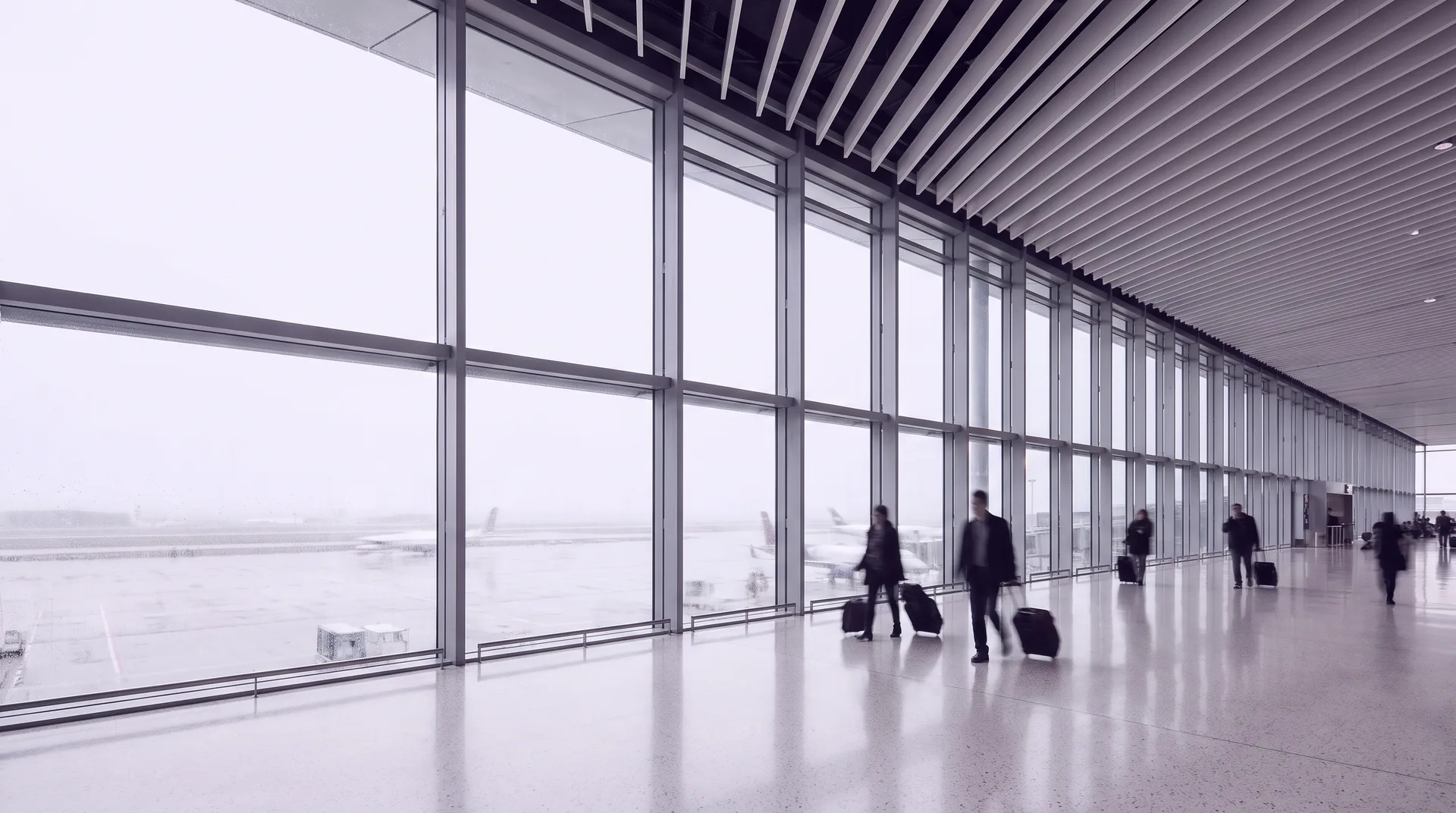
Seoul Incheon International Airport
Incheon International Airport (ICN) Is South Korea’s Main Gateway, Built on Reclaimed Land 48 km West of Seoul and Joined to the City Centre by a Non-Stop Airport Train That Takes 43 min
| IATA / ICAO | ICN / RKSI |
|---|---|
| Serves | Seoul, South Korea |
| Coordinates | 37.4691° N, 126.4510° E |
| Elevation | 23 ft |
| Number of Terminals | 2 Terminals and 1 Concourse |
| Airport Opening Hours | Terminals Open 24/7 |
| Recommended Arrival Time | At the Gate 30-40 min Early |
| Official Website | airport.kr |
Seoul Incheon International Airport at a Glance
The Airport Works as Three Buildings. Terminal 1 Holds Gates 1 to 50, the Midfield Concourse Gates 101 to 132, and Terminal 2 Gates 208 to 290, so a Boarding Pass Names the Building. Airside, a Shuttle Train Runs from Terminal 2 through the Concourse to Terminal 1 Every 5 min and Cannot Be Ridden Back
Is There Free WiFi at Seoul Incheon International Airport?
Incheon Airport Carries Free Courtesy Wi-Fi across Both Passenger Terminals and the Concourse. The Three Korean Mobile Networks Staff Roaming Counters in the Departure Halls from 06:00, and Two Stay Open around the Clock beside Arrivals at Terminal 1
Where Can I Buy a SIM Card at Seoul Incheon International Airport?
Airport WiFi
| Connection Speed | Slow / Unstable |
|---|---|
| Cost | Free, Often Time-Limited |
| Activation Time | Login / Ads / Forms |
| Documents Needed | Yes (eMail / ID / Login) |
| Coverage | Only inside Airport |
| Security | Public Network (Risk) |
| Can Be Set Up before You Fly | No |
| Local Phone Number | No |
| Can Pay in Cash | Not Applicable |
| Where You Get It | At the Terminal, Once You Land |
Local SIM Card
| Connection Speed | Fast 4G/5G Speeds |
|---|---|
| Cost | Counter Price, Varies by Desk |
| Activation Time | Queue and Paperwork at the Desk |
| Documents Needed | Passport Often Required |
| Coverage | Works across Entire Country |
| Security | Private Secure Connection |
| Can Be Set Up before You Fly | No |
| Local Phone Number | Yes |
| Can Pay in Cash | Yes |
| Where You Get It | A Desk or Kiosk in the Terminal |
Roaming Options
| Connection Speed | Fast, Depends on Your Plan |
|---|---|
| Cost | Your Operator Rate, Can Be High |
| Activation Time | Instant Connection |
| Documents Needed | None |
| Coverage | Works across Entire Country |
| Security | Private Secure Connection |
| Can Be Set Up before You Fly | Yes |
| Local Phone Number | Keeps Your Own Number |
| Can Pay in Cash | No |
| Where You Get It | Already Active on Your Phone |
travelData.shop eSIM
| Connection Speed | Fast 4G/5G Speeds |
|---|---|
| Cost | Free Trial, Then from 1.99 $ |
| Activation Time | Instant Connection |
| Documents Needed | None |
| Coverage | Works across Entire Country |
| Security | Private Secure Connection |
| Can Be Set Up before You Fly | Yes |
| Local Phone Number | On Selected Plans |
| Can Pay in Cash | No |
| Where You Get It | Online, before You Leave Home |
Why Use eSIM Instead of Seoul Incheon International Airport WiFi?
Skip the Login Portals — Land, Tap Once, and You Are on a Fast Private Connection That Keeps Working Far beyond the Terminal
Instant Connection
Get Online the Moment You Land — No Searching for WiFi, No Waiting, No Login Screens
Works beyond the Airport
Stay Connected across the Entire South Korea — From the Airport to Your Hotel, City Center, or Road Trip
No Public WiFi Risks
Avoid Slow, Unsecured Public Airport Networks & Stay on Your Own Private Mobile Connection Instead
Perfect for Travel Essentials
Use Maps, Book a Ride, Check-In to Your Hotel, or Message Instantly after Arrival
How to Get Internet at Seoul Incheon International Airport
Get Connected Instantly after Landing — No Airport WiFi Needed
- 01
Choose Your DATA Plan
Pick the Best Option for Your Arrival at Seoul Incheon International Airport
- 02
Install eSIM in One Tap
Activate Your eSIM Instantly with One Tap — QR Code Available as a Backup
- 03
Get Online Instantly
Start Using Internet Immediately at Seoul Incheon International Airport
Best Way to Get Internet at Seoul Incheon International Airport
Compare Free WiFi vs Mobile Data & Choose What Works Best for You
FAQs about Internet at Seoul Incheon International Airport
Everything You Need to Know about Getting Online at Seoul Incheon International Airport
Still Need Help?
Chat With Our Support Team 24/7 for Help With Compatibility, Installation, Activation, or Connection Issues
★★★★★ Travelers Around the World Rate Us 4.7/5 — 439859 eSIM Orders Delivered WorldWide
"I Used travelData.shop During My Trip to Japan and It Worked Perfectly From the Moment I Landed. Setup Took Less Than Two Minutes and the Data Speed Was Amazing!"
"Super Easy to Install and No Roaming Fees. I Stayed Connected Through My Entire Europe Trip Without Switching SIM Cards. Totally Worth It!"
"I Bought My Plan Online Before Traveling to Thailand. The QR Code Arrived Instantly, and the Connection Was Fast Everywhere I Went — Beaches, Cities, Even Remote Areas."
First Time at Seoul Incheon International Airport? Here’s What You Should Know
Where Can I Park at Seoul Incheon International Airport?
See Practical Airport Parking Options, Walking Time to Terminals, Typical Price Guidance, and Booking Tips before You Drive to the Airport
Short-Term Parking Lot
- Typical Price
- KRW 2,400 an Hour, 24,000 a Day
- Location
- Decks Facing Each Terminal, on Levels 1F Down to B3 at Terminal 1
- Best For
- Drop-Offs and Stays under a Day
Long-Term Parking Lot
- Typical Price
- KRW 1,000 an Hour, 9,000 a Day
- Location
- Set Back from Both Terminals; the Terminal 2 Shuttle Runs around the Clock
- Best For
- Any Stay of More than One Day
Reserved Parking Lot
- Typical Price
- KRW 1,000 an Hour, 9,000 a Day
- Location
- A Booked Bay Held for the Arrival Time Given, at the Long-Term Rate
- Best For
- Peak Weeks, When the Decks Fill
Valet Parking
- Typical Price
- KRW 20,000, or 10,000 Reduced
- Location
- Hand-Over at Terminal 1 Short-Term Parking, B1 Level, Zone A
- Best For
- Leaving the Car and Walking Straight In
Cargo Terminal Parking Lot
- Typical Price
- KRW 10,000 a Day for a Small Vehicle
- Location
- In the Cargo Area, Away from the Passenger Buildings
- Best For
- Coaches and Charter Groups
What Facilities Does Seoul Incheon International Airport Have?
Lounges at Seoul Incheon International Airport
Listed in the Priority Pass Network at Incheon Airport
Asiana Airlines Premium Cabins, and Listed in the Priority Pass Network
Premium Cabins and Elite Tiers on oneworld Member Airlines
Korean Air Prestige Class and the Airline’s Own Frequent Flyers
Korean Air First Class
SKY HUB Lounge (East)
SKY HUB Lounge (West)
Matina Lounge (East)
Asiana Business Lounge (West)
Oneworld Lounge
Korean Air Prestige Lounge (West)
Korean Air First Class Lounge
SKY HUB Lounge (West), Terminal 2
Lounges, Food, ATMs and Storage
Check Practical Terminal Services While Waiting, Arriving or Departing: Food, ATMs, Storage, Charging, Accessibility Support and More
Where Can I Sleep at Seoul Incheon International Airport?
Find On-Airport and Nearby Hotel Options, How to Reach Them from Arrivals, Expected Nightly Rates, and Practical Booking Tips for Late Arrivals or Early Departures
Capsule Hotel Darakhyu, Terminal 1
- In the Terminal 1 Transportation Centre, before Security
- An Early Flight without Leaving
Capsule Hotel Darakhyu, Terminal 2
- Beside the Terminal 2 Bus Ticket Counter, before Security
- Korean Air and Delta Passengers
Transit Hotel, Terminal 1
- Fourth Floor near Gate 11, inside the Duty-Free Zone
- A Long Connection between Two Flights
Transit Hotel, Terminal 2
- Fourth Floor across from Gate 252, inside the Duty-Free Zone
- A Long Connection between Two Flights
How Do I Get from Seoul Incheon International Airport to Seoul?
Bus & Train at Seoul Incheon International Airport
See Exact Route Options, Departure Points, Schedule Windows and Ticket Tips for Getting to the Center after Landing
Bus Connection
Airport Limousine 6001 to Seoul Station, Myeongdong and Dongdaemun
Airport Limousine 6015 to Myeongdong, Mapo and Gongdeok
Airport Limousine 6002 to Hongik University and Cheongnyangni
K Limousine 6701 to City Hall, Gwanghwamun and Myeongdong Hotels
Night Bus N6002 to Hongik University, Gwanghwamun and Dongdaemun
Night Bus N6000 to the Gangnam Express Bus Terminal
Train Connection
Airport Railroad Express Train, Non-Stop to Seoul Station
Airport Railroad All-Stop Train, Every Station to Seoul
Taxi, Ride Apps and Car Rental
Compare the Main Door-To-Door Options after Landing, Including Official Taxi Pickup Points, Ride-Hailing Availability and On-Airport Rental Counters
Regular Taxi
- Official Operators
- Seoul, Incheon and Gyeonggi Metered Taxis, International Taxi, Smart Taxi, Deluxe and Jumbo Taxis, Incheon Airport Call Vans
- Pickup Point
- Stands 5C, 6C and 6D on 1F at Terminal 1; at Terminal 2, 7C for Seoul, 6D for Gyeonggi and 5D for Incheon
- Payment Methods
- Cash in Korean Won or a Card; Visa, Amex and Mastercard on International Taxi
Ride Apps
Kakao T
Uber
International Taxi
Car Rental
SK Rent-a-Car
- Terminal 1, between Exits 13 and 14 on the 1F Public Area
- Daily 06:00-22:00
Lotte Rent-a-Car
- Terminal 1, between Exits 13 and 14 on the 1F Public Area
- Daily 08:00-20:00
SK Rent-a-Car
- Terminal 2, West Side of the Transportation Centre on B1
- Daily 06:00-22:00
Lotte Rent-a-Car
- Terminal 2, West Side of the Transportation Centre on B1
- Daily 08:00-20:00
Frequently Asked Questions about Seoul Incheon International Airport
Travel Tips & Essential Information for South Korea
South Korea Is One of the Easiest Countries in the World to Move around and One of the Hardest to Sign Up for. Transport, Coverage and Card Payment Are Excellent, but a Wall of Korean Apps and Services Wants a Korean Phone Number and an Identity Check a Visitor Cannot Pass

Official Languages: Korean
Subway Stations, Mainline Rail, Expressway Signs and Airport Signage All Carry English, and the Major Museums and Tourist Offices Are Staffed in It. Spoken English Thins Out Quickly beyond That, and Taxi Drivers Rarely Speak Any, so Carry Your Destination Written in Korean Rather than Saying It Aloud
Mobile Network: Coverage Is as Good as Anywhere on Earth. 5G and LTE Reach the Whole of the Built-Up Country, the Entire Seoul Metro Including Tunnels, and the High-Speed Rail Line. 2G Was Switched Off for Good in 2021, but 3G Is Still Running on Two of the Three Networks, so an Older 3G Handset Will Still Connect
Roaming/SIM/eSIM: Roaming Is Fine for a Few Days If Your Home Plan Prices Korea Sanely. A Data eSIM Is the Simplest Thing for Most Visitors, Installed before You Fly and Live the Moment You Land, and It Leaves Your Home Number Reachable. A Local SIM Still Wins in One Real Case — When You Need a Korean 010 Number for the SMS Codes a Booking or a Domestic App Asks for. Anything Carrying Calls and Texts Needs Your Passport, Because Real-Name Registration Is the Law
Cards Work Almost Everywhere, Taxis and Convenience Stores Included, with Visa and Mastercard the Safest to Carry. The Won Has No Sub-Unit, so Everyday Prices Run to Four or Five Digits. The Gap Is the Local Apps — Kakao Pay, Naver Pay and Toss All Need a Korean Mobile Number in Your Own Name Plus an Identity Check, Which a Visitor Cannot Get
There Is No Tipping in South Korea and No Polite Way to Start. The Number on the Menu Is the Number You Pay, in Restaurants, Taxis, Bars and Hotels Alike, and Staff Are Paid without Reference to It. Cash Left on a Table Is Usually Read as Something You Dropped, and Somebody Will Come after You with It. Rounding a Taxi Fare Up to the Next Note Is Convenience Rather than a Tip, and Nobody Will Think of It as One
Plug Type: Type C and Type F
Voltage: 220 V, 60 Hz
Adapter: Sockets Are the Round Two-Pin European Kind, so a Plug from Germany, France or Spain Fits Unaided. Anything from the UK, the US, Australia or Japan Needs an Adapter. Phone and Laptop Chargers Handle 220 V without Help, but a 110 V Hairdryer or Shaver Needs a Converter and Not Merely a Plug Shape
Korea Sits at the Safe End of Every Government Advisory, and Violent Crime against Visitors Is Rare. What the Foreign Office Actually Flags Is Road Traffic, Thefts in Crowded Tourist Districts Such as Itaewon, and Assaults around Late-Night Bar Areas. Summer Rain and Mountain Weather Cause More Trouble to Travellers Here than Crime Does
- Dial 112 for Police, 119 for Fire or an Ambulance, and 1330 for the State Travel Helpline, Which Has Interpreters
- Cross with the Signal and Look Twice, Because Drivers Are Held at Fault for Hitting a Pedestrian and the Accident Rate Is High
- The Rainy Season and the Typhoon Months Run from Roughly Late June into September, so Check a Forecast before Any Hike
- Keep Your Usual Habits about Bags and Phones in Packed Markets, Festivals and Nightlife Districts
- Tap Water Is Safe to Drink and Seoul Tests Its Supply for over Twice the Substances the WHO Lists, Though Most Homes Filter It
- The Drink-Drive Limit Is Stricter than in Most of Europe, and a Conviction Can Mean Prison
- Drug Offences Carry Long Sentences, Including for Amounts a Visitor Would Consider Personal
Do
- Check the K-ETA Site before You Fly, as the Waiver for Visa-Free Visitors Ends in December 2026
- Buy a T-Money Card with Cash the Hour You Land and Top It Up the Same Way
- Install Naver Map or KakaoMap before You Fly and Learn One of Them
- Keep Your Hotel Address in Korean on Your Phone for Taxi Drivers
- Carry Your Passport, Which Is Needed for Tax-Free Shopping and SIM Registration
- Call 1330 When Something Goes Wrong and You Need an Interpreter
- Check Whether Your Data Plan Includes a Korean Number before You Buy It
Avoid
- Do Not Count on Tapping a Foreign Card at a Subway or Bus Gate
- Do Not Expect Google Maps to Give You Driving or Walking Directions Yet
- Do Not Try to Register a Foreign Card inside a Korean Payment or Taxi App
- Do Not Tip, Because It Will Be Handed Back to You
- Do Not Smoke outside a Marked Smoking Area, Where the Fine Reaches 100,000 Won
- Do Not Join a Protest or Rally, as Political Activity by Foreigners Is Illegal
Local Cultural Tips
- Age Sets the Register of the Language, so Being Asked How Old You Are Early on Is Ordinary Politeness Rather than Nosiness
- Give and Take Money, Cards and Gifts with Both Hands, or the Right Hand Steadied by the Left
- Shoes Come Off Wherever the Floor Is Raised or a Shoe Rack Stands by the Door
- Convenience Stores Are Genuine Infrastructure Here, with Seating, Hot Food, Cash Machines and Parcel Lockers
- Public Bins Are Scarce Because Household Waste Is Charged by the Bag, so Plan to Carry Rubbish for a While
- Pouring Your Own Drink Is Unusual in Company, and the Bottle Is Normally Kept Moving Round the Table
- Let Passengers Off before You Board, and Stand Clear of the Doors
- Leave the Priority Seats Empty Even When the Carriage Is Full
- Keep Calls Short and Quiet on Trains and Buses, and Use Headphones
- Do Not Eat or Drink on the Subway, However Long the Journey
- Wait to Be Seated in Restaurants That Have a Host, and Call Staff with the Table Button
- Turn Up on Time, Because Korean Schedules Are Kept to the Minute
Get Online without Seoul Incheon International Airport WiFi. Activate Your Free eSIM Trial When You Land
Get a Free eSIM Trial for South Korea When You Land at Seoul Incheon International Airport, Then Continue with 1GB or Unlimited Data for Maps, Taxi Apps & Travel Essentials