
Everything is booked. The visa question was settled weeks ago, the hotel is paid for, the taxi was on time. You put your passport on the counter, the agent turns it over, glances at a screen, and says the sentence nobody rehearses for: I am sorry, I cannot board you on this flight.
Hardly anybody is turned back at a border. They are turned back at a check-in desk, hours earlier, by airline staff applying a rule the destination wrote. This article is about that desk — what it checks, why, and the handful of conditions behind most refusals. None are exotic, and most are visible in your passport tonight.
Key takeaways
- The airline decides, and carries the cost of being wrong. That is why check-in is stricter than the border.
- There is no universal six-month rule. Some countries want six months, some three, some only the length of your stay.
- When a passport was issued can matter as much as when it expires.
- Blank pages, damage, a mismatched name and a missing onward ticket refuse people who are otherwise eligible.
The Airline Is the First Border, and the Stricter One
A carrier that flies someone to a country where they are refused entry has to take them home again, and pays for it. IATA puts it plainly: airlines are "responsible for covering all associated costs" of an inadmissible passenger — "meals, accommodation, transportation, security, medical escorts, translation services, detention, and more" — on top of a fine from the state that refused them.
So the incentive at the counter runs one way. Refusing you costs the airline a seat. Boarding you wrongly costs it a return flight, your care while you are held, and a penalty.
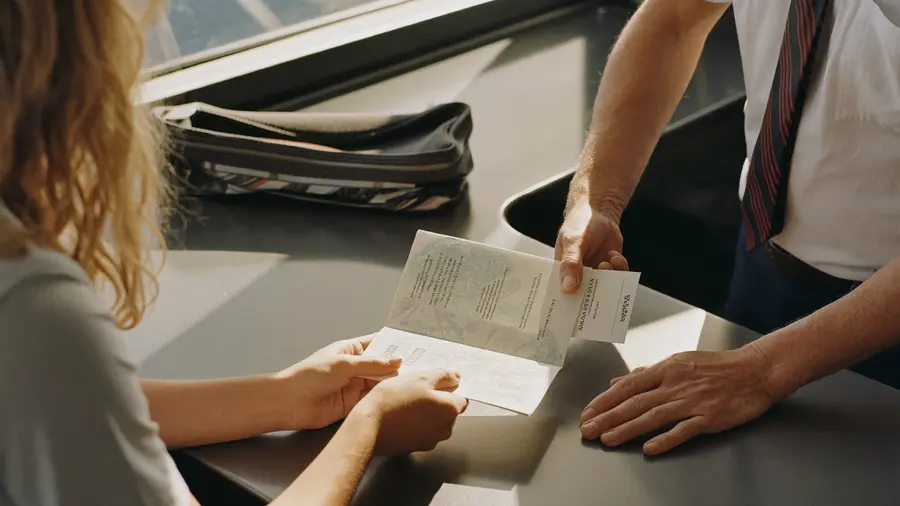
By the time an immigration officer sees your passport, an airline has already staked money on it being acceptable. That is why the desk is strict.
The agent is not remembering any of this. They are reading it. Most airlines check documents against Timatic, IATA's database of entry requirements, which draws on "government and airline sources" — border control, immigration, consular departments and health ministries — and receives, IATA says, "on average around 70 updates per day".
700 million
passenger travel documents checked through IATA's Timatic each year
A refusal is therefore not a judgement about you. It is a line of data that did not match — and the governments that wrote those lines publish them, so you can read them first.
A border officer who is unsure can let you through. A check-in agent who is unsure cannot.
There Is No Single Six-Month Rule
The six-month rule is the most repeated piece of travel advice in existence, and it is not one rule. It is a common shape of rule, and countries disagree about the shape.
| Validity | Measured from | Example |
|---|---|---|
| Six months | Arrival | Singapore, bar its own |
| Three months | Intended departure | The Schengen area |
| The stay itself | The authorised stay | Canada |
Canada, at the permissive end, asks only that the passport cover the period you are authorised to remain. The six-month habit sits at the other end, and it is a safe default rather than a legal fact: it is longer than almost every real requirement, so a passport with six clear months rarely fails anywhere. Note too that a rule measured from departure behaves differently from one measured from arrival — on a long trip, that gap is weeks.
And the rule belongs to every country your itinerary touches, not only the one you booked a hotel in. A layover that puts you through immigration puts you under that country's requirements, and a transit refusal ends the trip just as firmly.
Note
Which rules apply depends on the passport you hold, where you are going and where you change planes. The authority is the destination's own immigration or foreign ministry — never a summary, including this one. Check each leg separately.
When the Passport Was Issued Is a Separate Test
This condition catches experienced travellers, because it is invisible if you read only the expiry date. The Schengen area applies two independent requirements at once, and the French government states them together: a passport "issued for less than 10 years and whose validity is at least 3 months longer than the scheduled date of your departure".
How does a passport come to be more than ten years old and still in date? Because some issuing authorities used to carry unused validity forward: a traveller who renewed early had the leftover months of the old book added to the new one. Those months are real for most of the world and worthless for this test — UK guidance is explicit that the document must "have a 'date of issue' less than 10 years before the date you arrive".
Warning
Read the two dates as two questions. Is the expiry date far enough away? And is the issue date recent enough? A passport that answers yes to the first and no to the second looks completely fine to its owner and fails at the desk.
Blank Pages Are a Requirement, Not a Convenience
Several countries specify how much empty paper you must arrive with, more precisely than people expect. South Africa is the standard example: two entirely blank visa pages, facing each other, not counting the endorsement pages at the back. A page with a stamp in the corner does not qualify, and neither do two blank pages in different parts of the book.

A page is blank or it is not. Find the pages reserved for visas and count the ones with nothing on either side. It takes a minute, and it is the only version of this check that works.
It is enforced at the desk precisely because it is objective — nobody interprets anything, they turn the pages. A frequent traveller with a well-stamped passport and eight months of validity left is exactly the person this rule refuses.
What Counts as a Damaged Passport
Damage is the one condition here with a subjective threshold, which makes it the most frustrating. There is no measurement: the book is acceptable if the person holding it believes it will be accepted at the other end. What draws attention is consistent — water staining, a torn page, lifting laminate on the photo page, handwriting from anyone who was not an official, a chip that will not read.
Do
- Replace a damaged passport rather than travelling hopefully with it.
- Test the chip at an automated gate on an easy trip, where a failure costs nothing.
Don't
- Repair it yourself. Tape and glue turn minor damage into apparent tampering.
- Assume a document accepted last month will be accepted by a different airline this month.
The Name on the Booking Must Be the Name in the Passport
Airlines require the name on the ticket to match the travel document you present — not approximately, but the given name and family name as printed. That sounds trivial until you notice how many ordinary situations break it: a shortened first name where the passport carries the full one, a recent marriage the document has not caught up with, two family names where the booking form accepted one, a hyphen or accent a system quietly flattened, a transliteration from a non-Latin script spelled two different ways.
The fix has to happen before the airport: contact the airline as soon as you spot it. Corrections are routine well in advance and expensive or impossible on the day. Book in the name the passport uses, even when it is not the name you go by.
Proof You Intend to Leave
A visitor is somebody who leaves, and several countries want that established before you arrive. The requirement is often written into law: the United States Visa Waiver Program requires by statute that the traveller "is in possession of a round-trip transportation ticket", subject to narrow exceptions.
The airline checks it, because the airline pays if you are turned around. In practice the agent wants a booked, dated journey out of the country inside the period you may stay — a flight, a train, a ferry. A plan to move on overland is not evidence, and a search result is not a booking. Open-ended trips meet this hardest.
The Permissions You Apply for at Home
A newer category of refusal has nothing to do with the passport: an electronic authorisation you were meant to obtain before leaving home. These are not visas — they are pre-travel screening, usually granted quickly, and the airline is instructed to refuse boarding without one. They are being phased in country by country, so treat any date you read as perishable. As of August 2026:
- The United Kingdom operates an Electronic Travel Authorisation for visitors who do not need a visa. The Home Office is unambiguous: "Visitors without an ETA will not be able to board their transport and cannot travel to the UK, unless exempt." British and Irish citizens are excluded.
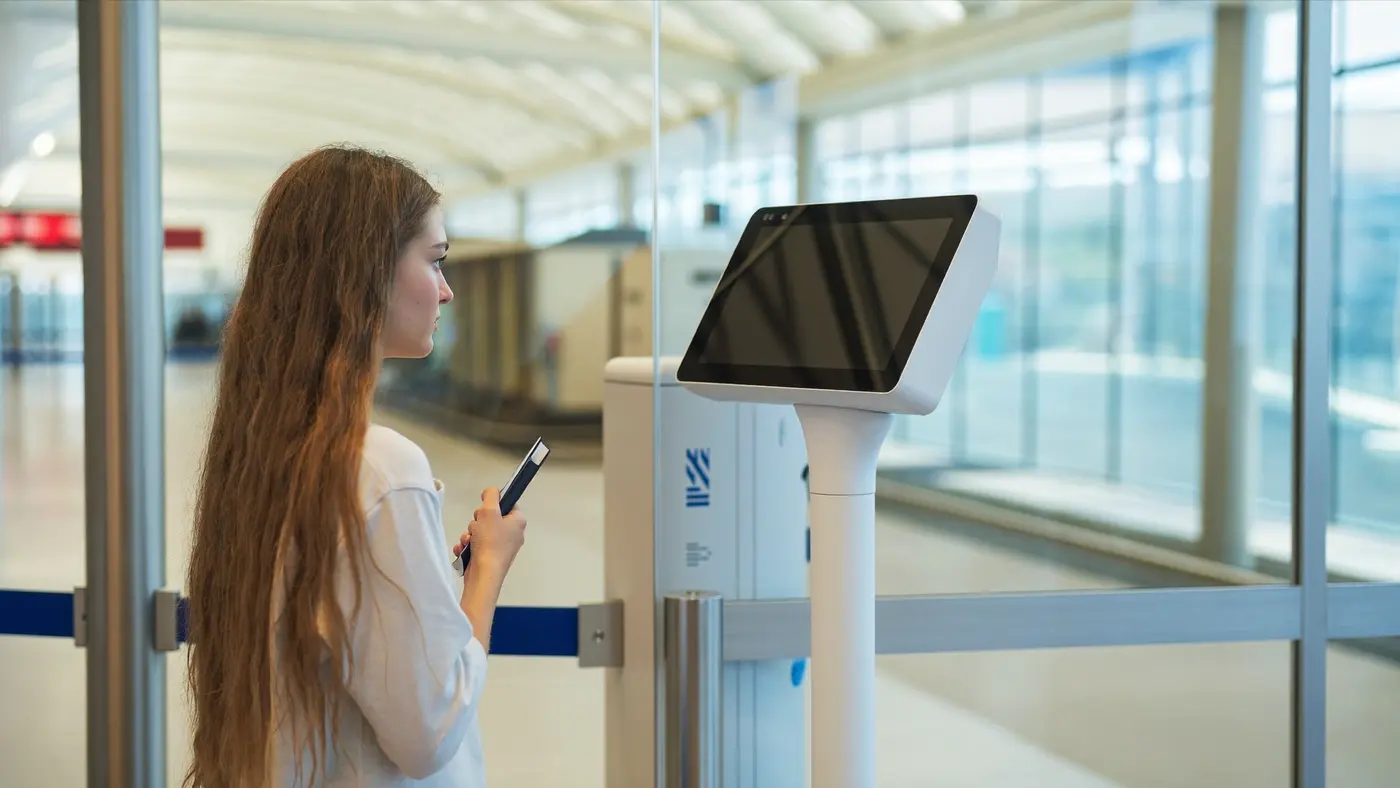
- The Schengen area has replaced passport stamping with the Entry/Exit System, which the French foreign ministry says "has been gradually implemented since 12 October 2025 and will be fully operational from 10 April 2026". It records a facial image and, above the age of twelve, fingerprints. There is nothing to apply for; it happens at the border.
- ETIAS, the separate European travel authorisation, is not yet in force. EU guidance says it is expected in late 2026 and that no action is required from travellers at this point.
Warning
Every one of these schemes has attracted lookalike websites that copy official branding and charge a mark-up to fill in a form you could complete yourself. The European Union warns that there is only one official ETIAS website. Apply on the government domain, and reach it by searching for the government rather than the scheme.
The Check to Run Tonight
The conditions above share one useful property: every one of them is answerable at home. Reading only the expiry date, assuming the destination's rule is the only rule, counting blank pages generously, booking in the name people call you rather than the one printed in the passport, treating an authorisation as a formality — each is a habit rather than bad luck, and each takes minutes to correct while you are still sitting down.
-
Write down both dates in the passport
Date of issue and date of expiry. You are going to test them separately.
-
List every country the itinerary touches
Destination, and anywhere you land in between.
-
Read each country's own entry requirements
Its immigration or foreign ministry, plus your own government's travel advice for the passport you hold. Check validity, blank pages, onward travel and any authorisation.
-
Compare the booking name to the passport, character by character
If it differs at all, contact the airline while a correction is still routine.
-
Turn the pages and look at the book itself
Count consecutive blank visa pages; look for water damage and lifting laminate. If anything makes you hesitate, renewing costs less than a missed flight.
Tip
Photograph the data page and your onward ticket and keep them where you can reach them without your bag. If a question comes up at the counter, the difference between a two-minute delay and a missed flight is often whether you can produce a document while standing there.
Being Reachable Is Part of Being Prepared
None of the checks above need a phone. The minute after a question is raised at the desk very much does. Onward tickets live in eMail, bookings live in apps, an authorisation reference arrived weeks ago, and a consulate is a phone call. An airport is exactly where you do not want to be fighting a wireless portal that wants to text you a code, on a number that may be roaming. That is the unglamorous argument for arriving already connected: a travel data plan installed at home and live on landing keeps your documents and bookings reachable from the moment the door opens.
Check connectivity for your destination Coverage and plans for the country you are flying to, before you leave home.Common Questions
Does the Six-Month Rule Apply to Children's Passports?
Validity is a property of the document, not the traveller, so it applies the same way. Children's passports are usually issued for shorter periods, so a child's book can sit well inside a ten-year window and still fail a six-month test.
Can I Fly Home on an Expired Passport?
Returning to the country that issued your passport is different from entering a foreign one, because a state does not refuse its own nationals. Getting on the aircraft is still the problem: the airline and any country you transit apply their own rules. Contact your embassy or consulate, which can usually issue an emergency travel document.
Am I Owed Anything if I Am Refused Boarding on Documents?
Denied-boarding compensation schemes generally cover overbooking and the airline's own operational failures, not a passenger who arrives without the documents the journey requires. Assume the ticket is lost and check your travel insurance.
The Short Version
The check-in desk is not being difficult. It is applying somebody else's rules with money on the line, and it has no room to take your word for anything. Read your passport's two dates. List every country the trip touches. Read those countries' own requirements for your nationality rather than a summary of them. Then book, and forget about it — and if you are thinking about the practical side of landing, what happens the first time you use a card abroad is worth the same ten minutes.