
The bill arrives on a small tray and the table goes quiet. Somebody is doing arithmetic under their breath, somebody else is asking whether it is already included, and neither of you knows. Two minutes later you have overpaid out of anxiety or underpaid out of caution, and you will never find out which.
Almost everything written about tipping is a list of percentages by country, which ages badly and helps not at all when you are holding a bill you cannot read. This article does the opposite: why the custom exists where it does, how to read a bill for a charge already on it, what the card terminal is really asking, where that money ends up, and how to leave nothing without causing offence.
Key takeaways
- A tipping custom is a wage arrangement. Ask who pays the wage and you can predict the custom without memorising a single figure.
- The bill usually answers the question. A service line or a printed phrase is a fact you can read; the norm in your head is a guess.
- A service charge and a tip are different things in law, and they reach the staff by different routes.
- Where tipping is not done, the graceful move is to do nothing at all, confidently.
Why the Custom Exists in Some Countries
Tipping is not a national personality trait. It is what a country's wage law leaves for the customer to finish.
In the United States, federal law lets an employer count tips towards the minimum wage. The Fair Labor Standards Act defines a tipped worker's wage as a cash amount from the employer plus "an additional amount on account of the tips received by such employee", equal to the gap between that cash wage and the full minimum. The customer is not being generous there; the customer is completing a wage the statute assumes will be completed. The same section sets a limit that surprises visitors: "An employer may not keep tips received by its employees for any purposes, including allowing managers or supervisors to keep any portion of employees' tips."

One country pays this shift a full wage, another pays part of it and lets the customer supply the rest, a third adds a charge to the bill and settles it in payroll. The service looks identical from your chair.
France answers the question in the opposite direction. Its consumer affairs directorate states that a tip "est toujours facultatif", always optional, and that "aucune profession ne peut l'exiger", no occupation may demand one. Service is a charge that must already be inside the number: it "doit être inclus obligatoirement dans le montant de la note", and displayed prices must be what the customer actually pays.
Japan sits further along the same line. The national tourism organisation tells visitors that "it's not common to tip for services such as those provided in bars, cafes, restaurants, taxis, and hotels". Nothing is missing from those bills, so nothing needs adding.
| Model | The wage | The bill |
|---|---|---|
| Tip-funded | The law lets tips make up part of the minimum | Adds nothing; the amount is left to you |
| Service-funded | A set wage, with a service charge collected for the house | Carries a service line, often described in words |
| Wage-funded | The wage is the whole wage | One number, and it is final |
The Bill Is a Document, and Worth Reading First
Before adding anything, read the bill for what is already on it. Three things turn up, and each means something different.
- A service line, a separate charge added by the house, usually a percentage of the food and drink.
- A printed phrase rather than a line, where service is inside the menu prices and only a sentence says so.
- A blank tip box, or a total larger than the sum above it, inviting you to write a number in.
France is the clearest worked example of the third case, because the wording is prescribed. Where a service charge is taken, every menu and price list must carry the words "prix service compris" followed by the percentage applied — and the absence of that mention means the staff are paid a fixed salary instead. One printed phrase, and you know the wage model of the place you are sitting in.
Elsewhere that line arrives in a language you do not read, in small type, at the moment everyone is standing up to leave. It is a fifteen-second job for a phone camera and a translation, which is one of the few travel problems that genuinely needs the phone online at the table rather than back at the hotel — so check what a plan costs for where you are going before you rely on it.
Note
A service charge and a tip prompt can appear on the same transaction — the charge printed on the bill, the prompt on the terminal a minute later, calculated on a total that already contains it. Reading the paper first is what stops you paying twice.
The Terminal's Buttons Are a Setting, not a Rule
The card machine that offers you three figures is not reporting a national custom. Whoever configured the terminal chose those numbers, the merchant chose whether the prompt appears at all, and the option to skip is frequently the palest thing on the screen.
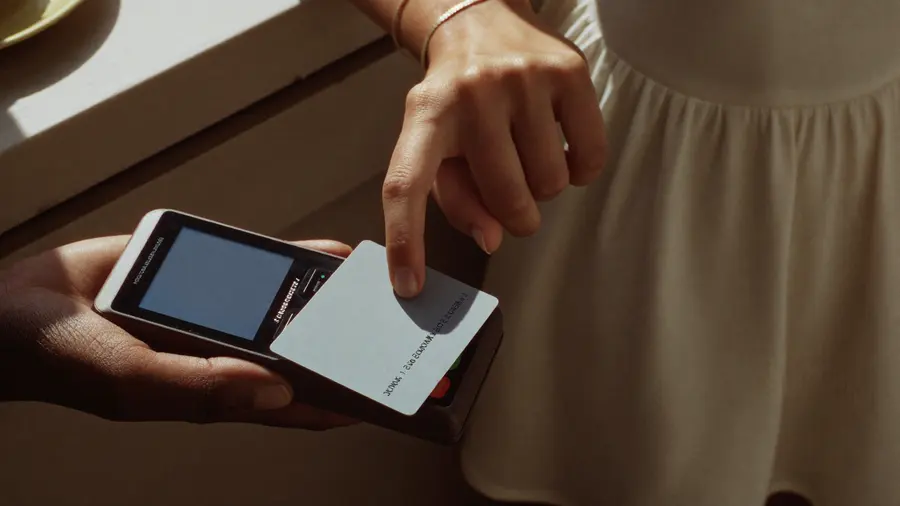
The presets are a merchandising decision, not a rule of the country. The button you are looking for is usually the plainest one on the screen, and it is always there.
One more mechanic is worth knowing before that screen appears: the prompt has spread well beyond table service, to counters, kiosks and a pastry handed over in a bag. The screen asks because the software offers the feature, not because a service was performed.
Where That Money Goes after You Press Yes
In United States federal regulation, a charge the house imposes is not a tip: "A compulsory charge for service, such as 15 percent of the amount of the bill, imposed on a customer by an employer's establishment, is not a tip." Where the employer distributes such sums to employees, the regulation adds, "they may be used in their entirety to satisfy the monetary requirements of the Act" — that is, to pay wages the employer already owed. A tip is defined separately, as "a sum presented by a customer as a gift or gratuity in recognition of some service performed".
A service charge is the establishment's money, which it may choose to share. A tip is the worker's money, which the establishment has to hand over.
Britain has legislated the second half of that sentence. The Employment (Allocation of Tips) Act 2023 requires an employer to ensure that tips, gratuities and service charges attributable to a place of business are "allocated fairly between workers", and paid "no later than the end of the month following the month in which the tip, gratuity or service charge was paid by the customer". Government guidance puts it in one line: by law, all tips must be given to workers without deductions.
Warning
Those are two countries' rules, not a world standard. In much of the world nothing obliges a business to pass on a card tip, and the only reliable way to find out is to ask the person serving you which route reaches them.
Cash and Card Are Not the Same Tip
The two routes differ in timing, in visibility and in who touches the money on the way.
Cash goes into a pocket or a shared box at the end of the shift, under whatever arrangement the house runs, and where a tip is handed over rather than added to a bill it is the only mechanism there is. A card tip travels through the business instead: where a rule like the British one applies that is a delay of weeks, and where none applies, what happens once the money reaches the employer's account is a house policy rather than a right.
So carry a small amount of local cash for exactly this — which costs almost nothing if you withdraw it sensibly, and a surprising amount if you do not: how to pay abroad without paying twice.
Who Else Is Tipped Besides Waiters
Restaurants get the attention and are rarely where a traveller goes wrong. Tipping follows personal service priced separately from the thing you booked.
- Housekeeping, left daily rather than in one lump at the end, because it is rarely the same person all week.
- Porters and doormen, whose whole job is the thing being tipped, and who are handed it rather than added to a bill.
- Drivers, where the fare is metered or fixed by regulation and the tip is the only variable part.
- Guides, on a tour where the guide and the driver are two people to thank, which catches out most of the group at the end of a long day.
- Salons and treatments, where the person performing the service is often not the person who took the payment.

Where Tipping Is Not Done, and How to Decline
In a country with no tipping custom, leaving money reads as a misunderstanding of what just happened: the price was the price, the service was the service, and the transaction was complete.
Japan is the clearest case, because the exception is documented rather than folklore. The national tourism organisation describes a custom of "kokorozuke", a gratuity offered in a narrow set of situations such as a private guide used to overseas practice — and even there, "if you do decide to offer a gratuity, it is customary to put it in an envelope", given discreetly. Cash pressed into a hand at the till is not a smaller version of that.
Declining is easier than travellers expect, because it consists of doing nothing:
- Take the change. Waiting for it is normal; refusing it is the gesture.
- Say thank you properly instead. In most non-tipping cultures the words are the accepted currency, and they are noticed.
- Press the skip option and move on. No explanation is owed to a screen.
- If a tip is refused, let it be refused. Pressing money back a second time turns a norm into a scene.
The same composure works in the other direction. Where a service charge is printed on the bill, "nothing further" is a complete and correct answer, and it needs no apology.
Four Things That Catch Travellers Out
- The prompt where nothing was served. A screen turned round at a counter is the till's default, not the country's custom.
- Rounding up in an unfamiliar currency. A fine habit where the smallest note is small, and an accidentally enormous gesture where it is not.
- The group tour with two people to thank. The driver is the one who gets forgotten while everybody is saying goodbye to the guide.
- The cover charge read as service. A per-person charge for the table is neither a tip nor a service charge, and nobody has been paid for looking after you.
What to Settle before You Land
-
Find out how the wage works, not the percentage
One sentence about whether tips count towards the wage tells you more than any table, and stays true after the table has gone stale.
-
Decide your default answer to the terminal
Choose it at home, once, so four seconds in front of a screen with a queue behind you is not a decision.
-
Carry small notes from the first day
Porters, drivers and housekeeping all want the denomination nobody has on arrival.
-
Land with a working connection
Reading a bill and checking a phrase happen at the table or not at all. If you have not set this up before, here is how an eSIM works.
Common Questions
Is a Service Charge the Same as a Tip?
No, and the difference is written into law in several countries. A service charge is imposed by the business and, under United States regulation, "is not a tip" — where it is distributed to staff it can be used to satisfy wages the employer already owed. A tip is money you chose to give.
What if the Service Charge Says It Is Optional?
Then it is a request, and it can be removed by asking. Whether to ask is a separate question: an optional charge is often the route by which everyone from the kitchen to the floor is paid, which a note handed to one server is not.
Should I Tip in Cash or on the Card?
Cash where the tip is handed to a person, card where it is added to a bill in a country whose rules oblige the business to pass it on. Where you are unsure and you have notes, cash removes every intermediary between your hand and theirs.
Is It Rude to Tip Where Tipping Is Not Done?
More often confusing than offensive, and the confusion lands on the person you were thanking, who now has to work out what to do with money they cannot accept. In those countries the compliment is to accept the price as the whole price.
The Short Version
Before the trip, learn one thing: whether tips are part of the wage where you are going. On the trip, read the bill before you add anything, treat the terminal's buttons as a setting rather than a rule, keep small notes for the people you thank by hand, and where the custom is to leave nothing, leave nothing without ceremony.
See how to pay abroad without paying twice for the card side of the same evening, and how much data you need before you choose anything.
Check what a plan costs for where you are going So the bill, the phrase and the local custom are all one tap away at the table.