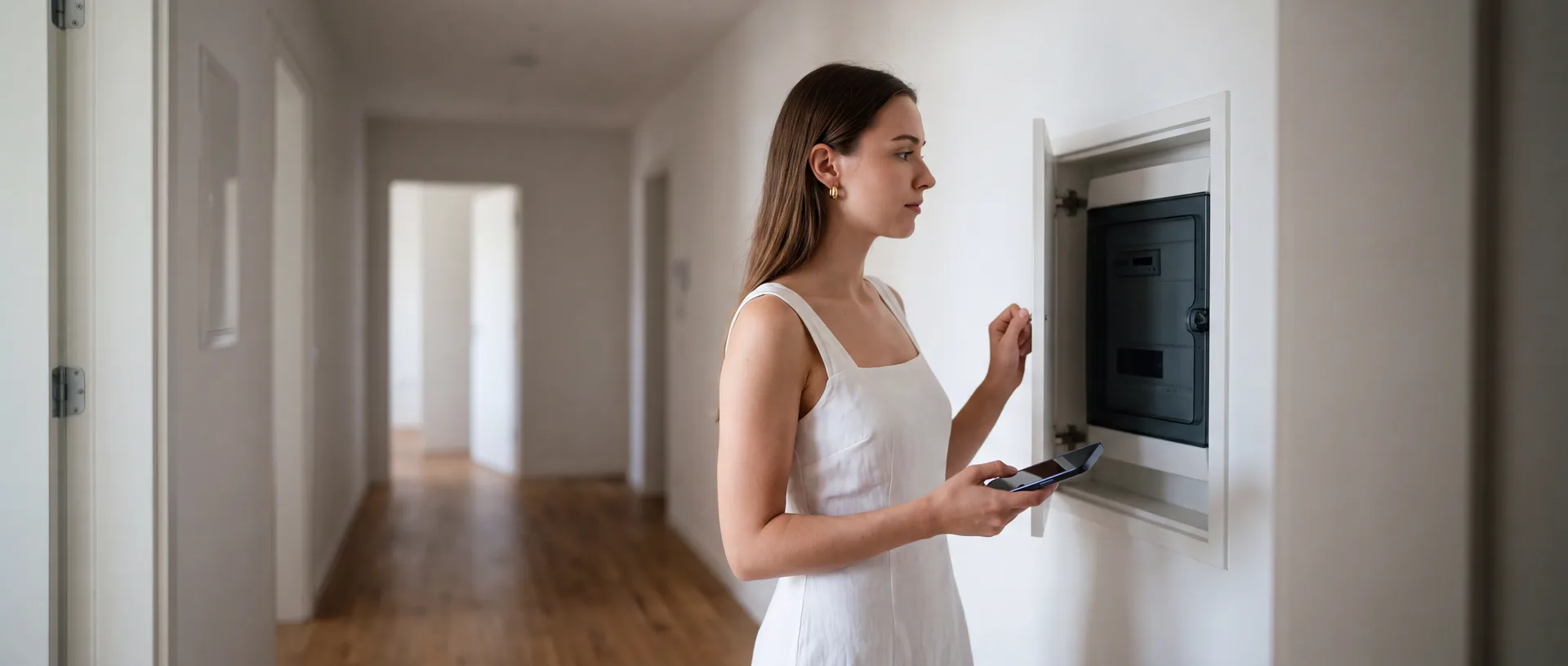
The lease is signed, the keys are in your hand, and the lights come on when you find the switch. It is easy to read that as finished. It is not. What has actually happened is that you have stepped into somebody else's supply on somebody else's terms, and a meter somewhere in the building has started counting against a name that is not yet yours.
Our method for working out what a month abroad costs put "a utility connection" in the up-front column and left it at four words. This is those four words opened out. There are no amounts below, because the amounts are local and they move. What travels is the shape: which services arrive with the flat and which need a contract in your name, what you are billed for before you have used anything, and why the real price of turning a home on is measured in appointments rather than money.
Key takeaways
- Nothing switches itself into your name — the supply is usually already live, on default terms, and you are liable from the first kettle.
- A standing charge is rent on the connection. An empty flat you never enter still bills you.
- A meter reading taken on the day you get the keys is the only thing separating your bill from the last tenant's.
- With no local credit history, a deposit or a pay-in-advance meter is the price of being trusted — and it is sized to consumption, not invented.
What the Flat Comes with, and What Comes with You
The useful division is not by service. It is by whose name the account sits in, and there are only three answers. The landlord holds the account and recharges you through the rent or a service charge. The account is yours, opened with a supplier you choose or inherit, billed to you directly. Or the charge is municipal, attached to the property rather than to a person, and arrives with a local tax.
You cannot tell which is which by standing in the flat. A radiator that works proves the building has heating; it proves nothing about who pays for it. Ask per service, in writing, before you sign, because the answer decides whether a bill is a thing you can negotiate or a line in a rent you have already agreed.
| Service | Usually | Watch for |
|---|---|---|
| Electricity | Yours | Live on a default rate from day one |
| Gas | Yours | Often a different supplier from the electricity |
| Water | With the building | Sometimes metered per flat and recharged |
| Heating | Shared or central | An annual reconciliation you were not told about |
| Internet | Yours to arrange | Nothing exists until you order it |
| Waste | Municipal | Follows the address, not the occupant |
Two Clocks Run: the Supply and the Account
People conflate two different things, and separating them explains most of the delay. The supply is physical: a cable, a pipe, a meter, a connection that either exists or does not. The account is a relationship with a company. In any flat that has been lived in, the supply is already there and already live — that is why the lights worked — and the account belongs to somebody else, usually the last occupant or the landlord.
So setting up is rarely switching anything on. It is transferring a relationship, and that transfer has its own clock: days for energy, often weeks for a fixed line. Every one of those transfers is done through a portal or a phone call, most of them send a verification code, and none of them will politely wait until your local number exists. The connection you carry in on is what does that work — an eSIM is a plan written to the phone as software, so it does not need a shop, an address, or a signature from anyone.
The Charge That Exists before You Use Anything
Ofgem, the British energy regulator, defines the standing charge as "a fixed monthly or daily amount that you pay your electricity or gas supplier for maintenance and other costs, such as maintaining connection to the power network". Read what it is not: it is not a price for energy. It is the rent on the connection, and almost every market has some version of it under some name.
Three consequences follow, and they matter most to exactly the person reading this. An empty flat costs money, so the weeks between signing and moving in are billed. A short stay is dominated by the fixed part, because there is less consumption to spread it over. And comparing offers on the unit rate alone is meaningless for a light user, which a newcomer with no furniture invariably is.
A utility is a subscription with a meter attached, not a shop where you buy electricity.
So ask the question in the shape that survives a currency and a decade: what proportion of a typical bill here is the fixed part? A market where the fixed share is large is one where using less saves you less, and that changes which flat is actually the cheap one.
Read the Meter before You Unpack
The reason the lights work on day one has a name. Ofgem's guidance on deemed contracts states that one "is normally in place when any type of customer moves into new premises and starts to consume gas, electricity, or both, without agreeing a contract with a supplier". Boil a kettle and you are a customer, on terms you did not choose, at a rate that can move. That is not a trap — it is what stops the power going off for somebody who moves in on a Sunday — but it is a contract and it is billed.
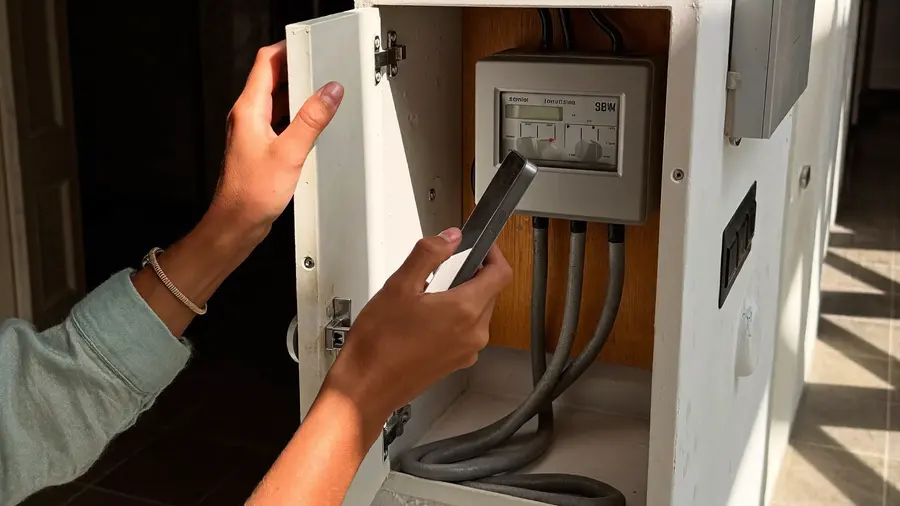
Open the cupboard on the day you get the keys, and take a picture with the digits legible and the date on the file. Do it for every meter in the building that has your flat's number on it.
Without that reading, the supplier estimates — and an estimate spreads the meter's whole travel since the last real reading across whoever is standing there when the bill is cut. That is how a newcomer inherits a stranger's winter. Send the reading the day you take it, to the supplier and to the landlord, and keep the confirmation. The same act at the other end of the stay is what gets a deposit back when you leave.
The Deadlock between the Address and the Account
Here is the loop that catches organised people. A supplier wants proof that you occupy the property before it will put an account in your name. The address registration, in the many countries that have one, frequently wants a document proving the address — and a utility bill in your name is the classic proof. Two doors, and each is holding the other's key.
It is soluble, and the solution is always the same shape: find the one document whose issue depends on nobody else's process. Usually that is the tenancy agreement itself, or the landlord's written confirmation that you live there. Take it to whichever counter accepts it, get the thing that counter issues, and the rest unlocks in order — which is the whole logic of the first month after you move.
A Deposit Is What Stands in for a Credit History
A credit history is a claim about your future built out of a record of your past, and that record does not cross a border. Years of paid bills in one country buy you nothing at a counter in another. Companies know this, and they substitute for it in one of three ways: a deposit, a guarantor who does have a local record, or pay-in-advance.

The deposit conversation is rarely on the website. It comes up on the call, after the credit check fails, and it is where the useful questions get asked.
The size of a deposit is not arbitrary, and the wording used by Citizens Advice in the United Kingdom is the shape to look for anywhere: a supplier "should work out what's reasonable by looking at how much energy households like yours use over 3 months". It is a multiple of expected consumption, not a number somebody felt like. Ask three things before you agree: is it refundable, when, and what releases it early. The third answer is almost always a run of bills paid on time, which means the deposit has an end date you can plan around.
A Line That Exists Is not a Line That Is Live
A socket on the wall proves that somebody once had a connection here. It says nothing about whether you can have one this month. There are three states, and only the last of them is internet: no infrastructure to the building at all, infrastructure present but not provisioned to your address, or provisioned and active.

The lead time is a sum, not a single number: the order, the provisioning done by an infrastructure company that is not the provider you are paying, and often a visit. The website quotes the first part. The third decides the date. Assume weeks rather than days, order it before you need it, and treat the flat as unconnected until an engineer says otherwise — which means arriving with a data plan for where you have landed rather than a plan to sort one out on Tuesday.
The Appointment Window Costs a Working Day
This is the cost nobody puts in a spreadsheet, and for most people it is the largest one. Site visits are scheduled as windows rather than times, in working hours, and somebody has to be inside the flat for the whole of it. A meter exchange is one. An installation is another. A failed visit, because the building's riser is locked or the neighbour has the key, is a third — and it does not usually get you priority for the next slot.
Common Questions
Can I Leave Everything in the Landlord's Name?
Sometimes, and it is a real option for a short stay — but understand what you are buying. You lose the ability to change supplier, you have no standing to query a bill you did not receive, and the amount you are recharged is whatever the landlord's arrangement produces plus whatever the contract allows on top. Ask to see the underlying bill, and check the lease says you may.
What if a Bill Arrives for Someone Else?
Do not ignore it and do not pay it. Send the supplier your meter reading, the date your tenancy started, and the contract that proves it. Suppliers reallocate consumption between occupants routinely; the reading is what makes the split defensible. Without one, you are arguing about somebody else's estimate with no evidence of your own.
Do I Need a Local Bank Account First?
Often, and it is worth checking early rather than at the point of sale. Many suppliers price the direct-debit tariff below the alternatives, some accept only a local account for it, and a few will not open an account without one at all. Where that is the case, the bank moves ahead of the utility in your ordering, not behind it.
How Long until the Flat Is Fully Connected?
Energy is usually the fast one, because the supply is already live and you are only transferring an account. The fixed line is the slow one and it sets the date the flat becomes usable for work. Plan the move around the line, not the other way round, and never book the first day of a job for the week you move in.
Switch Them on in This Order
Almost every delay in this article comes from doing something before the thing it depends on. The sequence below is not a checklist so much as a dependency chain, and running it in order is worth more than starting early.
-
Read every meter on the day you get the keys
Photographs, digits legible, dated. Send them to the supplier and the landlord the same day.
-
Establish whose name each service is in
Per service, in writing. This is the answer that tells you which of the steps below you actually have to do.
-
Order the fixed line before anything else you can wait for
It has the longest lead time and it is the only one where an outside company decides your date.
-
Open the accounts that need no other document
Energy usually accepts a tenancy agreement. That bill then becomes the proof of address the next counter wants.
-
Write down every deposit and its release condition
What returns it, and when. Money nobody is chasing sits where it is for the whole of your stay.
Done in that order the setting-up cost is a fortnight of small tasks and one deposit you get back. Done backwards it is a month of estimated bills in a stranger's name, a fixed line that arrives after the work does, and four separate mornings spent waiting for somebody who was given a window rather than a time.
Arrive already connected Live plans and coverage for the country you are moving to, so the weeks before the line is live are not weeks offline.