You had planned the morning around a bank, a museum and a haircut, and at ten o'clock the street is shut. Not quiet — shut. Shutters down, lights off, nobody to ask. The first instinct is to treat it as a problem: bad luck, bad planning, a country that does not appear to want your money.
It is none of those. It is somebody's week, running the way it has run for a very long time, and you have walked into the middle of it. What follows is the shape of those weeks — the fast that turns a day over, the rest day that falls on a Friday or a Saturday, the Sunday that parts of Europe still protect in law, and the holidays that land on a different date every year. Then the practical half: what keeps working regardless, and how to check your own dates rather than read about calendars in general.
Key takeaways
- A closure is a rhythm, not an event — learn the shape and the day stops surprising you.
- The rest day is not always Sunday — Friday, Saturday and Sunday each anchor a week somewhere.
- Emergency care, borders and transport keep working — what stops is counter service.
- A date set by the moon moves every year — last year's date tells you nothing about this year's.
A Calendar Has Three Shapes
Almost everything that closes a door abroad is one of three things. There is the day: a fast, a prayer, a siesta — a period inside a single day when the ordinary hours are rearranged rather than cancelled. There is the week: one day in seven set aside for rest, which is Sunday in some places, Saturday in others and Friday in others again. And there is the year: the national and religious days that fall once and stop the country while they do.
They stack, which is where the surprises come from. A one-day holiday landing on a Sunday in a country that already closes on Sunday is invisible to you. The same holiday landing on a Tuesday takes Monday with it, because almost nobody works a single day between two closed ones. A fast that shortens the working day, in a week whose rest day is Friday, in a month with a national holiday in it, can leave a genuinely narrow window for anything that needs a person behind a desk.
The day this bites hardest is the day you arrive. Everything a traveller means to sort out on landing — cash, a local number, a working data connection — is bought from a counter, and counters are exactly what a calendar closes. Whatever you can arrange before you leave, arrange before you leave; what you need for the country you are going to is worth settling while the shops at home are still open.
The Month That Turns the Day Over

A courtyard with its chairs stacked at two in the afternoon is not a closed business. It is a business whose evening has not started yet, and its evening will run late.
Ramadan is a month of fasting from first light to sunset, observed across the Muslim world and by Muslim communities everywhere else. Read as a list of closures it looks like a month to avoid. Read correctly it is an inversion: the day contracts and the night expands, and a visitor who moves their own clock gets the better half of it.
During daylight the pace changes. Offices open for shorter hours, and where a shortened working day applies it is often an entitlement written into employment law rather than a company's goodwill — which is worth knowing, because it means the change is fixed and has nothing to do with you. Many restaurants stay closed or screened until sunset. Government counters and banks may keep morning hours only.
Eating and drinking in public during daylight is the part that most needs care. In some countries it is an offence and belongs with the other laws travellers break without meaning to; in others it is simply conspicuous and unkind. The rule that travels everywhere is the same either way: eat out of sight. Hotels almost always keep a screened room serving guests through the day, and a bottle of water inside a bag is a different thing from a bottle of water in your hand on a hot street.
Then the sun goes down and the city you thought was closed turns out to have been waiting. The fast is broken, the streets fill, restaurants run late and shops open until well after midnight. Sunset is not a fixed hour — it shifts by a minute or two every evening, and the whole city's timetable shifts with it, so tonight's time is not last night's.
The Week That Ends on Friday Afternoon
A visitor whose week runs Monday to Friday reads Saturday and Sunday as the weekend everywhere. In a large part of the world it is not.
Shabbat runs from sundown on Friday to nightfall on Saturday. In Israel that makes Friday afternoon the last working stretch of the week rather than the start of a slow wind-down: buses and trains thin out and then stop before sunset, shops close through the afternoon, and by dusk a great deal of the country is genuinely still. Saturday is the quiet day. Then comes the part that catches people out — Sunday is a normal working day. Offices open, schools run, and the week that felt like it had ended has in fact begun.
Friday carries weight in the Muslim world too, around the midday congregational prayer, and in several countries the weekend itself is Friday and Saturday — so Sunday is an ordinary working day there as well. The practical version is short. In much of the region a Friday arrival is the tightest day of the week and a Sunday arrival is one of the easiest, which is the exact opposite of the assumption most visitors carry with them. Hotels function throughout; it is public transport, offices and counter service that follow the rest day.
Sunday, and the Parts of Europe That Still Close
Anyone raised on 24-hour retail reads Sunday as a slower Saturday. In parts of Europe it is a closed day, and it is closed on purpose.
Germany is the clearest case rather than the only one. The federal Shop Closing Act still states plainly that shops "müssen … an Sonn- und Feiertagen … geschlossen sein" — must be closed on Sundays and public holidays. The individual states now set their own weekday opening hours, so the detail varies from one to the next, but the Sunday principle sits above all of them, because it is in the constitution rather than in shop-hours policy.
"Der Sonntag und die staatlich anerkannten Feiertage bleiben als Tage der Arbeitsruhe und der seelischen Erhebung gesetzlich geschützt." — Sunday and the state-recognised holidays remain protected by law as days of rest from work and of spiritual elevation.
Article 139 of the Weimar Constitution, carried into the German Basic Law by Article 140
That sentence explains something a shopping-hours table never would. The closure is not a commercial decision that competition might one day undo. It is a protected day, and the exceptions granted around it — bakeries in the morning, stations, airports, petrol stations, pharmacies on rota — are exceptions to a rule that is meant to hold.
The Holidays That Move
Fixed national days are easy — an independence day sits on the same date forever and any calendar will tell you. The ones that move are the ones that ruin plans, and they move for two different reasons.
The first is a purely lunar calendar. The Islamic year is twelve lunar months, which comes to roughly 354 days, so every date inside it falls about eleven days earlier in the Gregorian year than it did the year before. Ramadan and the two Eid holidays drift steadily backwards through the seasons and take a little over three decades to come all the way round. The second reason is a calendar that keeps step with the sun but sets its feasts by the moon — Lunar New Year, Diwali, the Jewish festivals, Orthodox Easter on the older Julian reckoning. Those do not drift; they swing within a band, which is why Easter can be a month apart in two neighbouring countries.
Two consequences matter more than the astronomy. Some dates are confirmed only days ahead, because the start of the month depends on an actual sighting of the new moon — so a public holiday can be announced at short notice and can fall a day apart in neighbouring countries. And a major holiday is rarely one day: it is a block of several, wrapped in travel, during which domestic transport sells out weeks in advance and a whole country is on the move.
So last year's date tells you nothing. Neither does a friend's memory of when it was.
What Keeps Working
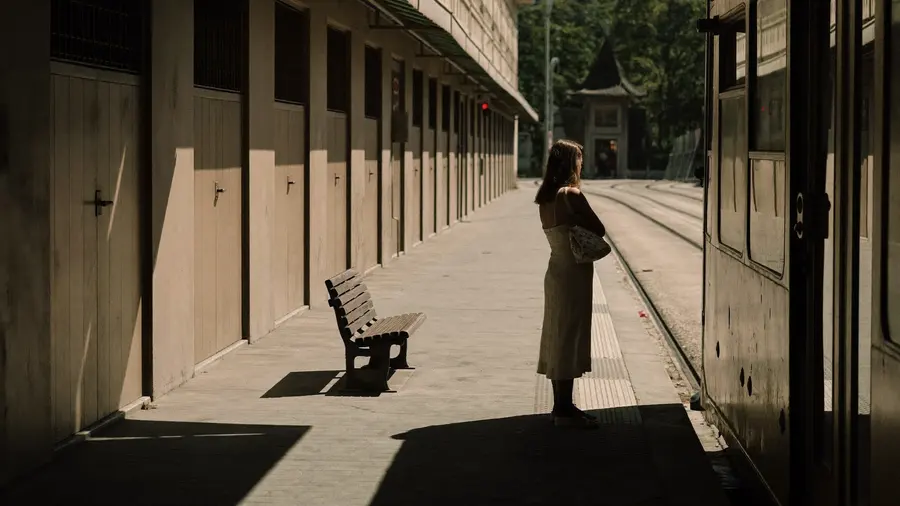
On a rest day or a holiday, city transport usually falls back to a reduced service. The first departure is rarely the problem. The last one is.
| Service | Rest day | Holiday |
|---|---|---|
| Emergency care | Open | Open |
| Pharmacies | Duty rota | Duty rota |
| Cash machines | Working | Working |
| Bank branches | Closed | Closed |
| City transport | Reduced | Reduced |
| Borders, airports | Open | Open |
| Shops, offices | Varies | Mostly closed |
Hospitals and emergency numbers do not observe anything. Pharmacies run a duty rota so that one in each district is always open, and the address of the duty pharmacy is posted in the window of every closed one. Cash machines keep working, but a card that has been blocked needs a human being, and the human being is behind the branch door — which is why a blocked card on the first morning of a four-day holiday is the single most expensive version of this problem.
Land borders, airports and ports stay open, though staffing can thin and a queue can lengthen. Long-distance transport usually runs; city transport falls to a reduced timetable, and the trap is always the last service rather than the first.
What does not keep working is the counter. Nobody will sell you a local number, change money at a decent rate or activate anything on a closed day — which is the one argument for arranging a connection before you go rather than on arrival, since a plan written to the phone you already own is downloaded rather than bought over a counter, and a downloaded thing does not observe a holiday.
How to Check One Specific Date
General knowledge about calendars is interesting. What you actually need is whether the Tuesday you land is a working day where you are going.
-
Write down the dates that matter
Not the whole trip — the arrival day, any day you need a bank, an office or a hire desk, and the departure day. Usually three dates.
-
Read the country's own holiday list
The national government publishes one, and so does the central bank. The central bank's is the more useful of the two, because it is a list of days on which money does not move.
-
Check whether the date is confirmed
For a holiday set by the moon, look for wording that marks it as provisional or subject to announcement. If it is provisional, treat the day either side as uncertain too.
-
Ask the operator about the last service
Timetable pages show holiday services badly. The last bus, last train and last airport transfer on a reduced timetable are what a plan actually depends on.
-
Ask the people you are staying with
One message — is anything closed while we are there, and what should we do differently? — gets you the local answer no calendar contains.
Common Questions
Is it Rude to Visit during Ramadan?
No, and it is a rewarding month to be there if you shift your own hours. What is rude is eating and drinking conspicuously in daylight, complaining about the pace, or booking a table at eight and being annoyed that the kitchen is busy. Go out in the evening and the city is at its warmest.
How Far Ahead Should I Book around a Moving Holiday?
Further than feels reasonable. A multi-day national holiday is a domestic travel season: internal flights, trains and coaches sell out weeks ahead and prices rise with them. If your dates overlap one, book the internal legs before the sightseeing.
What if I Get the Day Wrong?
Almost nothing bad happens. You lose a morning, and you learn that the country has a life independent of your itinerary. Rebuild the day around what is open — a walk, a park, a long lunch — and do the errand tomorrow.
Being a Good Guest
The practical sequence is short. Check the three dates that matter before you book anything internal. Assume the day before and the day after are affected. Sort out money and a working connection before you land, because those two are counter services and counters close. Then let the rest go.
The wider point is worth holding on to. A fast, a rest day or a saint's day is not an obstacle that a country has thoughtlessly left in your path — it is the part of the year people build their lives around, and being present for it is closer to the reason for travelling than the museum you missed. Turn up quietly, eat where it does not make anyone's day harder, and the same instincts that govern ordinary politeness elsewhere will carry you through a closed week without a single awkward moment.
Arrive already connected Pick your destination and set your data up before you fly, so a closed shop on day one costs you nothing.