
Two travellers stand at the same stall. One pays the first number they hear and walks off feeling fleeced. The other argues the price down and walks off having quietly insulted somebody. Both made the same mistake: they decided in advance what kind of place they were in, instead of reading it.
Bargaining is not a personality trait and it is not a sport. It is a commercial custom, with a form, a range and an ending, and it is switched on in some settings and switched firmly off in others. This article is about telling which is which — from the price itself, from the goods, from who is standing behind them — and about the two ways a visitor most often gets it wrong.
Key takeaways
- The setting decides, not the country — one street can hold a fixed-price shop and a negotiable stall.
- A displayed price is usually a statement; an unmarked one is usually an invitation.
- A mark-up and a negotiation are different problems and only one of them is solved by arguing.
- Walking away is part of the form, not a threat — and it has to be genuine to work.
- Do not grind somebody over an amount that is nothing to you and a day's margin to them.
One Word, Two Different Transactions
English uses one word for two things that have almost nothing in common. In the first, a price is a published fact: the seller has decided what the thing costs, told everybody at once, and cannot move without moving it for the whole street. In the second, a price is the opening line of a short conversation whose purpose is to find the number at which this buyer and this seller are both content.
Neither is more honest. The fixed price buys speed and saves the shy customer from being punished for shyness. The negotiated one lets the same object cost different amounts to a student and to a tour group, which is a kind of fairness too. What is rude is playing the wrong game: haggling in a shop that has published its prices reads as an accusation, and accepting the first number where a conversation was expected reads as indifference — sometimes even as a small display of wealth.
Reading the Setting before Anyone Speaks
Almost all of this can be settled before anybody says a word, because the setting announces itself. Look first at the price. A printed ticket, a shelf edge, a menu, a meter — anything that states a number to everyone equally — is a declaration, and declarations are not negotiated one customer at a time.
That is not only a convention. Across much of Europe the shown price is a legal obligation: the Price Marking Order 2004 requires that where a trader “indicates that any product is or may be for sale to a consumer, he shall indicate the selling price of that product”. Where a business is required to publish, publishing is the whole point, and asking it to contradict its own notice for you alone is asking for something it cannot really give.

Picking the thing up, turning it over, asking what it is made of — that is how the conversation starts anywhere it is going to start at all.
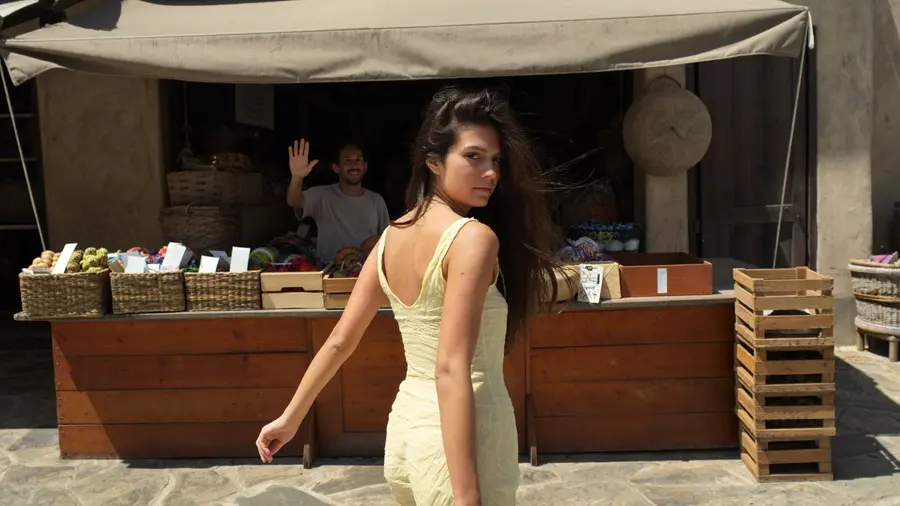
Then look at who is behind the goods. A till, a receipt and staff who did not choose the stock make a shop, whatever the building looks like. Loose stock arranged that morning by the person who owns it makes a negotiation. The awkward middle is the tourist stall dressed as a market, which will take a fixed price happily and expects a conversation.
| What you see | Reads as | Then what |
|---|---|---|
| A printed ticket or shelf price | A public statement | Pay it, or leave it |
| No price written anywhere | An invitation | Ask, expect a counter |
| A running meter | A published rate | Watch it, do not discuss it |
| No meter and no rate | Nothing agreed yet | Settle it before you set off |
| The maker at the bench | Somebody's wage | Buy, or admire and go |
| A queue of locals paying fast | One price for all | Join it and copy them |
When the reading is genuinely unclear, the cheap correction is comparison rather than confrontation: two more stalls, or the same object looked up while you are standing there. That is worth arriving with a connection that already works, because the moment you need it is the moment you are least able to go and find Wi-Fi.
The Taxi without a Meter
Transport is where this matters most, because it is the one purchase you cannot undo halfway through. The rule is simple and almost universal: if there is a meter, it is the price, and the conversation is about whether it is switched on, never about the number it reaches. A driver who offers a flat sum instead of the meter is proposing to move you from one system to the other, and that is a decision worth making deliberately rather than in a doorway.
Note
Where a fare has to be agreed, agree it before the door closes. Law drafted for exactly this case turns on whether “no fare and no rate of fare was agreed before the hiring was effected” — an agreement made at the start is a contract, and one attempted at the kerb is a dispute.
The airport rank is the hard version, because you arrive tired, carrying everything, with no idea what the journey should cost and a queue of people behind you. Almost every advantage sits on the other side. The fix is not to argue better but to arrive already knowing the shape of the fare and the route — which is the argument for a phone that is on the local network before you reach the doors, rather than after you have accepted something to end the conversation.
A Mark-Up Is Not a Negotiation
These get confused constantly and they call for opposite responses. A negotiation is a price both of you are allowed to move; the seller expects it, has built room in, and thinks no worse of you for using it. A mark-up is a different number quoted to you because of what you look like, in a place where everybody else is paying something else. One is a form. The other is a decision made about you before you opened your mouth.
Arguing hard in a negotiation is participation. Arguing hard against a mark-up is trying to win an argument the other person is not having with you.
The tell is usually structural rather than emotional. A negotiated price moves in steps, with reasons attached — the quality, the quantity, the hour. A mark-up tends to jump: an enormous concession offered immediately, or a number that drops the moment you look unimpressed, because it was never anchored to anything. The response is not indignation, which achieves nothing and sours the street. It is to find out what the ordinary price looks like before you are standing in front of it, and to be willing to buy the same thing thirty seconds later from somebody else.
How the Form Actually Runs
Where a negotiation is expected it has a shape, and the shape is broadly the same from one market to another, because it is doing the same job everywhere: letting two strangers find a number without either of them having to be wrong in public.
-
Handle the thing first
Pick it up, turn it over, ask what it is made of and who made it. Interest is the opening, and it is also how you find out whether the object deserves the conversation.
-
Let them name a number
Asking the price is not a commitment and hearing it first tells you the range you are working in. Naming yours first only ever costs you.
-
Reply with a number you would truly pay
Not a symbolic one. If your offer is accepted immediately, you must be willing to buy — an offer you would refuse is the one move that actually offends.
-
Close the gap in shrinking steps
Each of you moves less than last time. That is the signal that says where the end is, and it works without anybody having to announce it.
-
Agree, then stop
Once a number is said and taken, it is finished. Reopening it, or producing a smaller note and hoping, is the genuinely rude move in the whole exchange.
The Walk-Away Is Part of the Form
Leaving is the most misread gesture in the whole business. Visitors avoid it because at home walking out mid-conversation is a snub, and they assume it must be a threat here too. It is not a threat. It is the only honest way of saying that the last number was above what the thing is worth to you, and both parties understand it as information rather than as drama.
If they call you back, the price had room in it. If they let you go, it did not — and you now know something the argument would never have told you.
Which is why it only works when it is real. A theatrical exit performed twice is a tactic and everybody can see it; a slow, friendly, genuine departure asks a question and gets an honest answer either way. The version that fails is the traveller who leaves, is not called back, returns anyway and pays the same number with less goodwill than they started with.
When the Thing Was Made by Hand
This is where the visitor's instinct goes most wrong, and it is worth being blunt about it. Haggling over mass-produced stock is a negotiation with a margin. Haggling over something the person in front of you made themselves is a negotiation with their labour, and there is no margin in it to find — only hours.

The signals are easy once you look for them: a workshop behind the counter, tools, unfinished pieces, one person doing everything, an answer to who made this that is I did. Where a middleman resells, room in the price is normal and expected. Where the maker sells directly, the number is closer to a wage, and pushing it down is not shrewd shopping — it is asking somebody to work for less because you are on holiday.
The graceful move where you cannot afford the piece is to say so, admire it properly and leave without an offer. Buying something smaller is better than talking something larger down. And a maker who does have room will often tell you themselves, unprompted, once they can see you understand what you are looking at.
The Last Small Amount
The final courtesy is the one nobody teaches. Late in a negotiation the remaining gap is often trivial to a visitor and not trivial at all to the person on the other side — a fraction of a day out for one of you, a real share of the day's takings for the other. Winning it costs almost nothing and buys almost nothing.
Tip
Decide before you start what the object is worth to you, and stop when you reach it. It ends the exchange at a number you are happy with instead of at the number you managed to extract.
This is not an argument for overpaying, which has its own costs: it distorts what the next visitor is quoted and it can be read as condescension rather than generosity. It is an argument against the last grind — the extra push after the price is already fair, made because winning has become the point. Closing warmly, a little early, is also the version people remember, which matters if you intend to walk down that street again. The same instinct governs what to hand over after a service, and for the same reason.
Common Questions
Is Haggling Ever Actually Rude?
Yes, in three places. In a business that publishes its prices, where it reads as an accusation of dishonesty. Over food someone is selling to eat that day. And with a maker over their own work. Everywhere else the risk is not that you asked, but how hard and how long you pushed.
What if I Cannot Tell Which Kind of Place It Is?
Ask the price and watch what happens to it. A fixed price is repeated, unchanged, sometimes with a shrug at the ticket. A negotiable one comes back with a qualifier attached, a look at what you are carrying, or a pause. You can also simply ask whether the price is fixed; nobody is offended by the question.
Should I Pay More than a Local Would?
Often you will, and it is not always a swindle — a seller who has to explain, translate and handle one item for one customer really is doing more work. What is worth resisting is a price with no relation at all to the ordinary one, which is a different thing from a small premium you can see the reason for.
What Happens if I Agree and Then Change My Mind?
Say so at once and apologise plainly. A withdrawn agreement is understood if it comes immediately; what is not forgiven is haggling after the handshake, or accepting and then producing less than the agreed amount. If you are unsure, do not agree yet — nothing obliges you to close on the first visit.
Reading a Price, Anywhere
None of this needs a country-by-country list, which would be out of date before you landed and would still not cover the street you are actually standing in. It needs the habit of asking one question before you open your mouth: is this number a statement or an opening, and who is standing behind it. The rest is manners you already have. If you want the wider version of the same skill, reading a room abroad works exactly the same way.
Get it right and a bargain is not something you won off somebody. It is a short, mutual, faintly enjoyable piece of business that both of you close in a good mood, which is the outcome the custom was designed to produce in the first place.
Land knowing what things cost Pick your destination and arrive with data already working, so checking a price never means finding Wi-Fi first.