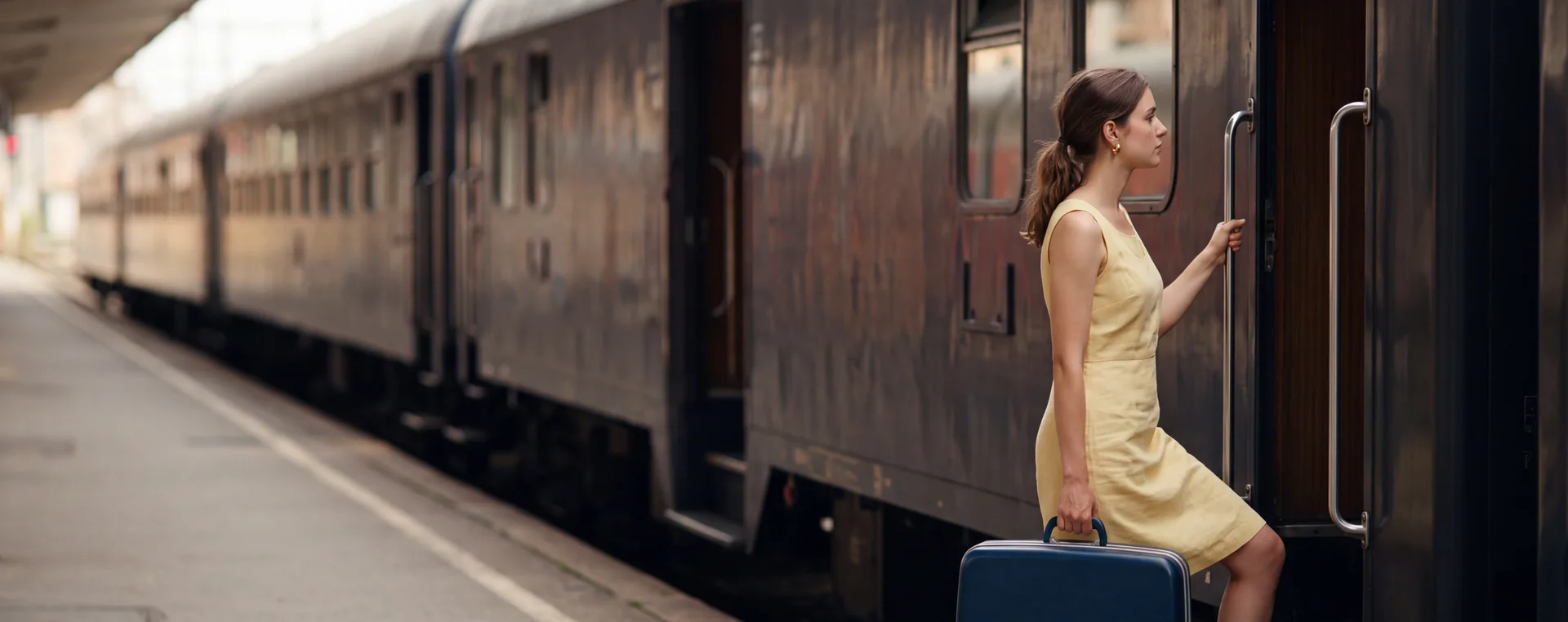
The question people type is whether a night train is worth it. The question they actually have arrives later, at about ten in the evening on a platform: which bunk did I book, who is going to be in the room with me, and where does the suitcase go while I am asleep.
A night train is the only form of transport that sells you a bed. Almost everything that catches first-time passengers out follows from that one fact — the tiers, the odd way it sells out, what a border does to the night, and why comparing it with a flight is never a comparison of two fares. This article works through it in the order the evening happens.
Key takeaways
- You are buying accommodation — the fare is a journey plus a bed, and the bed is the part that sells out.
- The tier decides the night — seat, couchette and sleeper differ in privacy and security far more than in speed.
- Booking opens late and unevenly — a cross-border service often goes on sale months after the day trains beside it.
- The honest comparison with a flight counts the hotel you did not book and the day you did not lose.
A Night Train Sells You Two Things at Once
Every other ticket you buy moves you. This one moves you and houses you, and the railway prices those two things separately even when the website shows a single figure. That is why the same train, on the same night, between the same two cities, can be sold at a spread that looks absurd next to a bus: the cheap end is a chair and the expensive end is a room.
Once you see the fare that way, the rest of the system stops being strange. Accommodation is a fixed, small stock — a carriage holds a set number of beds and cannot hold one more — so it behaves like a hotel rather than like a train. It sells out from the top down, it is rarely refundable close to departure, and a change of date is usually a new booking rather than an amendment. Read every rule on the page as a hotel rule and you will guess right most of the time.
Seat, Couchette or Sleeper
Three tiers, and the names are not decorative. A reclining seat is an ordinary carriage that happens to run at night: the lights dim rather than go out, people get on at three in the morning, and you sleep upright among strangers in a public space. A couchette is a compartment of four or six padded bunks, sold by the berth, where you keep your clothes on and share the room with whoever booked the other berths. A sleeper is a proper made bed in a compartment of one, two or three, often with a washbasin, and a door that locks from the inside.
| Tier | Sleep | Security |
|---|---|---|
| Reclining seat | Upright, dimmed rather than dark, woken at every stop | Public carriage, nothing locks, bags stay in your sight |
| Couchette | Flat bunk, bedding provided, four or six to a room | Door latches, but the room is shared with strangers |
| Sleeper | A made bed, one to three people, room to stand up | Locks from inside; the attendant holds the only key |
The jump that matters is not seat to couchette, which mostly buys you the horizontal. It is couchette to sleeper, which buys you a door you control and a room whose other occupants you chose. Solo travellers who dread the idea of a night train are usually imagining a couchette and pricing a seat.
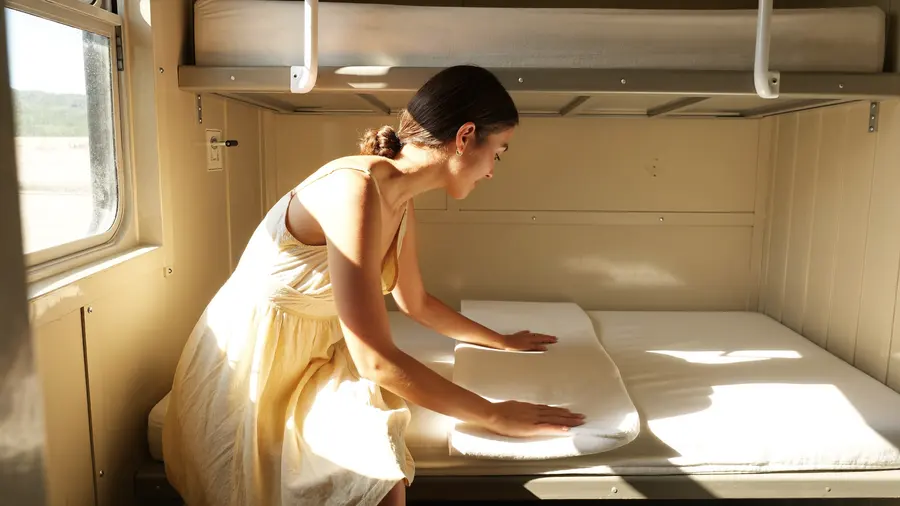
In a couchette the lower bunk is everybody's sofa until the room decides to sleep, and the upper one is private from the moment you climb into it. Neither is better. They are different evenings, and you pick one when you book.
What Actually Decides Whether You Sleep
Not the tier, mostly. Four smaller things do more work. Position in the carriage: the ends sit over the bogies and the wheels are loudest there, while the doors and the washroom generate their own traffic all night. Height: an upper bunk is warmer, more private and harder to leave at four in the morning. Stops: a train that pauses for twenty minutes goes eerily quiet and often warm, because the air conditioning can drop while the locomotive is changed, and the silence wakes people the movement never did.
The fourth is the one nobody plans for: a shared room has a shared temperature and one opinion about the window, settled by whoever speaks first. Earplugs, an eye mask and something warm cost nothing and remove most of it.
Your phone is the alarm, the reading light and the clock, and it is the one that has to still work when you wake up somewhere else. That is worth settling before you board rather than at six in the morning in a station you have never seen, and a plan that covers the whole route rather than only the country you left is one less thing to solve on a platform with a suitcase in your hand.
Booking Opens Later than You Expect
Day trains commonly go on sale several months ahead. Night trains often do not, and the reason is structural rather than commercial: a service that runs through two or three countries cannot be sold until every railway involved has agreed its timetable and released its share of the carriages. So the sleeper you want can be invisible on the day you plan the trip and on sale, sold out, three weeks later.
It then sells out unevenly, which is the part that misleads people. Sleepers go first because there are fewest of them, couchettes next, seats last — so a train marked "sold out" in the search results may still have a chair on it, and a train showing availability may have nothing left but the chair. Check the tier, never the train, and set a reminder for the day the route opens rather than checking hopefully: the whole date goes on sale at once and the beds go in days.
Where a route runs several nights a week, moving your travel by one day is often the difference between a berth and a chair.
What the Border Does to Your Night
Sometimes nothing at all. Between countries that have abolished internal checks the train simply keeps moving and you never know it happened. Where checks do exist, the night acquires a scheduled interruption: an officer works down the corridor, the compartment lights come on, and everyone is awake for ten minutes at an hour nobody chose. On some services the attendant collects passports at boarding and returns them in the morning, which is normal practice and saves the interruption.
The other thing a border can do is take half the train away. Long-distance night services are often assembled from portions that split at a junction while everyone sleeps, with one half going north and the other east. Nothing announces it in a way a sleeping passenger will hear, and the protection is not vigilance — it is boarding the right coach. Your coach number is the part of the reservation that matters most, and it is worth reading twice on the platform.
Your phone crosses the border on its own terms as well. It drops the network it had, hunts for whatever is strongest at three in the morning and attaches to it, and whatever it finds is what you wake up connected to. An eSIM downloaded before you boarded settles that in advance, because the profile is already on the handset and needs no shop, no counter and no signal to arrive.
Where the Luggage Lives
There is no hold. Whatever you bring, you carry on, lift up and sleep beside — which makes a night train the one journey where a smaller bag genuinely changes the experience rather than just the fee. Large cases go on a rack at the end of the coach or in the space above the compartment door; smaller ones fit under the lowest bunk or in a locker under the bed on some sleepers.
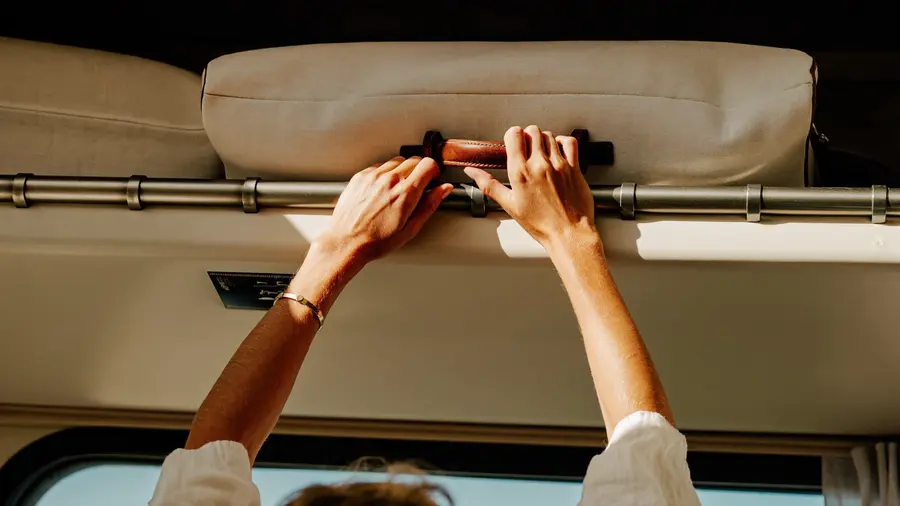
A case that cannot go overhead has to live where people walk, and that is the whole security question answered before the train has moved. Pack so that one person can raise it above head height without help.
The security rule is the same in every tier and takes ten seconds: separate what you would replace from what you could not. Passport, cards, phone and keys go in a small bag that comes into the bed with you. The case can be strapped or cable-locked to a fixed rail, which stops the opportunist walking a corridor at a station stop and defeats nobody determined — that is what it is for. In a couchette, use the compartment latch once the room settles; in a sleeper, lock the door.
What Is Included, and What Is Sold on Board
"Included" is a property of the tier, not of the train, and it is where two people paying different amounts have entirely different mornings. Bedding — a sheet, a pillow, a blanket — normally comes with any berth, and a couchette fare usually stops there. Sleeper fares tend to add a towel, some form of breakfast brought to the compartment, and access to a shower where the carriage has one, which not all do.
Water is the thing to bring regardless. Compartments get warm, the washbasin tap is usually marked as not for drinking, and nothing is on sale at two in the morning on a train with no bar. Assuming otherwise is the most common small misery of a first night train.
The Arithmetic against a Flight
Compared fare to fare, a berth loses to a cheap seat on a plane and it is not close. That comparison is simply the wrong one, because the two products do not contain the same things.
A night train is transport that arrives with a night's accommodation already spent. A flight is transport that arrives with a night still to pay for.
The honest version counts four things the flight makes you buy separately. The hotel you did not book, because you slept on the train. The transfers, since airports sit outside cities and stations sit in the middle of them, so the journey starts and ends where you actually want to be. The hours — the check-in margin, the security queue, the ride in at each end — set against boarding a few minutes before departure. And the day: an overnight service consumes time you were going to spend unconscious anyway, while a morning flight consumes a morning.
Run those four and the answer stops being universal, which is the point. Where the alternative is a short hop and a cheap airport bus, the plane wins comfortably. Over a distance long enough to need a bed anyway, the train frequently wins on total cost and wins outright on the morning. Work out what the night on the ground would have cost first — it is the same discipline that makes it worth pricing a trip by the day rather than by the ticket.
Common Questions
Is There a Women-Only Compartment?
On many operators, yes — a female-only couchette or sleeper compartment, chosen during the berth-selection step rather than arranged on board. It is easy to miss because it appears late in the booking flow. Where a route does not offer it, a single-berth sleeper is the alternative that does the same job.
Do I Have to Get Off the Moment It Arrives?
Often not. Sleeper passengers are frequently allowed to stay in the compartment for a stated period after arrival, which turns a brutal 06:00 into a civilised start. It varies by operator and by train, so look for it in the booking conditions rather than assuming it.
Can I Charge My Phone Overnight?
Assume one socket per compartment rather than one per person, and assume the upper bunks are furthest from it. Older carriages may have none at all in a couchette. A short cable and a power bank remove the problem entirely, and the power bank has to travel in the cabin with you anyway.
What Happens if the Train Arrives Late?
Night trains hold long waits in their timetables and often make time up, but they also lose it at borders and locomotive changes. Treat a morning arrival as an estimate rather than an appointment, particularly where the onward leg is a flight. Two hours of slack costs nothing and saves the trip.
The Night, Step by Step
-
Book the tier, then the berth
Decide between seat, couchette and sleeper first — it is the only decision that changes the night — then ask for a berth away from the doors and the coach ends.
-
Read the coach number, not just the time
Trains split. The number on your reservation is what puts you in the half going where you are going.
-
Board early and lift the case once
Get the large bag overhead or onto the end rack while the corridor is still empty, and keep the small bag with the passport, cards and phone in it.
-
Settle the room before the lights go
Window, temperature and who has the ladder are all easier at ten in the evening than at two in the morning. Fill a water bottle before you lie down.
-
Wake up ready to move
Check what the first hour in the arrival city will need — how the local transport takes a fare is worth knowing before you are standing in front of a barrier with a suitcase.