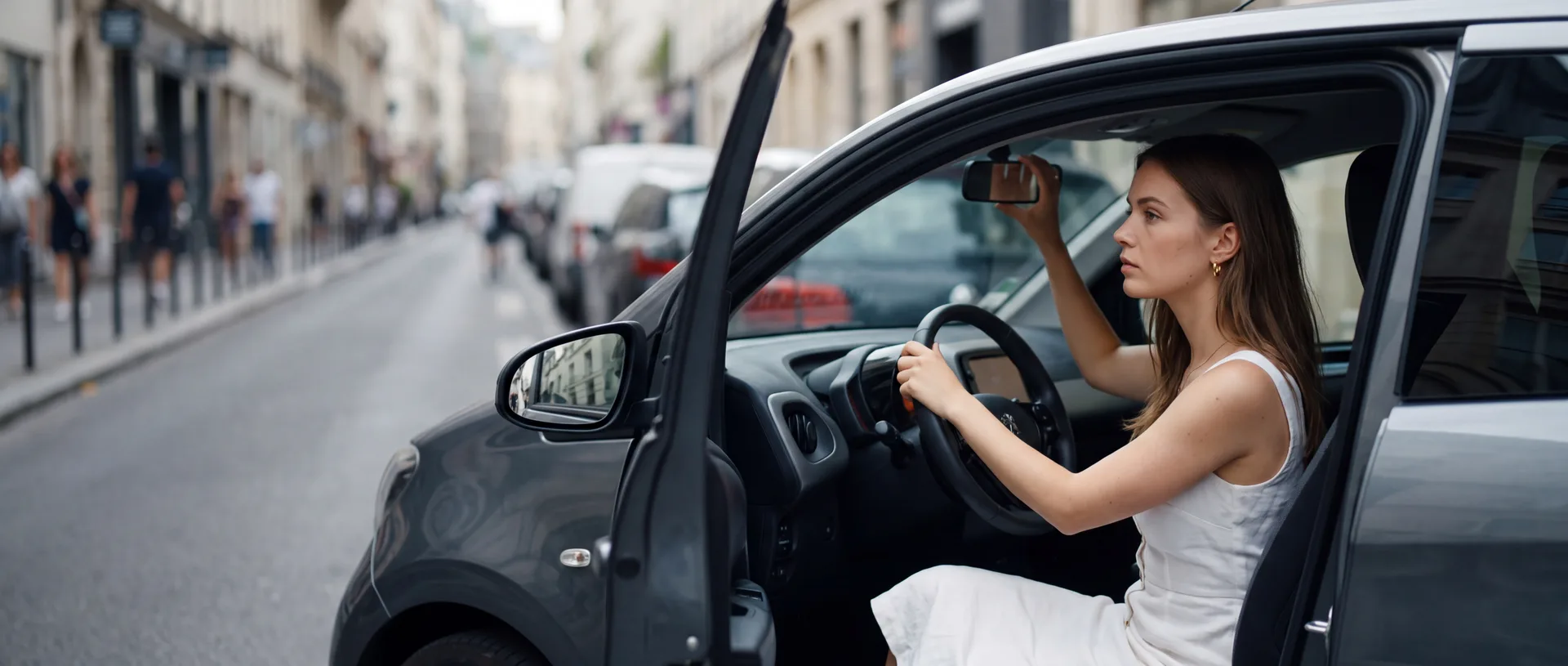
Everyone preparing to drive in another country prepares for the same thing: the side of the road. It is the most visible difference, the one people rehearse on the flight over, and — twenty minutes after leaving the car park — the one they have stopped thinking about.
What actually goes wrong is quieter. A document the hire desk will not accept. An excess that turns out to be four figures. A rule about who has priority that nobody signposts, because every local learnt it at seventeen. A zone you drove into without noticing. An envelope that reaches your home address six months later. This is the shape of it, in roughly the order you meet it.
Key takeaways
- The permit is not a translation — it is issued by your own country, works only beside your own licence, and cannot be bought after you land.
- The card decides more than the licence does — the hold, the name match and the excess all run through it.
- Nothing at the border tells you the rules changed — priority, headlights and required equipment all shift silently.
- Tolls come in four shapes, and only one of them stops you at a barrier to ask.
- A fine can take months, and the hire company's fee for handing over your address arrives either way.
The Side of the Road Is the Easy Part
Driving on the unfamiliar side is a motor skill, and motor skills correct themselves fast. Within an hour the gear lever in the other hand stops being strange. The lapses that remain cluster in a few moments — pulling out of a side road, leaving a petrol station, the first junction after a long empty stretch — because that is where there is no traffic to copy.
Your Licence, and the Permit That Is Not a Translation
Two questions hide inside "can I drive there". The first is whether the country recognises your licence at all. Within a bloc that has agreed mutual recognition — the EU and EEA being the obvious one — a licence from one member state is simply valid in the others. Outside that, recognition rests on treaties, which is why the second question exists.
The second is whether you also need an International Driving Permit. There are three conventions behind it — 1926, 1949 and 1968 — and each country decides which it accepts, so the permit is a family of documents rather than one. The UK government publishes a country-by-country table of which type is needed where; read on 28 August 2026, it listed 1968 permits for France and Greece and 1926 permits for Mexico and Somalia, which is a fair picture of how uneven the map is.
The important part is what the permit is not. It is not a translation, and it is not a licence — it is a permit issued by your own country's authority, and the same guidance is explicit that you must carry your own licence alongside it. Two consequences arrive too late for many people: no translation app substitutes for it, and you cannot obtain one after arriving, because the issuing authority is at home.
What the Hire Desk Will and Will Not Accept
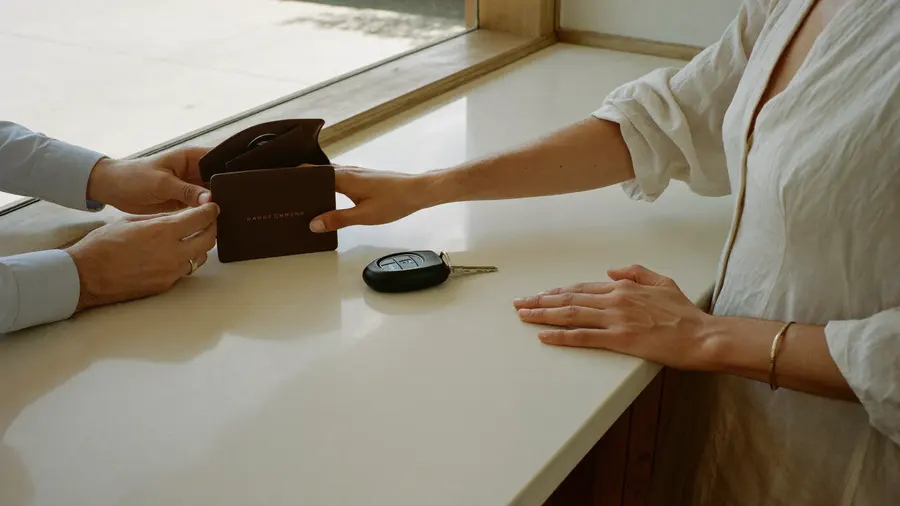
A deposit is held against it, and the name embossed on it has to match the name on the licence and on the booking. One initial out of place stops the handover.
A hire desk runs a short checklist, and it is not the one travellers prepare for. It wants the physical licence in the driver's name; a card in that same name, usually a credit card, because a hold is placed on it rather than a charge; a matching name across licence, card and booking; and every person who will drive registered on the agreement, because an unregistered driver is an uninsured one.
Two things reliably go wrong. A debit card is refused, or accepted only if you buy the counter's own cover. And the hold is larger than people expect — it is blocked against your available limit, so a card that comfortably covers a week's spending can be left with very little on it once the deposit sits on top.
There is a third, newer one. Several countries no longer print endorsements on the licence and keep the record online instead, so the desk asks for a check code you generate yourself, shortly before, from the issuing authority's website. That request lands while you stand at a counter in another country, which is exactly when a phone with no working data becomes expensive. The plan for it is made at home: an eSIM is written to the phone as software before you leave and switched on when you land.
The Excess Is the Real Price of the Car
The daily rate is not what the car costs you. The excess is — the amount you are liable for if anything happens to it — and it is usually the largest number in the contract and the least advertised.
The waiver sold with the car, whatever it is called, limits your liability rather than insuring it — and limits it down to the excess, not to zero. What it typically does not cover is the list of things that actually happen to a hire car: tyres, glass, the underside, the roof, the wrong fuel, lost keys, recovery. That gap is the product sold at the counter, in the one moment you cannot compare it: in a queue, after a flight, keys already on the desk.
The Rules That Differ without Telling You

Priority. At an unmarked junction, some countries give way to traffic from the right by default. A road that looks like the main one may not be, and the local pulling out in front of you is not being reckless — they have priority and know it.
Roundabouts. Whether traffic already on the roundabout has priority is not universal, and a few older ones are signed the other way round. Alcohol limits move too, and are often near zero for newly qualified drivers.
Lights. Several countries require dipped headlights in daylight, on some or all roads, all year. Daytime running lamps are not the same thing — they are usually front-only, so a car that looks lit from the front is dark from behind, which is the direction that matters.
Equipment you must carry. A warning triangle, a high-visibility vest, spare bulbs, a first aid kit: the list varies and so does where it must be kept. The vest is the classic — it has to be reachable from the driver's seat, because the point is to put it on before you get out. A vest in the boot has failed the test.
Winter equipment. Some countries require winter tyres by calendar date regardless of the weather; others by conditions, so the obligation appears with the first snow. Mountain routes may additionally require chains to be carried. A car booked in summer for a winter trip is not automatically equipped, and the contract usually says so.
Low-Emission Zones Are a Separate Permission

Enforcement is a camera, and a camera does not stop you. It records you, and records you again on the way back out.
A low-emission zone is not a toll. A toll is payment for using a road; a zone is permission for the vehicle to be there at all, granted on what it emits — and no willingness to pay creates that permission at the roadside.
France illustrates the timing problem. Its Crit'Air certificate classifies a vehicle by emissions and must be displayed on the windscreen inside a low-emission zone; it is applied for through the state's own site, and — as service-public.gouv.fr set out when read on 28 August 2026 — the fee includes postage, because the certificate is posted to you. Foreign-registered vehicles apply into the same postal process, so ordering one from the car park is not a plan. Germany runs a badge of the same shape.
Italy's restricted historic centres deserve their own warning, because they are enforced per crossing. Driving in, out and back in past the cameras is not one contravention but three, and the letters arrive separately. Satnav software will route you through all of it unless told otherwise. And the emissions class of a hire car is not yours to control, so ask what class it is and whether it already carries the sticker.
Tolls Come in Four Shapes
Every road-charging system is a variation on four mechanisms, and knowing which one you are in tells you what to do and by when. Fares change on somebody else's schedule; the shapes do not.
| Shape | How you pay | The trap |
|---|---|---|
| Vignette | Bought for a period before you enter | A digital one is tied to the plate, so a hire car may already have one — or not |
| Barrier | Ticket on entry, settle on exit | Lanes are sorted by payment method, and the wrong lane is hard to leave |
| Free flow | Cameras read the plate, you pay afterwards | Nothing stops you, and the window to pay is measured in days |
| Tag | A transponder billed to an account | A hire car's tag may be inactive, or active with a fee per day |
Free flow is the one that catches visitors, because it is the only shape with no moment of interaction. You drive under a gantry, an obligation is created, and discharging it means finding the operator's site and paying within a deadline that started when you passed the camera. That is a task performed from the passenger seat, in a country you arrived in yesterday — a good argument for sorting out data for the country you are driving in before the wheels are moving rather than after.
The Fine That Arrives Six Months Later
The delay is not a sign that something went wrong. It is the process running at normal speed, with more steps than most drivers realise. A camera records a plate. The plate is registered to the hire company, so the authority writes to the hire company. The company identifies you from its records, hands over your name and address, and charges you an administration fee for having done so — contractual, in the terms you signed, and usually taken from the card on file without a further conversation. Only then does the authority write to you, at the address on the booking. Every hop adds weeks.
Two consequences follow. An unexplained foreign envelope months after a trip is not junk mail: many systems offer a reduction for prompt payment and set the appeal window from the date of posting, so both expire quietly while it sits on the hall table. And the letter goes to the address on the hire booking — worth keeping current if you have moved since.
The other assumption worth abandoning is that a foreign plate is anonymous. Where two countries have an enforcement arrangement with each other, crossing the border does not end the matter, and how far that reach extends depends entirely on where you were driving. The hire company's part of the chain, though, does not vary at all — because that part is a contract rather than a treaty.
Common Questions
Do I Need a Permit if My Licence Is Already in the Latin Alphabet?
Possibly. The permit is not a translation, so legibility is not the test — the test is which convention the destination has signed. A perfectly readable licence can be insufficient on its own, and one in another script can be fine where a treaty covers it.
Can I Just Use My Phone as the Satnav?
Yes, and it is usually better than the hire company's screen. Two conditions: download the offline map for the whole region first, because mountain roads and border areas are where coverage thins, and mount the phone properly. Holding it is an offence in many of the places you will be driving.
Who Pays When the Car Is Damaged and Nobody Left a Note?
You do, up to the excess, because liability under a rental agreement does not depend on fault. That is what makes the excess a real question rather than a theoretical one, and why dated photographs at collection matter.
Before You Collect the Keys
-
Settle the paperwork at home
Confirm the country recognises your licence, find which convention it accepts, and order the permit while you are still in the country that issues it.
-
Decide the excess before the desk decides it for you
Read what the waiver excludes and check whether a card or travel policy you already hold covers it.
-
Check the route for zones
Look for low-emission and restricted zones on the roads you will use, and order anything that has to be posted to you.
-
Work out the toll shape
Establish which mechanism applies and, if it is free flow, how a charge is discharged and by when.
-
Photograph the car, twice
All four corners, roof, windscreen and fuel gauge, in daylight at collection and again at return.
-
Sort out data before you drive
Check codes, toll portals and zone registrations all assume a connection at a moment when you will not have time to find one.
None of it is difficult, and all of it is easier at a kitchen table than at a counter. If you are also working out how the city itself gets around, its fare systems follow the same logic: a handful of shapes, and the trick is telling which one you are looking at.
Get data sorted before the wheels are moving Check connectivity for the country you are driving to, and set it up before you leave home.