Your First Month Abroad: The Admin That Comes FirstAn Address to Register, a Permit Clock, a Bank Account That Wants Both, a Phone Number You Cannot Take with You, Health Cover and a Tax Residence You Have Not Left — the First Month Abroad in the Order it Happens28.08.202612 min readFrom the Team

Home // Destinations // Western Sahara
Let PlanPilot™ AI Find Your Best 5G eSIM for Western Sahara
Compare Prepaid 5G eSIM Data Plans for Western Sahara From Multiple Providers in One Place. PlanPilot™ AI Shortlists Them for Your Trip, So You’re Not Left Comparing Specs Yourself
Network Signal · 5G
WESTERN SAHARA · all networks available
98%
✦
● PlanPilot™ AI ·
comparing 5 offers..._
Western SaharaInstant DeliveryNo Roaming ChargesUnlimited 5G DataOne-Tap Installation
Western SaharaInstant DeliveryNo Roaming ChargesUnlimited 5G DataOne-Tap Installation
Western SaharaInstant DeliveryNo Roaming ChargesUnlimited 5G DataOne-Tap Installation
Western SaharaInstant DeliveryNo Roaming ChargesUnlimited 5G DataOne-Tap Installation
How PlanPilot™ AI Picks Your eSIM Plan for Western Sahara
PlanPilot™ AI Compares eSIM Plans for Western Sahara From Multiple Providers Worldwide, Then Ranks Them by Price, Coverage, Speed, and Overall Value — So the Plan You See First Is Already the Strongest Match
Tell PlanPilot™ AI What Type of Plan You Prefer
Select Whether PlanPilot™ AI Should Focus on UNLIMITED Data Plans or FIXED Data Packages
Choose How PlanPilot™ AI Should Prioritize Your Matches
Select the Balance of Price, Speed, Coverage, and Support You Want — From Affordable 4G Options to Premium 5G Performance
Pick From PlanPilot™’s Best Matches
PlanPilot™ AI Evaluated Every Eligible eSIM Plan Available for Western Sahara Across Our Providers Based on Your Preferences
All Plans
- 1 GB · 7 days · Data Only · Essential $ 41.99 · Plus $ 50.99 · Max $ 54.99
- 2 GB · 15 days · Data Only · Essential $ 82.99 · Plus $ 98.99 · Max $ 107.99
- 3 GB · 30 days · Data Only · Essential $ 115.99 · Plus $ 139.99 · Max $ 150.99
- 5 GB · 30 days · Data Only · Essential $ 192.99 · Plus $ 230.99 · Max $ 249.99
- 10 GB · 30 days · Data Only · Essential $ 353.99 · Plus $ 424.99 · Max $ 460.99
PlanPilot™ AI Picks for Travel Beyond Western Sahara
Explore Regional and Global eSIM Plans That Include Western Sahara and Keep You Connected Across Multiple Countries — Without Switching Plans
TRAVELLING WORLDWIDE?
One eSIM WorldWide
192 Destinations • Same Plan • No Swapping
Your PlanPilot™ AI Selection Is Ready
Review Your Chosen Plan, Savings, and Final Recommendations Before Continuing to Checkout
travelData.shop
Order Summary
✦
PlanPilot™ AI · Optimized
PLAN NO. 2026-87718
PlanFIXED Data • Plus
CoverageWestern Sahara
Networks4G / 5G
Data10 GB
Validity30 days
Western Sahara eSIM #1
$ 424.99
$ 42.50 per GB
Bundle Coupon
Add a 2nd eSIM — Whole Bundle at −10%
You’d Save $ 85.00 in Total
Subtotal$ 424.99
Total10% cashback
$ 424.99Claim 10% Cashback After Checkout
PlanPilot™ AI // recommendation
Go Max for Just $ 1.20 / Day
Smart Network Switching
Faster 5G · Faster Hotspot · Priority Supp_
Only +$ 36.00 for This eS_
INSTANT DELIVERY
ONE TAP INSTALLATION
Redeem a Code
Got a Code From a Friend, Creator, or Partner? Enter It Below to Unlock Your Offer
%
No Code Yet? Complete Checkout to Unlock Your Shareable Referral Code
OFFERS VARY BY CODE
ONE CODE PER ORDER
ONE CODE PER ORDER
// the calculator
Tell Us What a Normal Day Looks Like — We Will Do the Maths
// Describe Your Next Adventure
Trip Length7 Days
How Many People Will Use This eSIMJust You
// What a Day On Your Phone Looks Like
Watching Video
Netflix, YouTube, Disney+, Prime Video
Social Media
TikTok, Instagram, Facebook, Posting Photos
Calls and Messaging
WhatsApp, FaceTime, Zoom, Telegram
Music and Podcasts
Spotify, Apple Music, Podcasts
Browsing, Maps and Apps
Web, eMail, Maps, Ride Apps, Games
Laptop or Tablet on the Hotspot
Sharing the eSIM With Another Device
Screen Time · 4.5 h Per Person Per Day
10 GB
30 Days
// Our Data Usage Estimate
15 GB7 Days · Just You
// Recommended Plan10 GB30 Days · $ 424.99The Biggest Plan Here — Our Estimate Is 15 GB
// Breakdown By Activity
Watching Video4.9 GB34%
Social Media5.8 GB40%
Calls and Messaging1.8 GB12%
Music and Podcasts516 MB3%
Browsing, Maps and Apps1.7 GB11%
Per Person Per Day2.1 GB
Our Estimate Uses 100% Of The 10 GB Plan
Get This Plan →$ 424.99Our Estimate Tops the Biggest Package Here — Plan a Mid-Trip Top-Up
// How It Works
Get Connected in Just 3 Simple Steps
01
Tell PlanPilot™ AI What You Need
Choose Your Data Type and Preferred Balance of Price, Speed, Coverage, and Support
02
Install Your eSIM With One Tap
Install Directly on a Compatible Device in Seconds — or Use the QR Code Whenever Needed
03
Connect When You Arrive in Western Sahara
Your Plan Activates Automatically When It First Connects to a Supported Network in Western Sahara
✓
Is Your Phone eSIM-Ready?
Most Newer Smartphones From 2018+ Support eSIM - Verify Yours in 10 Seconds
Why travelData.shop Is More Than an eSIM Store
Instead of Pushing One Provider’s Plans, PlanPilot™ AI Compares Eligible eSIM Plans for Western Sahara Across Multiple Providers and Surfaces the Strongest Matches for Your Trip
More Providers, One Search
Compare Eligible Plans Without Checking Providers One by One
PlanPilot™ AI-Ranked Matches
See the Strongest Options First Based on Price, Coverage, Speed, and Overall Value
Transparent Prepaid Pricing
Pay Upfront and Travel Without Unexpected Roaming Charges
One-Tap eSIM Installation
Install in Seconds With One Tap — or Use the QR Code
// FAQ
FAQs About eSIM in Western Sahara
An eSIM Is a Digital SIM That Lets You Activate a Mobile Data Plan Without Replacing Your Physical SIM Card, Purchase and Install It Online, Then Connect to Supported Local Mobile Networks When You Arrive at Your Destination
Your Phone Must Support eSIM Technology and Be Unlocked From Your Mobile Carrier, Check Your Device Before Purchasing to Make Sure It Can Install and Use a Travel eSIM
Compatible Devices Support One-Tap Installation Directly From Your Order, if One-Tap Installation Is Unavailable, You Can Use the Provided QR Code Instead, Install Your eSIM Before Traveling While You Have a Stable Internet Connection
Installing the eSIM Does Not Start Your Plan, Your Plan Activates Automatically When the eSIM First Connects to a Supported Network in Western Sahara, and Its Validity Begins From That Moment
Data Roaming Must Be Enabled for the Travel eSIM to Connect to Its Supported Networks in Western Sahara, No Extra Roaming Charges Apply Beyond the Prepaid Plan Price, Keep Data Roaming Disabled on Your Primary SIM to Avoid Charges From Your Regular Carrier
Yes, Most Compatible dual-SIM Phones Let You Keep Your Physical SIM Active for Calls and Texts While Using the eSIM for Mobile Data, Select the Travel eSIM as Your Mobile Data Line Before Connecting
Most Travel eSIM Plans Are Data-Only Unless Calls or Texts Are Specifically Included in the Plan Details, You Can Continue Using Apps Such as WhatsApp, FaceTime, or Messenger, Mobile Hotspot Availability Depends on the Selected Plan
The Available Networks Are Displayed in Each Plan’s Details and Order Summary Before Checkout, Depending on the Selected Provider, Location, Network Coverage, and Device Compatibility, Your eSIM May Connect to 4G or 5G Networks in Western Sahara
A Country-Specific Plan Is Intended for Use in Western Sahara, for Trips Beyond Western Sahara, Choose a Global Plan Covering 192 Destinations, Always Check the Plan Coverage List Before Purchasing
Top-up and Extension Options Depend on the Selected Provider and Plan, if Your Plan Cannot Be Extended, You Can Purchase Another Prepaid eSIM Plan and Continue Using Mobile Data During Your Trip
For Maps, Messaging, Browsing, and Occasional Social Media, 5-10 GB Is a Practical Starting Point for Many Travelers, Choose More Data or an Unlimited Plan if You Expect Frequent Streaming, Video Calls, Hotspot Use, or Simply Do Not Want to Monitor Your Usage
PlanPilot™ AI Compares Eligible eSIM Plans for Western Sahara Across Multiple Providers, It Evaluates Your Selected Preferences Together With Price, Coverage, Speed, and Overall Value, Then Places the Strongest Matches First
Make Sure the eSIM Line Is Enabled, Selected for Mobile Data, and Has Data Roaming Turned on, Confirm That You Are in a Supported Destination, Then Toggle Airplane Mode or Restart Your Phone, if the Issue Continues, Contact Our 24/7 Support Team for Help
Support // LIVE CHAT 24/7
Still Need Help?
Chat With Our Support Team 24/7 for Help With Compatibility, Installation, Activation, or Connection Issues
★★★★★ Travelers Around the World Rate Us 4.7/5 — 440157 eSIM Orders Delivered WorldWide
Sarah Chen
@sarahchen_travels
"I Used travelData.shop During My Trip to Japan and It Worked Perfectly From the Moment I Landed. Setup Took Less Than Two Minutes and the Data Speed Was Amazing!"
Marcus Weber
@marcusweber
"Super Easy to Install and No Roaming Fees. I Stayed Connected Through My Entire Europe Trip Without Switching SIM Cards. Totally Worth It!"
Priya Sharma
@priyasharma
"I Bought My Plan Online Before Traveling to Thailand. The QR Code Arrived Instantly, and the Connection Was Fast Everywhere I Went — Beaches, Cities, Even Remote Areas."
// Know Before You Go
Travel Tips & Essential Information for Western Sahara
Western Sahara is a sparsely populated Atlantic desert territory. Visitor infrastructure is limited compared with nearby Morocco, and practical travel planning matters more than sightseeing variety. Most access for travelers is typically through areas administered by Morocco, especially the coastal city of Dakhla.
Western Sahara AT A GLANCE
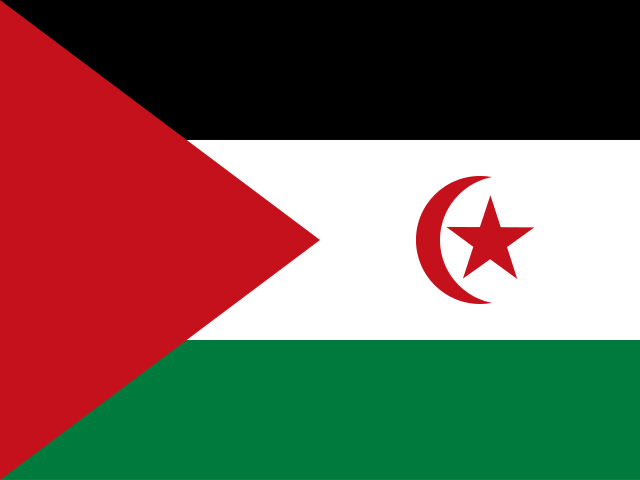
LanguageArabic, Spanish
Capital CityLaayoune
CurrencyMoroccan dirham (MAD)
Time ZoneUTC+1
Emergency19 police · 15 ambulance · 15 fire
Driving SideRight
Plug TypeType C and Type E
Voltage220 V, 50 Hz
Official Languages: Arabic, Spanish
English is not widely spoken. French is commonly more useful in business and travel services, and Spanish may also be heard, especially in some areas. Basic Arabic or French phrases can help.
Mobile Network: Mobile coverage is generally good in main towns and along major coastal routes, usually through Moroccan operators, but it becomes weak or absent in remote desert areas. Data speeds are commonly adequate in cities and more variable outside them.
Roaming/SIM/eSIM: Roaming can work well if your home provider has agreements with Moroccan networks, but it may be expensive. A local Moroccan SIM is usually the cheapest option for longer stays and gives the most predictable access in towns. An eSIM can be convenient for short trips if your phone supports it, but coverage and pricing depend on the provider and often still rely on the same local networks. For remote drives, do not rely on mobile data alone.
Cards are accepted in many hotels, larger restaurants, and some supermarkets in main towns such as Laayoune and Dakhla, but cash is still important for fuel, small shops, taxis, and remote areas. ATMs are available in main towns but can be scarce outside them.
Tipping is appreciated but not always mandatory. In restaurants, around 5 to 10 percent is common if service is not already included. For cafes, rounding up the bill is typical. Taxi drivers are often given a small round-up. Hotel porters and housekeeping commonly receive small cash tips.
Plug Type: Type C and Type E
Voltage: 220 V, 50 Hz
Adapter: If you come from countries using Type C or Type E plugs, usually no adapter is needed. Travelers from the UK, Ireland, North America, and other regions commonly need a plug adapter. Check whether your devices support 220 V.
Travel conditions vary by location. Areas under Moroccan administration that receive visitors are generally calmer than remote interior zones, but the territory has political sensitivities, long driving distances, and desert hazards. Some countries advise against travel near the berm and in remote inland areas because of mines and unexploded ordnance.
- Check your own government travel advisory before departure and again just before any overland trip.
- Stay on well-used roads and do not leave marked routes in remote desert areas because of mine risk in some zones.
- Carry water, fuel margin, sun protection, and a charged phone for any long drive. Distances are large and roadside services may be limited.
- Expect police or security checkpoints on major roads. Keep passport, visa documents if applicable, and vehicle papers accessible.
- Avoid political demonstrations, photography of security sites, and arguments about territorial status.
- If driving between towns, try to travel by daylight because animals, sand, and limited roadside lighting can make night driving riskier.
Do
- Carry cash for small purchases and transport.
- Greet people politely before asking for help or prices.
- Confirm taxi fares in advance if the taxi is not using a meter.
- Keep extra drinking water with you in the desert climate.
- Respect checkpoint procedures and follow local instructions calmly.
Avoid
- Do not go off-road in unfamiliar areas due to isolation and possible mine contamination.
- Do not photograph military posts, police, checkpoints, airports, or strategic infrastructure.
- Do not assume card payment will work everywhere.
- Do not underestimate wind, sun, and dehydration, even in cooler months.
- Do not treat the political status of the territory as casual conversation.
Local Cultural Tips
- Dress modestly, especially outside beach resorts and windsurfing areas. Lightweight clothing that covers shoulders and knees is a safe default.
- Ask before photographing people, especially women, families, police, military areas, ports, and checkpoints.
- Hospitality is valued. If offered tea, accepting at least one glass is often seen as polite unless you have a reason to decline.
- Public discussion of politics and the status of the territory can be sensitive. Listen more than you speak if the topic arises.
- Friday prayer time can affect business hours, and some smaller places may close temporarily.
- Use a polite greeting such as hello or good day before starting a request.
- A handshake is common, but wait and follow the other person's lead, especially with women.
- Use the right hand when giving or receiving money, food, or small items when possible.
- Avoid public drunkenness and very revealing clothing outside resort settings.
- Be patient with slower service and administrative checks, which can be part of normal travel in the area.
// The Blog
Something to Read Before You Go
Cities, Borders, Costs and the Small Things Nobody Warns You About
Night Trains: What to Expect from Berth to BorderA Night Train Is the Only Ticket That Sells You a Bed, and Almost Everything That Surprises a First-Time Passenger Follows from That — What Seat, Couchette and Sleeper Really Buy, and Why Booking Opens So Late28.08.202613 min readFrom the Team
Will Your Phone Work in a Country That Has Retired 3G?A Phone That Works Perfectly at Home Can Lose Voice, Data or Both in a Country That Has Retired 3G. Here Is What a Switch-Off Removes, Why the Signal Bars Still Look Fine, and the Ten Minutes That Prevent it28.08.202611 min readFrom the Team
When to Haggle, and When It Is RudeA Ticketed Price, a Heaped Stall, a Taxi with no Meter, a Maker at a Bench — Each One Tells You Whether the Number Is a Statement or an Opening. How to Read a Setting before You Speak, and Where Arguing Lands Badly28.08.202613 min readFrom the Team
Western SaharaInstant DeliveryNo Roaming ChargesUnlimited 5G DataOne-Tap Installation
Western SaharaInstant DeliveryNo Roaming ChargesUnlimited 5G DataOne-Tap Installation
Western SaharaInstant DeliveryNo Roaming ChargesUnlimited 5G DataOne-Tap Installation
Western SaharaInstant DeliveryNo Roaming ChargesUnlimited 5G DataOne-Tap Installation
// Ready When You Are
Find Your Best eSIM Match for Western Sahara
Compare Prepaid 4G/5G eSIM Plans From Multiple Providers and Let PlanPilot™ AI Surface the Strongest Options for Your Trip. Install in One Tap and Connect When You Arrive
Boarding · Connectivity
Western Sahara→ Online
Ready When You Land