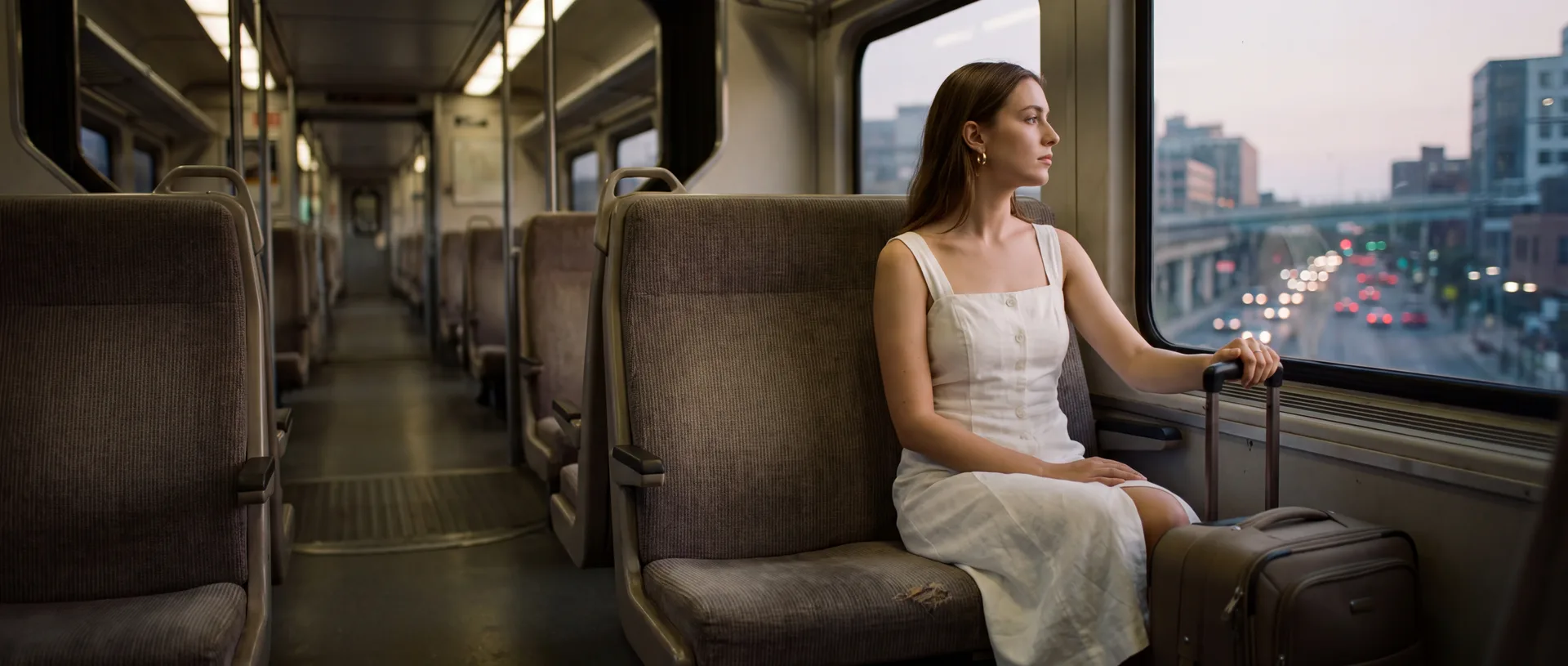
Most people arrive in Tokyo having read about temples and neon, and spend a chunk of their first day standing still in a station instead, working out which of several companies they are supposed to be buying a ticket from. The city is not difficult. It is specific — and almost everything that catches a first-time visitor out is a decision they made weeks earlier without realising it was a decision at all.
So this is not a list of sights. It is the handful of things that decide whether the first two days feel effortless or expensive: which airport you fly into, which side of the city you sleep on, what you carry your money on, and the two or three local rules that stay invisible until you break one. Get these right and Tokyo runs like a machine, because underneath it is one.
Key takeaways
- Book the airport and the hotel together — the fast train you want depends on which side of the city you sleep on.
- The rail network has three owners, and changing between them restarts the fare.
- Carry the fare card on your phone if your handset supports it; buy the plastic one at the airport if it does not.
- The last train ends the night, not closing time. There is no night service to fall back on.
Tokyo Is a Ring, Not a Centre
The most useful thing to understand before you land is that Tokyo has no centre in the sense most European or American cities have one. It has a loop — the Yamanote line, which runs a circle around the inner city — and each of the big stations on that loop anchors what is, by any normal measure, a city in its own right. Shinjuku, Shibuya and Ikebukuro sit on the western arc. Tokyo Station and Ginza are on the eastern side. Ueno and Asakusa are north-east, and feel like a different decade.
Nobody here says they are going into town; they say which station they are going to. Two things follow. Pick accommodation by the station it is walkable from rather than by the neighbourhood name in the listing — ten minutes from a loop station is a different trip from twenty-five. Then measure distances in stops around the ring, because the map's kilometres and the city's are only loosely related.
Which Airport You Land at Decides Your First Two Hours
Tokyo has two international airports and they are not interchangeable. Haneda sits inside the city, south of the loop, and a train from it drops you at the edge of the centre in well under half an hour. Narita is roughly sixty kilometres east, in a different prefecture, and every route from it is an hour-scale commitment. If both appear at a similar fare, Haneda is worth real money.
What almost nobody checks is that Narita's two fast trains go to opposite sides of the loop. The airport's own line-by-line listing makes it plain: the Keisei Skyliner runs to Nippori and Keisei Ueno in the north-east, while the Narita Express runs to Tokyo, Shinagawa, Shibuya and Shinjuku on the western arc. Keisei quotes the Skyliner at as little as 41 minutes to its Ueno terminus — genuinely fast, and wasted if your hotel is in Shinjuku and you then cross the city underground with a suitcase.
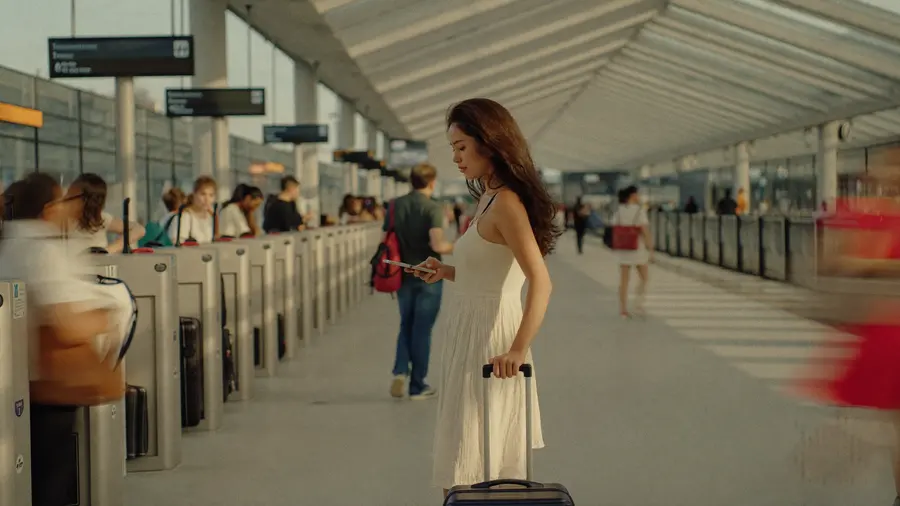
A row of gates that looks like one system is often the boundary between two operators. Tapping through it restarts your fare — which is why a shorter journey sometimes costs more than a longer one.
The Train Map Has Three Owners
What looks like one transit system is three businesses sharing a city. JR East runs the loop and the surface lines. Tokyo Metro runs nine subway lines. Toei, the metropolitan government's own operator, runs four more plus the trams and most buses. The map in your hotel lobby draws all of them in the same style and never says where one ends.
It matters because a change between operators is a fresh fare, not a transfer. Two journeys of the same length can differ noticeably depending on whether they cross an ownership line. The day tickets make the split visible, because each one is sold as a rung on a ladder of how many companies you have bought your way into.
| Ticket | What it covers |
|---|---|
| Metro 24-hour | The nine Tokyo Metro subway lines, and nothing else |
| Metro and Toei | Adds the four Toei subway lines |
| Combination | Adds the trams, the buses and JR inside the wards |
Each rung costs meaningfully more than the one below it, and the reason is not distance. For a first visit the honest answer is usually to buy none of them and simply tap a stored-value card at every gate: a day ticket only pays for itself over five or six subway hops, and a first-timer walking between sights rarely makes that many.
Put the Fare Card on Your Phone before You Fly
One rechargeable card works across all three operators, and in convenience stores, vending machines, coin lockers and a great many small shops. You never calculate a fare or choose a ticket type: tap in, tap out, and the gate does the arithmetic. It is the largest single difference between a smooth week and an awkward one.
There are two ways to hold it. The plastic card is sold from machines at both airports and at major stations, and topped up at those machines, often with cash. The other is to add the card inside your phone's wallet, which recent iPhones and many Android handsets support directly.
If your handset can do it, do it before you leave home. Open WalletAddTransit Card, pick the Japanese card and load it from a bank card you already have. You arrive able to walk straight through the barrier, and you top up on the platform instead of queueing at a machine.
Japan Is Cashless until it Suddenly Is Not
Tokyo's reputation as a cash economy is a decade out of date, and its reputation as a cashless one is a year ahead. Chains, department stores, hotels and most sit-down restaurants take cards without a thought. Then you reach a nine-seat noodle counter, a temple selling charms or a locker that wants coins, and the card is decoration.
Carry a couple of days' small spending in notes and keep the coins rather than clearing them out — the smallest denominations are what lockers, shrines and older machines want. When you do need more, convenience-store cash machines are the reliable ones for a foreign card; plenty of bank machines will decline it, and some keep bank hours. If a screen offers to bill you in your own currency, decline it — the reasoning is in our guide to paying abroad without losing money to fees.
The Last Train Is the Only Real Deadline
The network stops shortly after midnight and starts again around five in the morning, and in between there is nothing — no night metro, no skeleton service, only a thin set of night buses and taxis on a late surcharge. A missed train is not an inconvenience here, it is a decision about where you are sleeping.
The trap is subtler than it sounds. It is rarely your own last train that strands you; it is the last train on the line you were going to change onto, which stops earlier. If you are more than one line from your bed, work backwards from the connection and set an alarm forty-five minutes before it, not five.
Addresses Are Not Streets, They Are Blocks
Most streets in Tokyo have no name. An address names a ward, then a district, then a block and a building — and the numbers were historically assigned in the order things were built, not by position along a road. Handed a full address and no phone, a local would struggle too.
So nobody navigates by address. They navigate by station and by exit, and directions are given in that form: this station, that exit, five minutes. It sounds like a detail until you meet a station with dozens of exits spread across several hundred metres of underground concourse, where surfacing at the wrong one costs a quarter of an hour and your bearings. Screenshot the exit name before you go down the stairs, because that is exactly when the signal goes.
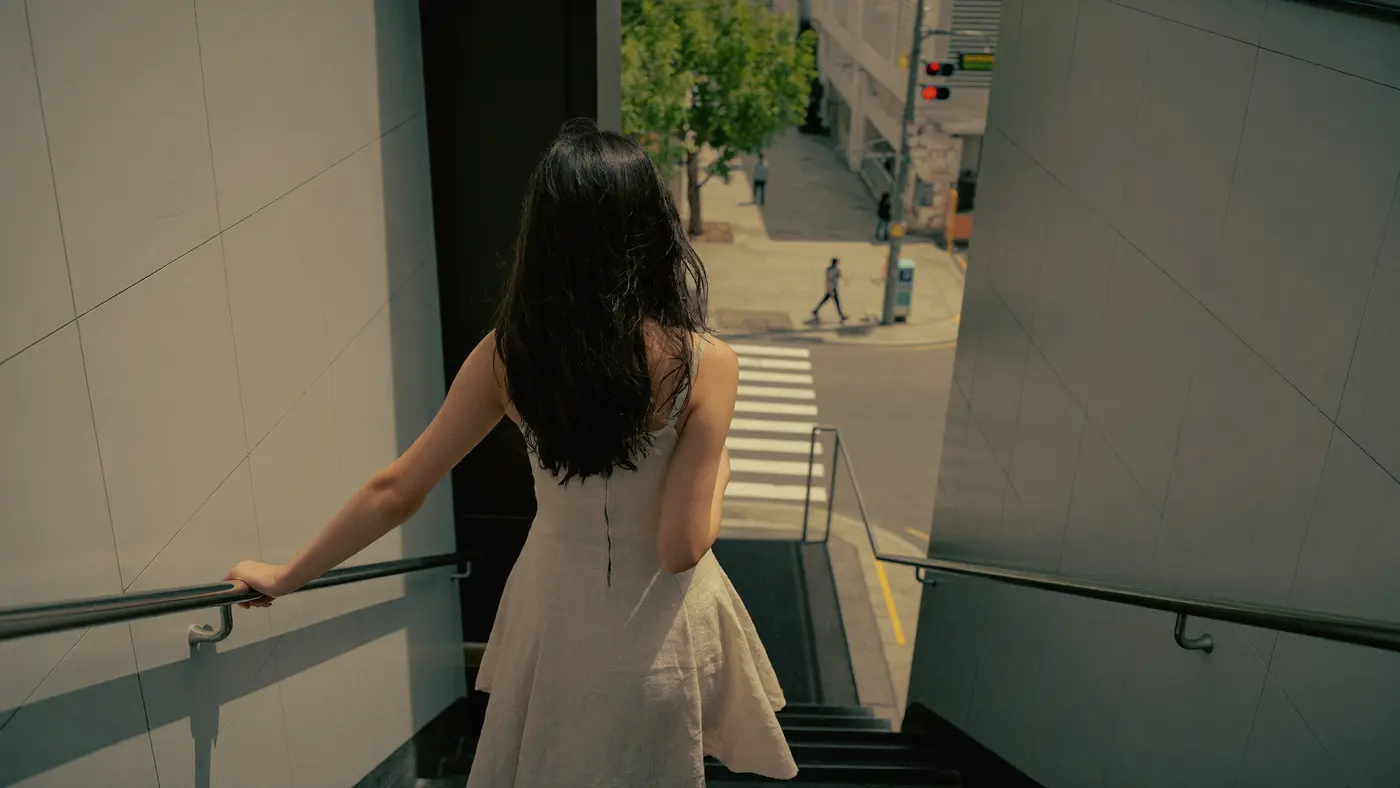
Which makes the phone load-bearing rather than convenient: it is the map, the fare card, the translator and the timetable at once. How much data that actually takes is its own question, and we have answered it separately.
What Counts as Rude, and What Does Not
Tokyo has fewer social landmines than its reputation suggests, and the ones it has are about not imposing on people in shared space. Trains are quiet. A phone call on one is the thing that will genuinely turn heads, and handsets go on silent as a matter of course. Platforms have queue markings and people use them.
Escalators are the famous one: Tokyo stands on the left and leaves the right clear, while Osaka does the reverse. Operators now run campaigns asking everyone to stand still on both sides, so the safest instruction is to copy the person in front of you.
Do
- Carry your rubbish until you find a bin — public bins are genuinely scarce.
- Take your shoes off where you see a step up and a rack of slippers.
- Hand money to a cashier on the little tray rather than into their hand.
Don't
- Tip. Anywhere. Leaving money behind reads as confusion, not generosity.
- Eat or drink while walking down a street; step aside and finish it.
- Block the barrier while you find your card — step out of the flow first.
Eating Out Is Easier than it Looks

Eight seats, one dish done properly, and a turnover of twenty minutes. Eating alone is completely ordinary, and the queue outside moves far faster than it looks.
The mechanics intimidate people and they are simple. Many small restaurants sell a meal ticket from a machine at the door: pay first, take the slip to the counter, hand it over. Others put a window display of remarkably convincing plastic models outside, which exists precisely so that you can point. Department store basements are enormous prepared-food halls and the easiest lunch in the city.
Most of these places take no bookings and expect no long sitting. You will not need a reservation on a first trip unless you have set your heart on one famous room — in which case book it before you fly and build the day around it.
The hardest part of eating in Tokyo is choosing. Almost nothing else about it is hard.
A First Three Days That Actually Works
Land, get the fare card working before you leave the airport building, and take the train that goes to your side of the loop even if another is quicker on paper. Spend the first day on foot in the district you are sleeping in, learning one station properly rather than six badly. Use the second for the far side of the ring, and the third for whatever the first two made you curious about — which will not be what you planned, and that is the point.
The one thing worth arranging beforehand is connectivity, because it sits upstream of everything else here: the exit you screenshot, the card in your wallet, the map that tells you which exit you wanted. Doing it at the airport, tired, in a queue, is the worst version of that job.
Data plans for Japan Compare what the networks there actually offer, and arrive with it already working.Common Questions
Do I Need to Speak Any Japanese?
No, but a phone that can translate a menu makes a real difference. Station signage, ticket machines and cash machines all offer English. Small restaurants often do not, and that is where camera translation earns its keep.
Is a Nationwide Rail Pass Worth Buying for Tokyo?
Almost never for Tokyo alone. Those passes are built for long-distance travel between cities, and inside Tokyo they cover only one of the three operators — so you would still pay separately for most subway journeys. Buy one if you are crossing the country, not if you are staying put.
How Many Days Should a First Visit Be?
Four full days is where the city stops being a series of errands and starts making sense as a place. Three works if you accept you are seeing one arc of the loop. Two is a stopover, best spent in one district rather than sprinting.
Can the Phone Be the Fare Card and the Map at the Same Time?
Yes, and that is the usual arrangement. Worth knowing that the fare card generally keeps working when the battery is nearly flat while the map does not, so the thing that gets you home fails last. A power bank is still the cheapest insurance you will buy.
What Is Not Worth Booking in Advance?
Restaurants, day tickets and most attractions. The exceptions are anything with timed entry, one famous room, and your connectivity — the first two because they sell out, the last because doing it on arrival costs the hour you least want to spend. For a longer route, our destination pages cover the rest of the region.