How to Use Public Transport in a City You Don't KnowA City Has Only Four Ways of Taking a Fare from You. Here Is How to Tell Which One You Are Looking at before You Reach the Barrier, Which Mistakes Turn a Cheap Ride into a Fine, and What Still Works Offline28.08.202612 min readFrom the Team
Home // Destinations // Bosnia & Herzegovina
Let PlanPilot™ AI Find Your Best 5G eSIM for Bosnia & Herzegovina
Compare Prepaid 5G eSIM Data Plans for Bosnia & Herzegovina From Multiple Providers in One Place. PlanPilot™ AI Shortlists Them for Your Trip, So You’re Not Left Comparing Specs Yourself
Network Signal · 5G
BOSNIA & HERZEGOVINA · all networks available
98%
✦
● PlanPilot™ AI ·
comparing 483 offers..._
Bosnia & HerzegovinaInstant DeliveryNo Roaming ChargesUnlimited 5G DataOne-Tap Installation
Bosnia & HerzegovinaInstant DeliveryNo Roaming ChargesUnlimited 5G DataOne-Tap Installation
Bosnia & HerzegovinaInstant DeliveryNo Roaming ChargesUnlimited 5G DataOne-Tap Installation
Bosnia & HerzegovinaInstant DeliveryNo Roaming ChargesUnlimited 5G DataOne-Tap Installation
How PlanPilot™ AI Picks Your eSIM Plan for Bosnia & Herzegovina
PlanPilot™ AI Compares eSIM Plans for Bosnia & Herzegovina From Multiple Providers Worldwide, Then Ranks Them by Price, Coverage, Speed, and Overall Value — So the Plan You See First Is Already the Strongest Match
Tell PlanPilot™ AI What Type of Plan You Prefer
Select Whether PlanPilot™ AI Should Focus on UNLIMITED Data Plans or FIXED Data Packages
Choose How PlanPilot™ AI Should Prioritize Your Matches
Select the Balance of Price, Speed, Coverage, and Support You Want — From Affordable 4G Options to Premium 5G Performance
Pick From PlanPilot™’s Best Matches
PlanPilot™ AI Selected the 11 Best Matches From 129 Eligible Unlimited Data Plans Across Multiple Providers Worldwide
All Plans
- Unlimited · 1 day · Data Only · Essential $ 3.99 · Plus $ 4.99 · Max $ 5.99
- Unlimited · 3 days · Data Only · Essential $ 9.99 · Plus $ 11.99 · Max $ 12.99
- Unlimited · 5 days · Data Only · Essential $ 15.99 · Plus $ 18.99 · Max $ 20.99
- Unlimited · 7 days · Data Only · Essential $ 21.99 · Plus $ 26.99 · Max $ 28.99
- Unlimited · 10 days · Data Only · Essential $ 30.99 · Plus $ 36.99 · Max $ 39.99
- Unlimited · 15 days · Data Only · Essential $ 45.99 · Plus $ 54.99 · Max $ 59.99
- Unlimited · 20 days · Data Only · Essential $ 57.99 · Plus $ 69.99 · Max $ 75.99
- Unlimited · 30 days · Data Only · Essential $ 83.99 · Plus $ 100.99 · Max $ 108.99
- Unlimited · 45 days · Data Only · Essential $ 125.99 · Plus $ 150.99 · Max $ 163.99
- Unlimited · 60 days · Data Only · Essential $ 167.99 · Plus $ 200.99 · Max $ 217.99
- Unlimited · 90 days · Data Only · Essential $ 250.99 · Plus $ 301.99 · Max $ 326.99
- 1 GB · 7 days · Data Only · Essential $ 3.99 · Plus $ 4.99 · Max $ 5.99
- 2 GB · 15 days · Data Only · Essential $ 6.99 · Plus $ 7.99 · Max $ 8.99
- 3 GB · 30 days · Data Only · Essential $ 7.99 · Plus $ 8.99 · Max $ 9.99
- 5 GB · 30 days · Data Only · Essential $ 10.99 · Plus $ 12.99 · Max $ 13.99
- 10 GB · 30 days · Data Only · Essential $ 19.99 · Plus $ 22.99 · Max $ 24.99
- 20 GB · 30 days · Data Only · Essential $ 34.99 · Plus $ 40.99 · Max $ 44.99
- 50 GB · 90 days · Data Only · Essential $ 91.99 · Plus $ 109.99 · Max $ 118.99
- 100 GB · 180 days · Data Only · Essential $ 177.99 · Plus $ 213.99 · Max $ 230.99
- 20 GB · 31 days · Data + Voice + SMS · Essential $ 45.99 · Plus $ 55.99 · Max $ 59.99
- 50 GB · 31 days · Data + Voice + SMS · Essential $ 86.99 · Plus $ 103.99 · Max $ 112.99
- 100 GB · 31 days · Data + Voice + SMS · Essential $ 115.99 · Plus $ 138.99 · Max $ 149.99
PlanPilot™ AI Picks for Travel Beyond Bosnia & Herzegovina
Explore Regional and Global eSIM Plans That Include Bosnia & Herzegovina and Keep You Connected Across Multiple Countries — Without Switching Plans
TRAVELLING ACROSS Europe?
One eSIM for 55 Countries
Includes Bosnia & Herzegovina • Same Plan • No Swapping
TRAVELLING WORLDWIDE?
One eSIM WorldWide
192 Destinations • Same Plan • No Swapping
Your PlanPilot™ AI Selection Is Ready
Review Your Chosen Plan, Savings, and Final Recommendations Before Continuing to Checkout
travelData.shop
Order Summary
✦
PlanPilot™ AI · Optimized
PLAN NO. 2026-85596
PlanUNLIMITED Data • Plus
CoverageBosnia & Herzegovina
Network4G / 5G • HT-ERONET
DataUNLIMITED
Validity10 days
Bosnia & Herzegovina eSIM #1
$ 36.99
$ 3.70 per day
Bundle Coupon
Add a 2nd eSIM — Whole Bundle at −10%
You’d Save $ 7.40 in Total
Subtotal$ 36.99
Total10% cashback
$ 36.99Claim 10% Cashback After Checkout
PlanPilot™ AI // recommendation
Go Max for Just $ 3.30 / Day
Smart Network Switching
Faster 5G · Faster Hotspot · Priority Support
Only +$ 33.00 for This eSIM_
INSTANT DELIVERY
ONE TAP INSTALLATION
Redeem a Code
Got a Code From a Friend, Creator, or Partner? Enter It Below to Unlock Your Offer
%
No Code Yet? Complete Checkout to Unlock Your Shareable Referral Code
OFFERS VARY BY CODE
ONE CODE PER ORDER
ONE CODE PER ORDER
// the calculator
Tell Us What a Normal Day Looks Like — We Will Do the Maths
// Describe Your Next Adventure
Trip Length7 Days
How Many People Will Use This eSIMJust You
// What a Day On Your Phone Looks Like
Watching Video
Netflix, YouTube, Disney+, Prime Video
Social Media
TikTok, Instagram, Facebook, Posting Photos
Calls and Messaging
WhatsApp, FaceTime, Zoom, Telegram
Music and Podcasts
Spotify, Apple Music, Podcasts
Browsing, Maps and Apps
Web, eMail, Maps, Ride Apps, Games
Laptop or Tablet on the Hotspot
Sharing the eSIM With Another Device
Screen Time · 4.5 h Per Person Per Day
UNLIMITED
7 Days
// Our Data Usage Estimate
15 GB7 Days · Just You
// Recommended PlanUNLIMITED7 Days · $ 26.99This Plan HandlesUp To 6.1 GB/day
// Breakdown By Activity
Watching Video4.9 GB34%
Social Media5.8 GB40%
Calls and Messaging1.8 GB12%
Music and Podcasts516 MB3%
Browsing, Maps and Apps1.7 GB11%
Per Person Per Day2.1 GB
Bar Shows Shares Of Your Estimate
Get This Plan →$ 26.99// How It Works
Get Connected in Just 3 Simple Steps
01
Tell PlanPilot™ AI What You Need
Choose Your Data Type and Preferred Balance of Price, Speed, Coverage, and Support
02
Install Your eSIM With One Tap
Install Directly on a Compatible Device in Seconds — or Use the QR Code Whenever Needed
03
Connect When You Arrive in Bosnia & Herzegovina
Your Plan Activates Automatically When It First Connects to a Supported Network in Bosnia & Herzegovina
✓
Is Your Phone eSIM-Ready?
Most Newer Smartphones From 2018+ Support eSIM - Verify Yours in 10 Seconds
Why travelData.shop Is More Than an eSIM Store
Instead of Pushing One Provider’s Plans, PlanPilot™ AI Compares Eligible eSIM Plans for Bosnia & Herzegovina Across Multiple Providers and Surfaces the Strongest Matches for Your Trip
More Providers, One Search
Compare Eligible Plans Without Checking Providers One by One
PlanPilot™ AI-Ranked Matches
See the Strongest Options First Based on Price, Coverage, Speed, and Overall Value
Transparent Prepaid Pricing
Pay Upfront and Travel Without Unexpected Roaming Charges
One-Tap eSIM Installation
Install in Seconds With One Tap — or Use the QR Code
// FAQ
FAQs About eSIM in Bosnia & Herzegovina
An eSIM Is a Digital SIM That Lets You Activate a Mobile Data Plan Without Replacing Your Physical SIM Card, Purchase and Install It Online, Then Connect to Supported Local Mobile Networks When You Arrive at Your Destination
Your Phone Must Support eSIM Technology and Be Unlocked From Your Mobile Carrier, Check Your Device Before Purchasing to Make Sure It Can Install and Use a Travel eSIM
Compatible Devices Support One-Tap Installation Directly From Your Order, if One-Tap Installation Is Unavailable, You Can Use the Provided QR Code Instead, Install Your eSIM Before Traveling While You Have a Stable Internet Connection
Installing the eSIM Does Not Start Your Plan, Your Plan Activates Automatically When the eSIM First Connects to a Supported Network in Bosnia & Herzegovina, and Its Validity Begins From That Moment
Data Roaming Must Be Enabled for the Travel eSIM to Connect to Its Supported Networks in Bosnia & Herzegovina, No Extra Roaming Charges Apply Beyond the Prepaid Plan Price, Keep Data Roaming Disabled on Your Primary SIM to Avoid Charges From Your Regular Carrier
Yes, Most Compatible dual-SIM Phones Let You Keep Your Physical SIM Active for Calls and Texts While Using the eSIM for Mobile Data, Select the Travel eSIM as Your Mobile Data Line Before Connecting
Most Travel eSIM Plans Are Data-Only Unless Calls or Texts Are Specifically Included in the Plan Details, You Can Continue Using Apps Such as WhatsApp, FaceTime, or Messenger, Mobile Hotspot Availability Depends on the Selected Plan
The Available Networks Are Displayed in Each Plan’s Details and Order Summary Before Checkout, Depending on the Selected Provider, Location, Network Coverage, and Device Compatibility, Your eSIM May Connect to 4G or 5G Networks in Bosnia & Herzegovina
A Country-Specific Plan Is Intended for Use in Bosnia & Herzegovina, for Trips Beyond Bosnia & Herzegovina, Choose a Europe Regional Plan Covering 55 Countries or a Global Plan Covering 192 Destinations, Always Check the Plan Coverage List Before Purchasing
Top-up and Extension Options Depend on the Selected Provider and Plan, if Your Plan Cannot Be Extended, You Can Purchase Another Prepaid eSIM Plan and Continue Using Mobile Data During Your Trip
For Maps, Messaging, Browsing, and Occasional Social Media, 5-10 GB Is a Practical Starting Point for Many Travelers, Choose More Data or an Unlimited Plan if You Expect Frequent Streaming, Video Calls, Hotspot Use, or Simply Do Not Want to Monitor Your Usage
PlanPilot™ AI Compares Eligible eSIM Plans for Bosnia & Herzegovina Across Multiple Providers, It Evaluates Your Selected Preferences Together With Price, Coverage, Speed, and Overall Value, Then Places the Strongest Matches First
Make Sure the eSIM Line Is Enabled, Selected for Mobile Data, and Has Data Roaming Turned on, Confirm That You Are in a Supported Destination, Then Toggle Airplane Mode or Restart Your Phone, if the Issue Continues, Contact Our 24/7 Support Team for Help
Support // LIVE CHAT 24/7
Still Need Help?
Chat With Our Support Team 24/7 for Help With Compatibility, Installation, Activation, or Connection Issues
★★★★★ Travelers Around the World Rate Us 4.7/5 — 439850 eSIM Orders Delivered WorldWide
Sarah Chen
@sarahchen_travels
"I Used travelData.shop During My Trip to Japan and It Worked Perfectly From the Moment I Landed. Setup Took Less Than Two Minutes and the Data Speed Was Amazing!"
Marcus Weber
@marcusweber
"Super Easy to Install and No Roaming Fees. I Stayed Connected Through My Entire Europe Trip Without Switching SIM Cards. Totally Worth It!"
Priya Sharma
@priyasharma
"I Bought My Plan Online Before Traveling to Thailand. The QR Code Arrived Instantly, and the Connection Was Fast Everywhere I Went — Beaches, Cities, Even Remote Areas."
// Know Before You Go
Travel Tips & Essential Information for Bosnia & Herzegovina
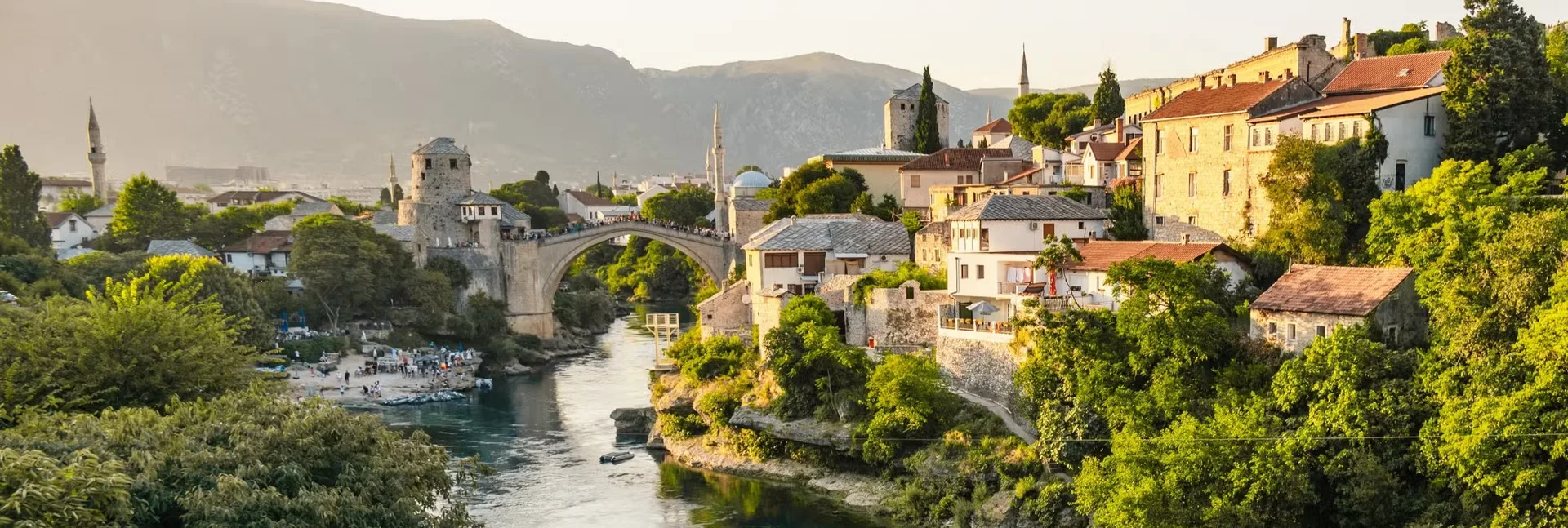
Bosnia and Herzegovina Pairs Ottoman Old Towns and Austro-Hungarian Architecture with River Canyons and Mountain Scenery, from Sarajevo to Mostar's Old Bridge over the Neretva. It Is Affordable for Most Visitors, and Cash Still Matters Once You Leave the Main Streets
Bosnia & Herzegovina AT A GLANCE
LanguageBosnian, Croatian, Serbian
Capital CitySarajevo
CurrencyConvertible Mark (BAM)
Time ZoneCET, CEST
Emergency112 · 122 · 123 · 124
Driving SideRight
Plug TypeType C and Type F
Voltage230 V, 50 Hz
Official Languages: Bosnian, Croatian, Serbian
English Is Common in Tourist-Facing Businesses in Sarajevo and Mostar, Especially with Younger People. It Is Less Reliable in Small Towns and Rural Areas, so Offline Maps, Saved Booking Details and a Few Local Phrases Help
Mobile Network: 4G Has Been the Mainstay Nationwide since 2019, with Good Coverage in Sarajevo, Mostar and along the Main Road between Them. Coverage Weakens in Mountain Tunnels, the Neretva Gorge and Remote Highland Areas. There Is No Commercial 5G yet, and the Largest Operator Began Switching Off 3G in 2026, so a 4G-Capable Phone Is the Safe Choice
Roaming/SIM/eSIM: Visitors from Elsewhere in the Region Pay No Roaming Surcharge under a Regional Western Balkans Agreement. EU Visitors Pay a Capped, Not Free, Rate under a Voluntary Operator Deal That Steps Down Yearly, While Talks on Full Home-Rate Roaming with the EU Continue. For Others, Roaming Is Simplest for a Short Trip but Often Pricier. A Local SIM Is Usually Cheapest for a Longer Stay If Unlocked, and an eSIM Can Match That with Setup Done before You Arrive, Where Supported
The Convertible Mark Is Pegged to the Euro at a Fixed Rate of 1.95583 BAM, so Euro Prices Convert Predictably. Cards Are Accepted in Hotels, Larger Restaurants, Supermarkets and Malls in Sarajevo, Mostar, Banja Luka and Other Bigger Towns, but Cash in BAM Is Still Needed for Small Cafes, Market Stalls, Rural Guesthouses and Some Taxis
Tipping Is Appreciated but Not Required. Five to 10 Percent Is Typical in Restaurants When Service Is Good and Not Already Included, and Rounding Up Is Common in Cafes, Bars and Taxis. Card Payments Do Not Always Let You Add a Tip, so Keep Some Cash on Hand — BAM or Euros Are Both Welcome for This
Plug Type: Type C and Type F
Voltage: 230 V, 50 Hz
Adapter: Visitors from Countries Using Type C or Type F Plugs Usually Do Not Need an Adapter. Travelers from the United Kingdom, Ireland, North America and Other Regions with Different Plug Types Will Typically Need One, and Some Devices May Also Need Voltage Compatibility Checked
Bosnia and Herzegovina Is Generally Safe for Visitors, with the Usual City Risks of Pickpocketing and Occasional Taxi Overcharging. Landmines from the 1992-95 War Remain in Some Rural and Less-Visited Areas; Cities, Main Roads and Marked Trails Are Clear, and the Risk Sits Off Them, Not on Them
- 112 Reaches Any Emergency Service Nationwide; 122 Is Police, 123 Is Fire and 124 Is Ambulance Directly
- Do Not Step Off Roads and Paved Paths without a Guide; Former Conflict Lines, Abandoned Buildings and Untarred Tracks Still Carry Risk
- Use Licensed Taxis or Ones Booked through Your Hotel, and Agree the Fare or Confirm the Meter Is Running
- Check Mountain Road Conditions before Driving in Winter, When Snow and Ice Affect Routes Such as Sarajevo to Mostar
- Keep Your Passport or a Copy Handy, as Accommodation Providers May Need to Register Your Stay
Do
- Carry Some Cash in BAM, or Euros, for Small Purchases and Rural Travel
- Dress Modestly at Religious Sites and Follow Any Posted Guidance
- Confirm Bus and Train Times in Advance, as Schedules Can Be Limited
- Respect That People Here Identify with Different Communities and Histories
Avoid
- Do Not Leave Marked Roads, Trails or Paved Paths in the Countryside
- Do Not Assume Every Business Takes Cards or Foreign Currency
- Do Not Photograph People at Worship without Asking First
- Do Not Joke about the War or Raise It Casually in Conversation
Local Cultural Tips
- Coffee Culture Runs Deep, and Cafe Visits Are Social and Often Unhurried, Not a Quick Stop
- Religious Sites Matter to Many Communities; Dress Modestly and Behave Respectfully in Mosques, Churches and Monasteries
- Signs, Menus and Currency May Appear in Latin or Cyrillic Script Depending on the Region, and Both Are Normal to See
- History and Recent Politics Can Be Sensitive Topics; Listen More than You Assume
- A Handshake Is the Usual Greeting in Formal or First-Time Meetings
- Greet Staff When You Enter a Small Shop, Guesthouse or Cafe
- Wait to Be Seated in Busier Restaurants Rather than Choosing Your Own Table
- Ask before Photographing People Closely, Especially in Villages, Markets or at Religious Sites
- Accepting an Offered Coffee or Small Refreshment Is Seen as a Polite Social Gesture
- Stay Patient and Courteous with Service Staff Rather than Rushing an Interaction
// The Blog
Something to Read Before You Go
Cities, Borders, Costs and the Small Things Nobody Warns You About
How Tipping Works Abroad, and Where to Leave NothingTipping Is a Wage Arrangement, not a National Trait. Here Is How to Read a Bill for a Charge That Is Already on it, What the Terminal Is Asking, Where That Money Goes, and How to Leave Nothing Gracefully28.08.202612 min readFrom the Team
Holy Days and Holidays — What Closes AbroadA Fast, a Rest Day or a Saint's Day Is Not an Obstacle Somebody Left in Your Path. Here Is What a Religious or National Calendar Actually Closes, What Keeps Running Anyway, and How to Check the Dates That Matter28.08.202613 min readFrom the Team
Moving Abroad with a Pet: the Chain Nobody SeesA Pet Move Is Not a Checklist but a Chain of Dates, and Taking Two Steps out of Order Does Not Delay the Second — it Voids it. Where the Months Hide, and Why Quarantine Is Almost Always a Paperwork Failure28.08.202612 min readFrom the Team
Bosnia & HerzegovinaInstant DeliveryNo Roaming ChargesUnlimited 5G DataOne-Tap Installation
Bosnia & HerzegovinaInstant DeliveryNo Roaming ChargesUnlimited 5G DataOne-Tap Installation
Bosnia & HerzegovinaInstant DeliveryNo Roaming ChargesUnlimited 5G DataOne-Tap Installation
Bosnia & HerzegovinaInstant DeliveryNo Roaming ChargesUnlimited 5G DataOne-Tap Installation
// Ready When You Are
Find Your Best eSIM Match for Bosnia & Herzegovina
Compare Prepaid 4G/5G eSIM Plans From Multiple Providers and Let PlanPilot™ AI Surface the Strongest Options for Your Trip. Install in One Tap and Connect When You Arrive
Boarding · Connectivity
Bosnia & Herzegovina→ Online
Ready When You Land